
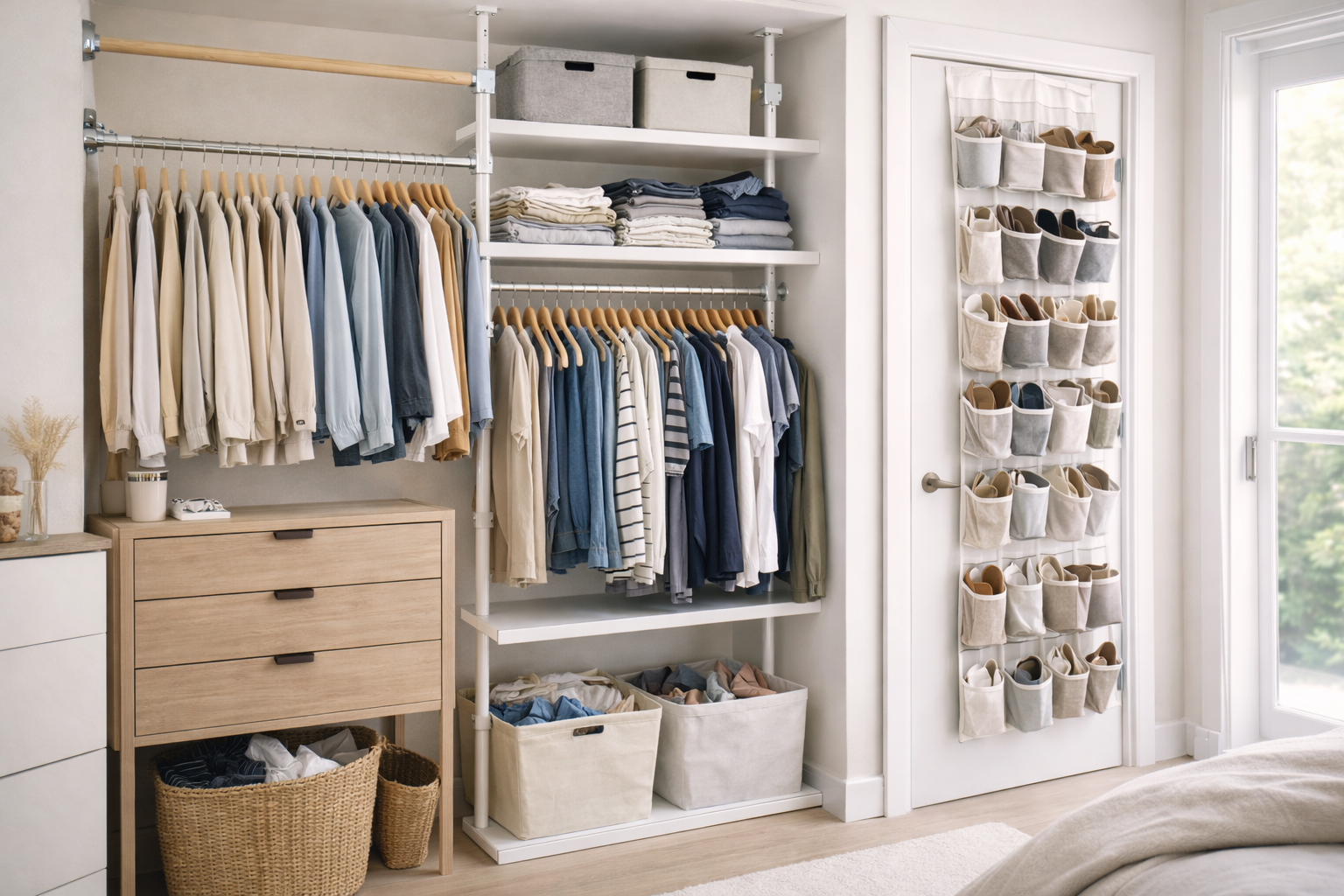
Renters often hear the same advice over and over. Buy bins. Add shelves. Install hooks. Most of this advice ignores one essential reality.
Rental apartments come with limits, and ignoring those limits leads to frustration, wasted money, and sometimes damage that costs more than it is worth.
Safe closet ideas are not about doing less. They are about doing smarter. The solutions that actually work for renters respect the temporary nature of the space while still delivering structure, order, and comfort.
When safety and functionality are treated as priorities rather than obstacles, closet organization becomes far more effective.
This article explores renter-safe closet ideas that truly work in real apartments, not just in idealized photos.
What Renter Safe Really Means
A renter-safe closet solution leaves no permanent trace. It does not require drilling, anchoring, or altering surfaces. It can be removed easily, and the closet can be returned to its original condition without repair.
Renter-safe also means low risk over time. Solutions should not stress existing rods, shelves, or doors in ways that could cause damage. Stability and weight distribution matter just as much as removability.
When safety is defined this way, the range of workable solutions becomes very clear.
Starting With the Closet You Already Have
Many renters rush to buy organizers before understanding their existing closet. This often leads to solutions that clash with the space instead of improving it.
A safer approach is to study the closet first. Look at how the built-in rod and shelf are positioned. Notice unused height, empty floor space, and dead zones near corners.
Working with what already exists reduces the need for added weight or pressure, which keeps the closet safer overall.
Floor Based Storage That Protects Walls
Floor-based storage is one of the safest and most reliable options for renters. Because it rests entirely on the ground, it places no stress on walls or built-in fixtures.
Freestanding shelving units, slim drawer towers, and shoe racks create structure without attachment. These pieces can be repositioned or removed at any time.
When chosen in the right size and proportion, floor-based storage feels intentional rather than temporary.
Hanging Solutions That Do Not Alter Structure
Hanging solutions use the closet rod rather than the walls. When used correctly, they add capacity without increasing risk.
Hanging shelves, fabric organizers, and tiered hangers create vertical storage zones without installation. These tools are lightweight and easy to remove.
To keep things safe, it is important not to overload hanging organizers. Balance and moderation ensure long-term stability.
Using Tension Systems the Right Way
Tension systems are often misunderstood. When installed carefully, they are among the safest renter solutions available.
Tension rods can add hanging space or support lightweight shelving. The key is correct sizing and gentle pressure. Overtightening can leave marks or stress surfaces.
Used properly, tension systems provide flexibility without permanence.
Door Based Storage That Does Not Damage Surfaces
Closet doors offer valuable storage potential without touching walls. Over-the-door organizers hang securely without tools.
These solutions are ideal for shoes, accessories, or folded items. They keep frequently used belongings accessible while reducing clutter inside the closet.
To stay renter-safe, choose organizers with protective padding where they contact the door.
Storage Boxes That Create Order Without Risk
Boxes are one of the simplest and safest organization tools. They contain items, create visual order, and protect belongings.
Uniform boxes placed on shelves or the floor improve clarity and reduce clutter. Labels make access easier and prevent unnecessary searching.
Boxes are especially useful for seasonal items and personal belongings that are not used daily.
Choosing Closet Accessories That Add Stability
Small accessories often make a big difference. Non-slip hangers reduce strain on rods by keeping clothes evenly spaced. Shelf dividers help prevent stacks from collapsing.
These accessories improve efficiency without adding weight or requiring installation. They support organization rather than replacing it.
For renters, subtle improvements are often the safest.
Creating Zones That Maintain Balance
Zoning is one of the most effective renter-safe strategies. By dividing the closet into clear zones, clutter becomes easier to control.
A hanging zone, a folded items zone, a shoe zone, and an accessories zone can all be created using portable organizers. This structure reduces the temptation to overload any single area.
Zones also make maintenance simpler, which keeps the closet safe over time.
Managing Weight to Protect Built In Features
Built-in closet rods and shelves are not designed to support unlimited weight. Overloading them is a common renter mistake.
Heavier items should be stored on the floor or in freestanding units. Lighter items belong on rods and hanging organizers.
Managing weight carefully protects the closet and prevents long-term damage.
Using Lighting to Improve Safety and Function
Poor visibility leads to overhandling and clutter. Renters often underestimate how lighting affects safety.
Battery-powered lights and clip-on fixtures improve visibility without installation. Better lighting reduces frustration and makes organization easier to maintain.
Lighting is a renter-safe upgrade that delivers immediate benefits.
Avoiding High Risk Organization Trends
Some trends promise easy organization but carry hidden risks. Adhesive products, stick-on shelves, and peel-and-stick solutions often damage surfaces.
Another risk is forcing organizers into spaces where they do not fit properly. Pressure in the wrong places can cause marks or damage.
Avoiding trendy shortcuts protects both the closet and the deposit.
Planning Organization With Moving in Mind
Renter-safe solutions should move easily. Organizers that cannot be disassembled or reused lose value quickly.
Choosing modular, portable storage reduces waste and saves money. It also ensures that organization investments continue to pay off in future apartments.
A closet designed to move is often safer and more efficient.
Maintaining Safety Over Time
Safety is not a one-time consideration. Over time, items accumulate and systems are pushed beyond their limits.
Regular check-ins help keep storage balanced. Removing unused items, adjusting spacing, and redistributing weight prevent stress on the closet.
Maintenance keeps renter-safe solutions working as intended.
Why Simple Ideas Often Work Best
The most effective renter-safe closet ideas are often the simplest. They rely on balance, flexibility, and consistency rather than complex systems.
Simple solutions are easier to maintain, safer to remove, and more adaptable to change. They respect the temporary nature of rental living.
This simplicity is what makes them work.
Frequently Asked Questions
What makes a closet solution truly renter safe?
It is removable, non-invasive, and does not stress walls, doors, or built-in fixtures.
Are floor-based organizers safer than hanging ones?
Generally yes, because they do not rely on built-in components. However, both can be safe when used correctly.
Can renter-safe solutions still look polished?
Yes. When planned carefully, renter-safe closets can look intentional and well-designed.
Should renters avoid all adhesive products?
In most cases, yes. Adhesives are unpredictable and often cause surface damage.
How can renters protect their deposit when organizing closets?
By choosing removable solutions, managing weight carefully, and restoring the closet to its original condition at move-out.

Ryan Lewis is a home organization enthusiast who specializes in smart, renter-friendly solutions for small spaces. With a passion for functional design and practical living, Alex shares tips, guides, and ideas to help readers create calm, clutter-free environments—no matter the size of their home.