
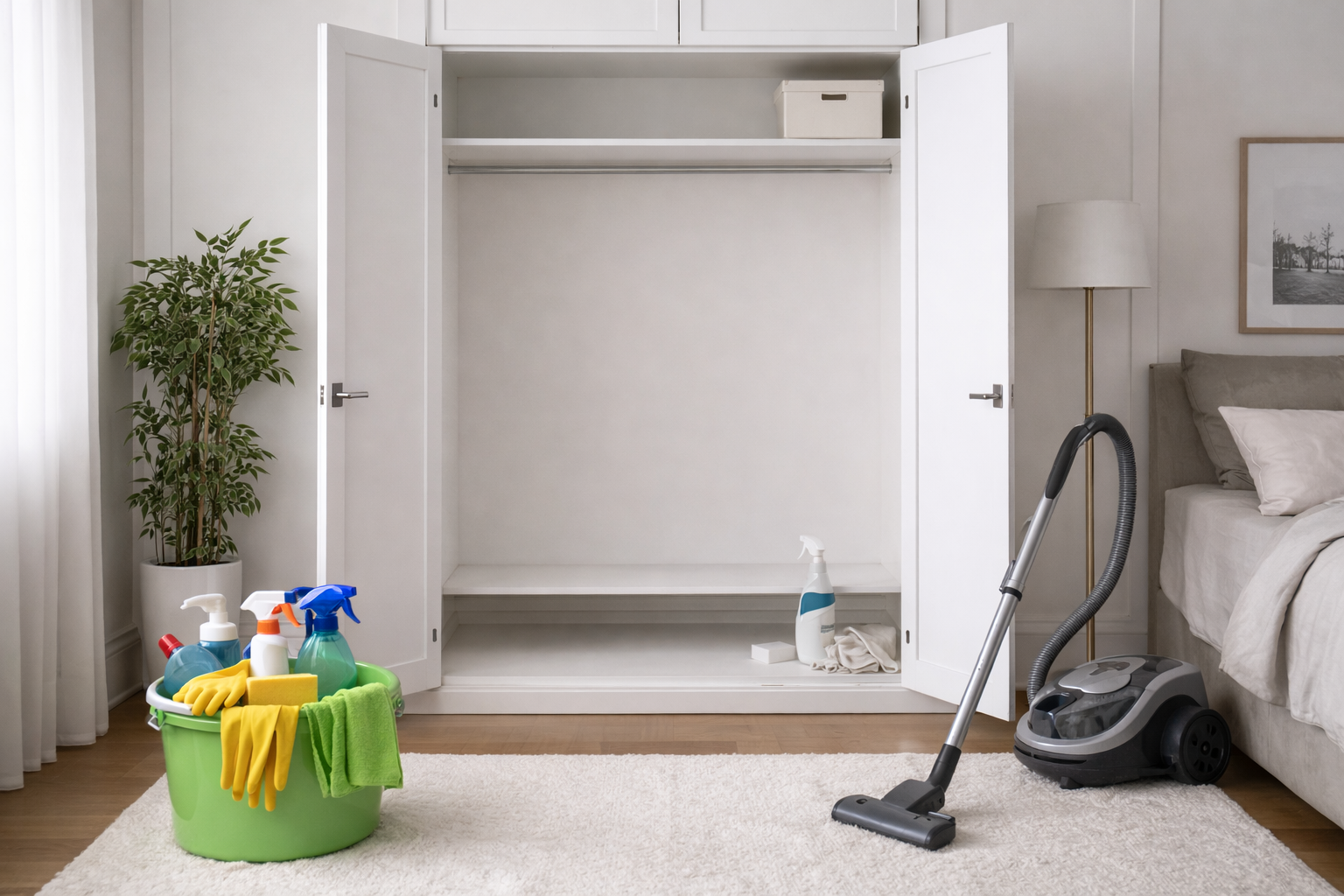
Moving out is often rushed. Boxes are stacked, keys are scheduled to be returned, and attention shifts to the next place.
In this rush, the closet is usually emptied and forgotten. A quick sweep, maybe a wipe, and the door is closed for the last time.
This is a missed opportunity.
Resetting a closet before handing the apartment back is not only about cleanliness. It is about closing a system properly.
Closets accumulate invisible wear, residue, and micro-damage that become obvious only when they are empty.
Addressing these issues protects your deposit, reduces stress during inspection, and provides a clean psychological break before the next chapter.
This article explains how to clean and reset a closet correctly before move-out, what most people overlook, and why a proper reset matters far more than it appears.
Why Closets Require a Different Cleaning Mindset
Closets are low-traffic spaces but high-contact spaces.
Clothes rub against walls. Shoes scrape floors. Hands touch rods and shelves daily.
Dirt accumulates slowly and unevenly.
Surface-level cleaning misses the real problem areas.
The Difference Between Empty and Reset
An empty closet is not a reset closet.
Reset means returning the space to a neutral, ready-to-use condition.
Neutral spaces feel intentional. Empty spaces can still carry residue.
Reset is closure, not absence.
Why Landlords Inspect Closets Closely
Closets reveal care patterns.
Dust on shelves suggests neglect. Scuffs on walls suggest careless use.
Because closets are enclosed, imperfections stand out.
A clean closet signals responsibility.
The Psychological Benefit of a Proper Reset
Resetting a closet marks completion.
It prevents mental carryover of unfinished tasks.
This closure reduces move-related anxiety.
Psychological clarity matters during transitions.
Start Cleaning Only After the Closet Is Fully Empty
Partial cleaning is inefficient.
Items hide dust, stains, and damage.
Remove everything first.
Full exposure reveals reality.
Inspect Before Cleaning
Before touching anything, inspect.
Look at walls, shelves, rods, floor, corners, and door frames.
Note stains, scuffs, and loose hardware.
Inspection guides cleaning strategy.
Common Closet Problem Areas
Certain areas consistently need attention.
Upper shelves collect dust
Rod brackets accumulate residue
Back walls show scuffing
Floors hide grit
Corners trap debris
Targeting these areas saves time.
Why Dust Is the Primary Closet Contaminant
Closets trap dust.
Airflow is limited. Dust settles and stays.
Dust also absorbs odors.
Removing dust restores neutrality.
Cleaning Shelves Properly
Shelves should be wiped top to bottom.
Remove shelf liners first.
Clean both the surface and underside.
Dust falls downward. Sequence matters.
Rods and Hardware Are Often Overlooked
Rods are touched constantly.
Skin oils accumulate.
Wipe rods thoroughly.
Check brackets for looseness.
Tighten gently if allowed.
Walls Carry Invisible Wear
Clothes brush walls daily.
This leaves faint marks.
Use gentle cleaning to remove scuffs.
Avoid aggressive scrubbing that damages paint.
Floor Cleaning Requires More Than a Sweep
Closet floors trap debris.
Shoes grind dirt into corners.
Vacuum first, then wipe if needed.
Corners deserve extra attention.
Door Tracks and Hinges
Sliding door tracks collect dust and hair.
Hinges collect residue.
Clean tracks carefully.
Wipe hinges lightly.
These details matter during inspection.
Dealing With Odors in Closets
Closets can retain odors from shoes and fabric.
Odors persist even after items are removed.
Neutralizing odors restores readiness.
Avoiding Strong Fragrances
Strong scents raise suspicion.
They suggest something is being masked.
Neutral freshness is better than fragrance.
Letting the Closet Air Out
After cleaning, leave doors open if possible.
Air circulation removes residual moisture.
Dry spaces signal cleanliness.
Checking for Minor Damage
Empty closets reveal damage.
Loose shelves
Bent rods
Scratched paint
Note what is wear versus damage.
Address minor issues if allowed.
Knowing What Not to Fix
Do not attempt repairs beyond your scope.
Unauthorized fixes can cause problems.
Stick to cleaning and minor tightening only.
Why Resetting Matters for Deposits
Deposits are influenced by perceived care.
Clean closets suggest responsible tenancy.
Inspectors notice patterns.
Patterns influence decisions.
Resetting Shelf Liners
Remove liners unless required.
Old liners often look worn.
Bare, clean shelves look better.
Why Leaving Shelves Bare Is Often Best
Bare shelves signal cleanliness.
Liners can hide dust and stains.
Unless liners are new, remove them.
Checking Light Fixtures
Closet lights collect dust.
Wipe fixtures gently.
Ensure bulbs are functioning.
Lighting affects perception.
The Role of Lighting in Final Impression
A well-lit closet looks cleaner.
Darkness hides flaws but raises suspicion.
If allowed, ensure lighting works.
How Resetting Simplifies Final Walkthroughs
Inspectors move quickly.
Clear, clean spaces reduce scrutiny.
Scrutiny increases risk.
Reducing it protects your time.
Resetting as a Courtesy to the Next Tenant
Clean spaces show respect.
Courtesy builds goodwill.
Goodwill sometimes translates into flexibility.
The Emotional Closure of a Clean Closet
Closets hold daily routines.
Resetting releases attachment.
This emotional closure supports transition.
Avoiding Last-Minute Cleaning
Last-minute cleaning is rushed.
Rushed cleaning misses details.
Schedule closet cleaning early.
Early cleaning allows adjustments.
Creating a Move-Out Cleaning Checklist
A checklist prevents omission.
Shelves
Rods
Walls
Floor
Doors
Checklists reduce stress.
Why Photos After Cleaning Are Useful
Photos document condition.
They protect you if disputes arise.
Photos are evidence.
Evidence provides peace of mind.
Resetting Without Overthinking
Resetting is not perfection.
It is restoration to neutral.
Neutral is the goal.
When to Stop Cleaning
Stop when surfaces are clean, dry, and odor-free.
Overcleaning risks damage.
Balance matters.
Why Clean Closets Speed Turnover
Landlords appreciate ready spaces.
Ready spaces reduce turnaround work.
Efficiency builds goodwill.
The Cost of Skipping Closet Reset
Skipping resets risks deposit deductions.
It also leaves mental residue.
Skipping costs more than it saves.
Resetting as the Final Structural Act
Closet setup begins a tenancy.
Closet reset ends it.
Closing the loop matters.
The Structural Rule of Move-Out Closets
If a closet does not look ready for immediate use, it is not reset.
Readiness defines completion.
Frequently Asked Questions
Do landlords really check closets
Yes, especially in smaller apartments.
Should I repaint scuffed walls
Only if permitted. Cleaning is usually sufficient.
Are shelf liners required
Rarely. Clean shelves are preferred.
How long should closet cleaning take
Usually less than an hour if done methodically.
Is resetting worth the effort
Yes. It protects deposits and mental clarity.

Ryan Lewis is a home organization enthusiast who specializes in smart, renter-friendly solutions for small spaces. With a passion for functional design and practical living, Alex shares tips, guides, and ideas to help readers create calm, clutter-free environments—no matter the size of their home.