
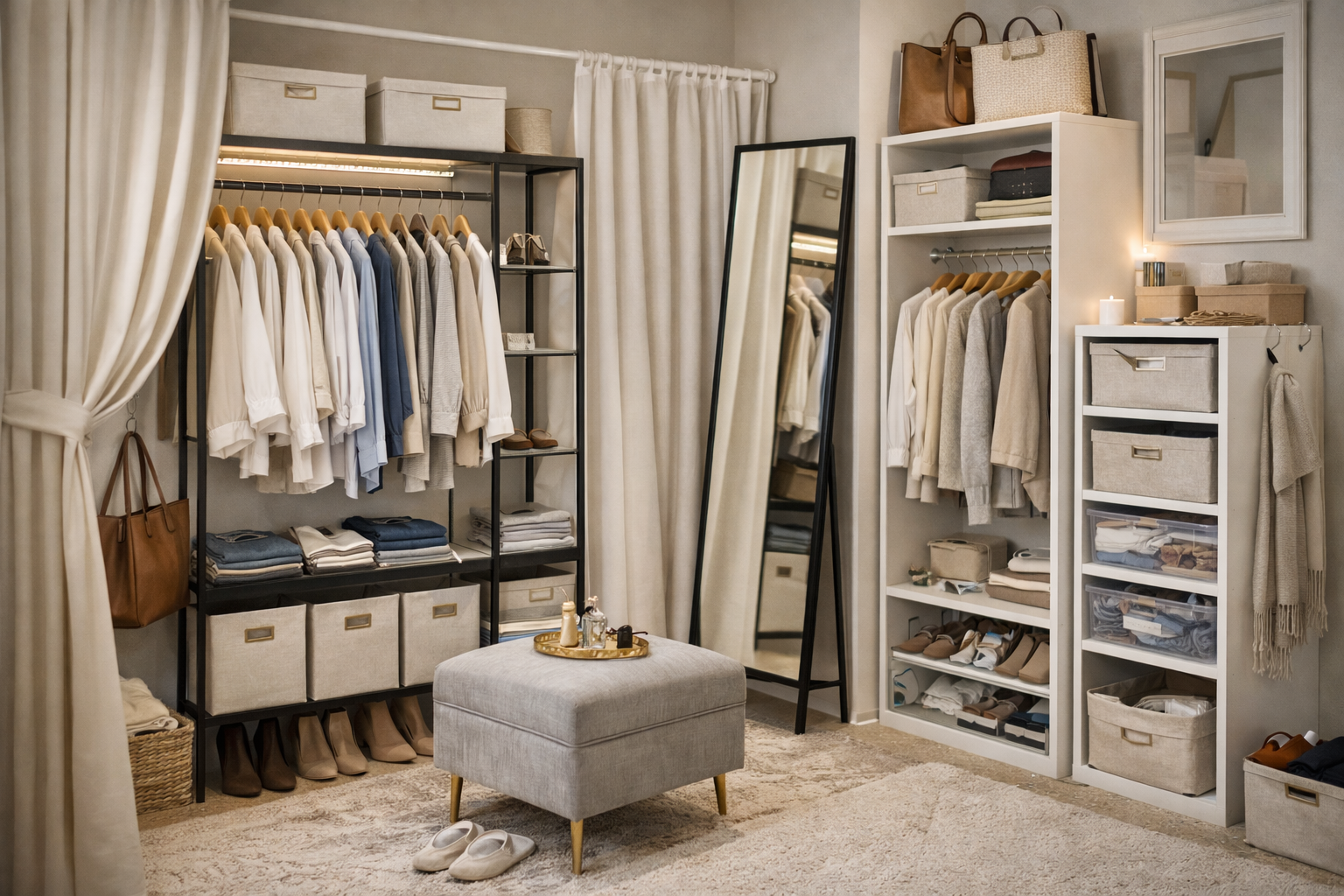
Let’s face it — walk-in closets are a dream for many, especially in small apartments. But most renters are stuck with narrow sliding-door closets or shallow alcoves that barely fit their wardrobe, let alone feel luxurious or practical.
Here’s the good news: you don’t need a renovation to create the feel of a walk-in closet.
With the right layout, furniture, lighting, and visual strategy, you can simulate the experience of a walk-in closet, even in a tight space.
This article will show you exactly how to create a walk-in effect in a rental or small home — without knocking down a single wall, drilling permanent holes, or spending a fortune.
And yes — everything you’ll learn here is landlord-friendly, budget-conscious, and fully reversible.
Let’s get started.
What Defines a Walk-In Closet — and Why You Crave It
Before you try to “fake” a walk-in closet, it helps to understand why it feels so appealing in the first place.
A walk-in closet gives you:
- Room to move freely between zones
- Visibility of all your items at once
- A dedicated area that feels like a mini dressing room
- Storage that supports daily flow, not just storage
- A calm and elevated emotional experience
It’s not just about more space. It’s about how that space makes you feel: in control, organized, and ready.
So how do we create those same feelings — in a much smaller layout?
Let’s break it down.
Step 1: Choose a Dedicated Closet Area (Even Outside the Closet)
To mimic a walk-in, you need to separate a small area of your home — even if it’s not technically inside the closet.
This could be:
- A corner of your bedroom
- The space beside a dresser
- A narrow hallway section
- An empty wall in your studio apartment
- The back side of a bookshelf
This “zone” becomes your dressing space, not just for storage.
It helps mentally shift how you interact with your wardrobe.
The walk-in feeling comes from having a place to view, change, and access — not just cram.
Step 2: Use Freestanding Open Storage Systems
Since you can’t build new walls, use freestanding furniture to mimic walk-in functionality.
Best options:
- Open wardrobe racks
- Cube shelving (for shoes, bags, and folded clothes)
- Narrow drawer units
- Rolling carts for accessories
- Vertical garment racks with shelves
Pro tip: Look for storage systems with open sides. It creates airflow, visibility, and simulates the “walk-around” feeling of a walk-in closet.
Combine two or three freestanding units side-by-side and you’ve got a personal dressing station — without touching the walls.
Step 3: Arrange Layout Like a Real Walk-In
Next, you’ll need to design the flow. Even in a small space, layout matters.
Here’s a mini walk-in closet layout you can copy:
🟢 Left side: Hanging rack with tops, dresses, jackets
🟢 Center: Low stool or ottoman + small mirror
🟢 Right side: Open shelving for folded items, bags, and shoes
🟢 Back wall or space behind: Drawer unit or hanging hooks for accessories
You don’t need to be able to walk in a full circle. You just need a sense of stations — like a boutique.
This makes your wardrobe feel intentional and luxurious.
Step 4: Add a Mirror — Full-Length If Possible
No walk-in closet is complete without a mirror.
If you have a blank wall nearby, add a full-length standing mirror.
If not, try:
- An over-the-door mirror
- A peel-and-stick wall mirror (renter-safe)
- A leaning mirror angled near your open rack
Why it works:
- It visually expands the space
- It enhances the “dressing room” effect
- It encourages you to use the area for outfit planning
It’s a small touch with major impact on daily usability.
Step 5: Bring in Lighting That Changes the Mood
Walk-in closets feel elevated because they’re usually well lit — often with soft, warm lighting that creates a sense of peace and intention.
If your current closet has bad lighting, or none at all, try this:
- Stick-on LED puck lights or strips
- Clamp-on lamps with warm-toned bulbs
- Battery-operated mini sconces
- Smart bulbs or lamps on timers
Place lighting:
- Above your racks
- Behind your mirror
- Near your accessory drawers
- On the floor facing upward (for indirect glow)
This adds depth, makes your clothes easier to see, and simulates that walk-in ambience without any wiring.
Step 6: Use Rugs, Stools, and Texture for Boutique Vibes
Want your faux walk-in closet to feel luxurious? Bring in home decor elements.
Try:
- A soft rug beneath your dressing zone
- A velvet or fabric ottoman
- A small stool for trying on shoes
- A tray for perfume, watches, or rings
- A small hanging art piece nearby
The walk-in feeling is as much about environment as it is about layout. These textures and comfort cues tell your brain, this is a personal space.
Step 7: Install Temporary Dividers to Define the Area
In an open room or studio, your “walk-in” might need more visual boundaries. You can fake walls without building any.
Options:
- Lightweight room dividers
- Tall shelving units (used as a wall)
- A tension curtain rod with sheer drapes
- Folding privacy screens
- Standing garment racks as visual walls
This is especially helpful if your closet area shares space with a bed or desk.
It instantly carves out a private wardrobe zone.
Step 8: Hide Visual Clutter to Maintain Calm
Here’s where most people lose the walk-in vibe: too much stuff in sight.
Even if your setup is functional, if it looks crowded, it won’t feel peaceful.
Fix it by:
- Using matching bins or baskets
- Covering lower shelves with fabric curtains
- Adding doors to open shelving (removable options exist)
- Rotating out-of-season clothes
Aim to leave empty space on shelves and hangers — it’s what gives luxury closets that “clean and curated” look.
Step 9: Store Items by Routine, Not by Type
To create that boutique feeling, organize your space based on how you dress — not just clothing categories.
For example:
- A section with workday outfits already grouped
- A small hook with today’s accessories and tomorrow’s bag
- A drawer with all lounge clothes in one place
- A shoe tray with your 3 most-used pairs
This kind of system reduces friction and reinforces the idea that this is a daily-use, walk-in experience — not a cramped closet you avoid.
Step 10: Keep It Fresh With Seasonal Rotation
Luxury walk-in closets aren’t just big — they’re well-maintained.
To keep your setup feeling fresh:
- Every 3 months, rotate clothes forward/back based on season
- Change your rug or decorative items
- Clean shelves and re-fold stackable items
- Review and remove anything you haven’t worn
Even in a small setup, these small seasonal resets help your space feel like a living environment, not just storage.
Bonus: Add a Scent Element
You can even appeal to your sense of smell to recreate the luxury closet experience.
Try:
- A small reed diffuser near your rack
- A sachet in your drawers
- A mini essential oil diffuser (USB or battery-powered)
Scents like cedar, lavender, or sandalwood make your “walk-in” feel clean, elegant, and elevated.
Real-Life Micro Walk-In Setups That Work
Studio Apartment Closet Zone
Layout: Garment rack + drawer unit + mirror
Additions: Curtain divider, rug, stick-on lights
Result: No closet used — full walk-in experience in 4 feet of space.
Shared Bedroom Setup
Layout: Open cube shelf + shared hanging rack
Additions: His-and-hers baskets, individual hooks, dual mirrors
Result: Peaceful dressing zones even with limited space and two people.
Hallway Dressing Nook
Layout: Tall shelving unit + rotating mirror
Additions: Hidden baskets for shoes, seasonal rotation drawer
Result: Created a closet feel in an unused corridor.
Final Thoughts: Walk-In Closets Are a Feeling — Not a Blueprint
You don’t need more square footage to enjoy a walk-in closet vibe.
You just need:
- A defined dressing area
- Open and freestanding storage
- Light, mirrors, and texture
- Systems built around your routine
- Decor that supports peace and functionality
The key is intention. When your closet space is designed around your life — not just your stuff — it becomes more than storage.
It becomes a daily experience you look forward to.

Ryan Lewis is a home organization enthusiast who specializes in smart, renter-friendly solutions for small spaces. With a passion for functional design and practical living, Alex shares tips, guides, and ideas to help readers create calm, clutter-free environments—no matter the size of their home.