
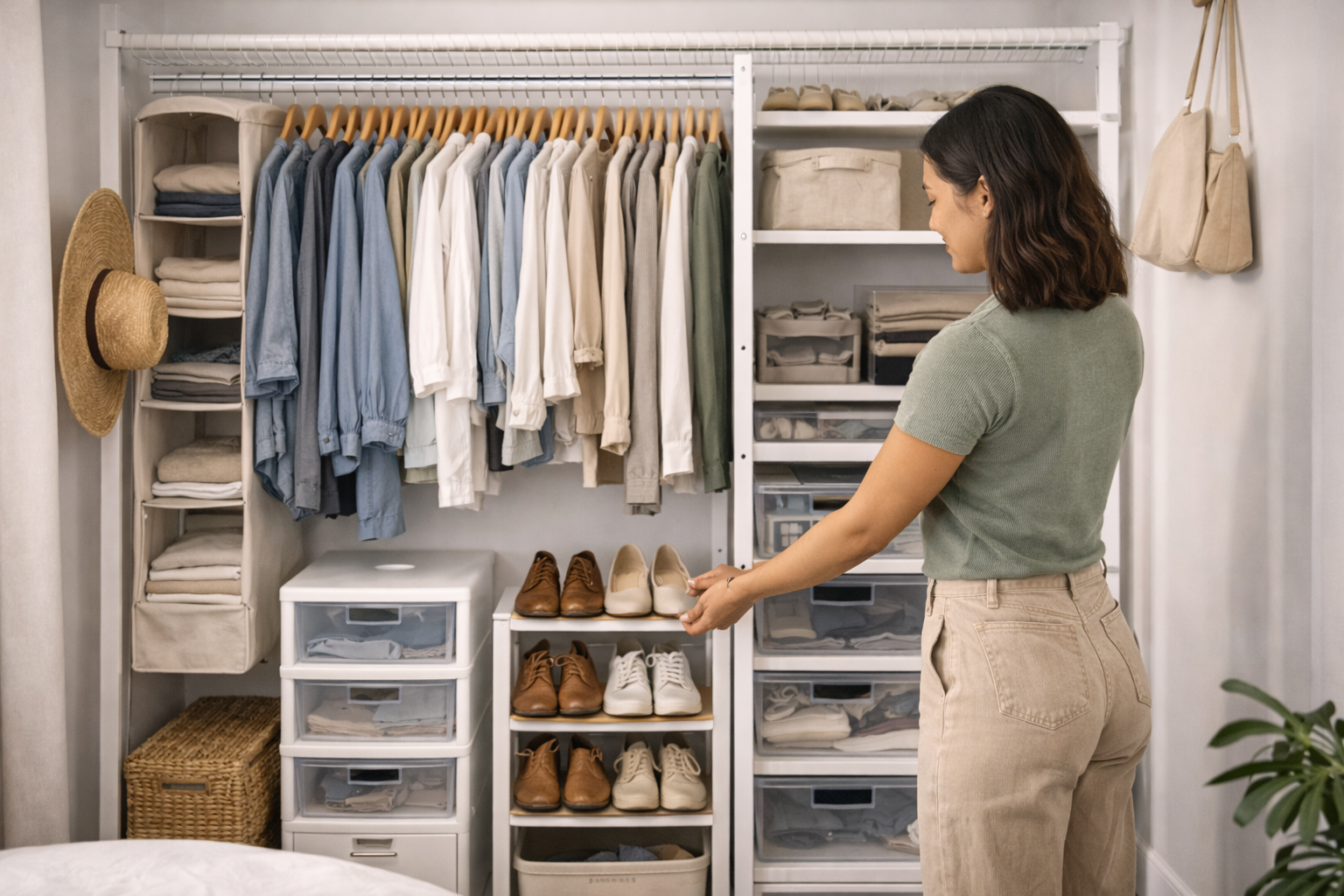
Living in an apartment with limited storage forces you to be intentional. Closets are often small, shallow, or poorly positioned, and there is rarely extra room to absorb clutter.
In these apartments, organization is not about perfection. It is about creating a layout that supports daily life without constantly fighting the space.
When storage is limited, poor layout decisions quickly become visible. Clothes pile up, shoes spread across the floor, and items that are rarely used take up space needed for essentials.
A well-planned closet layout, on the other hand, creates clarity, reduces stress, and makes the apartment feel more functional overall.
This article explores closet organization tips specifically for apartments with limited storage, focusing on layout strategies that help renters and small-space dwellers make the most of what they have.
Why Limited Storage Requires a Layout-First Mindset
In apartments with limited storage, adding more organizers without a plan often backfires. Extra shelves or bins may increase volume, but they also increase visual clutter and reduce accessibility.
A layout-first mindset prioritizes how space is used rather than how much space is filled. It asks practical questions. Where do items need to be accessed daily? Which items can be stored less conveniently? How can movement be preserved?
When layout leads the process, storage works with the apartment instead of against it.
Understanding Storage Pressure Points
Limited storage apartments usually suffer from specific pressure points. These are areas where items accumulate because there is no clear place for them.
Common pressure points include shoes near the closet entrance, folded clothes stacked on shelves without boundaries, and accessories scattered across multiple locations. Identifying these pressure points helps guide layout decisions.
A successful layout relieves pressure rather than redistributing it.
Using Vertical Space Strategically
Vertical space is one of the most valuable resources in apartments with limited storage. However, it must be used carefully to avoid visual overload.
Tall storage elements work best when they are slim and aligned. Hanging shelves, stacked bins, and narrow freestanding units increase capacity without spreading outward.
Vertical layouts reduce reliance on floor space and keep the apartment feeling more open.
Designing Hanging Space for Maximum Efficiency
Hanging space is often misused in small apartments. A single overcrowded rod forces clothes to overlap and hides items in the back.
Separating hanging space by garment length improves efficiency. Short items such as shirts and folded pants can hang lower, while long garments are grouped together.
This layout creates visual order and improves access, even when storage is limited.
Integrating Folded Storage Without Creating Bulk
Folded clothing requires boundaries. Without them, stacks collapse and clutter returns quickly.
In apartments with limited storage, folded items should be stored in slim drawers, narrow shelves, or hanging organizers. These solutions keep items contained without consuming excess space.
Integrating folded storage into the closet reduces the need for additional furniture elsewhere in the apartment.
Creating a Shoe Layout That Preserves Space
Shoes are often the biggest challenge in limited-storage apartments. Floor piles block access and create visual clutter.
Vertical shoe racks, stacked shelves, or interior door organizers help contain shoes without using valuable floor area. Keeping daily shoes separate from occasional ones improves efficiency.
A defined shoe layout prevents overflow into living spaces.
Using Closet Doors as Hidden Storage Zones
Closet doors are often overlooked in apartments with limited storage. Interior door storage adds capacity without affecting the room layout.
Over-the-door organizers work well for shoes, accessories, and lightweight items. Because they remain hidden when the door is closed, they preserve visual simplicity.
Using doors as storage zones reduces pressure on interior closet space.
Creating Clear Zones to Control Clutter
Limited storage requires discipline. Without zones, items migrate and clutter spreads quickly.
Clear zones give every item a home. A hanging zone, folded items zone, shoe zone, and accessories zone create structure without permanent installation.
Zoning simplifies maintenance and makes organization more intuitive.
Choosing Slim and Multi-Purpose Organizers
In limited-storage apartments, every organizer should earn its place. Slim and multi-purpose organizers deliver more value without taking up extra space.
Examples include drawer units that fit under hanging clothes or shelves that double as folded storage and container support. Multi-use elements reduce clutter by consolidating functions.
Choosing fewer, better organizers often leads to better results.
Managing Seasonal Items Without Overflow
Seasonal clothing adds pressure to limited storage. Without a plan, it quickly overwhelms closets.
A layout that accounts for seasonal rotation keeps storage balanced. Daily-use items stay accessible, while seasonal items move to higher or less convenient zones.
Rotating items seasonally prevents the closet from becoming overloaded.
Using Containers to Improve Visibility and Order
Containers help control clutter in limited spaces. They group similar items and reduce visual noise.
Shallow bins, labeled boxes, and narrow baskets keep items contained without blocking access. Uniform containers also improve visual balance.
Containers work best when sized intentionally for the space available.
Avoiding Storage Decisions That Reduce Access
One common mistake in limited-storage apartments is prioritizing capacity over access. Deep shelves, oversized bins, and stacked piles make items harder to reach.
Accessibility should always guide layout decisions. If accessing an item requires moving multiple other items, the layout needs adjustment.
Access-first layouts perform better over time.
Using Lighting to Support Limited Storage Layouts
Poor lighting makes limited storage feel worse than it is. Dark closets hide items and increase frustration.
Portable lighting improves visibility without installation. Battery-powered or motion-activated lights enhance access and support organization habits.
Lighting changes perception and usability.
Adapting Layouts as Storage Needs Change
Storage needs evolve. Wardrobes change, lifestyles shift, and space requirements grow or shrink.
A flexible layout adapts to these changes. Modular organizers, adjustable shelves, and movable bins allow reconfiguration without redesign.
Flexibility is essential in apartments with limited storage.
Maintaining Organization With Limited Space
Limited storage leaves little room for neglect. Small lapses quickly become visible.
Regular decluttering, seasonal reviews, and small adjustments help maintain balance. When layout supports habits, maintenance requires less effort.
Consistency preserves functionality.
Avoiding the Trap of Overfilling
One of the most damaging habits in limited-storage apartments is overfilling. Trying to store too much undermines even the best layout.
Accepting limits is part of effective organization. When storage is respected, the apartment feels calmer and easier to manage.
Restraint improves function.
Why Thoughtful Layout Beats More Storage
In apartments with limited storage, layout determines success. More storage without layout creates chaos.
Thoughtful layout supports access, visibility, and flow. It allows renters to live comfortably within real constraints.
A well-planned closet often feels larger than it is.
Frequently Asked Questions
How do renters organize closets with very limited storage?
By prioritizing layout, using vertical space, and creating clear zones.
Is it better to store fewer items?
Yes. Limited storage works best when it supports essentials rather than excess.
Can limited storage still feel organized?
Absolutely. Clear layout and disciplined zoning make a big difference.
What organizers work best in limited-storage apartments?
Slim, modular, and multi-purpose organizers provide the most value.
How often should limited-storage closets be reviewed?
At least seasonally, or whenever storage needs change.

Ryan Lewis is a home organization enthusiast who specializes in smart, renter-friendly solutions for small spaces. With a passion for functional design and practical living, Alex shares tips, guides, and ideas to help readers create calm, clutter-free environments—no matter the size of their home.