
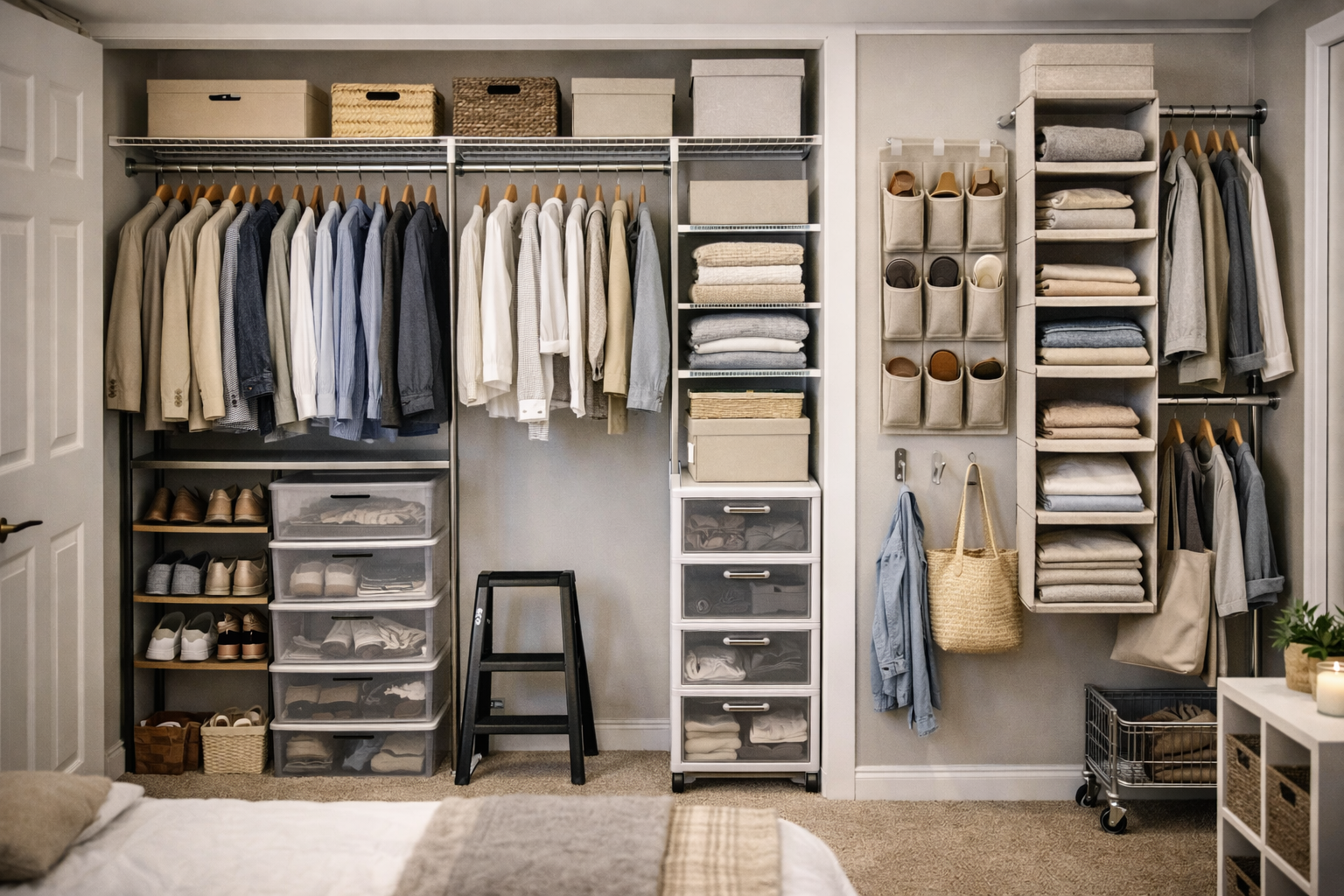
Closets are some of the most underutilized spaces in rental apartments — and in most cases, the vertical space is what gets wasted the most.
While many people focus on the floor or eye-level shelves, the truth is that the height of your closet holds enormous potential.
Whether you’re working with a narrow reach-in closet or an open wardrobe setup, using the vertical plane can drastically increase your storage capacity.
But there’s a catch: you need to do it right. If you overload the space vertically without planning, your closet will feel cramped, chaotic, and hard to access.
In this article, we’ll show you how to strategically maximize vertical closet space without sacrificing comfort, style, or usability.
Why Vertical Space Matters More Than You Think
Most closets only have one hanging rod and one shelf. That’s it. Everything above or below that is often wasted — even though it’s prime real estate.
By ignoring the full height of your closet, you’re basically using only 50% or less of the total space. When you consider that many rental apartments come with limited storage options, this is a major missed opportunity.
Using vertical space efficiently allows you to:
- Store more items without cluttering the floor
- Keep frequently used things at eye level
- Reduce the need for extra furniture
- Make your closet look and feel more organized
The key is finding balance — stacking without stuffing, organizing without overwhelming.
Step 1: Evaluate Your Closet’s Height and Layout
Before you start organizing, take a few minutes to assess:
- Total height from floor to ceiling
- Rod placement and how much clearance is above and below it
- Shelf positions and whether they can be adjusted
- Empty wall space along the sides or back
- Closet depth to see how far you can safely reach or stack
This quick review will help you create a vertical storage plan based on your actual space, not just assumptions.
Step 2: Divide Your Closet into Vertical Zones
To keep your closet functional, divide it into three vertical zones:
1. Lower Zone (0–36 inches from the floor)
Perfect for shoes, storage bins, rolling carts, or laundry baskets.
2. Middle Zone (waist to eye level)
Reserve this area for daily essentials: hanging clothes, drawers, or open shelves with items you use often.
3. Upper Zone (above eye level)
Best for seasonal storage, extra bedding, or items you don’t use daily (but still need accessible).
This structure keeps the space usable, balanced, and easy to navigate — no matter how much you store.
Step 3: Add a Second Hanging Rod
If your closet has just one rod, you’re wasting a huge amount of vertical space underneath it.
Installing a second hanging rod (especially in modular or tension style) instantly doubles the amount of hanging room — especially useful for shorter items like shirts, skirts, and pants.
Tips:
- Place the second rod about 40 inches below the top one.
- Only use for items that won’t drag on the floor.
- Use slim, uniform hangers to save even more space.
This one change can dramatically increase efficiency, especially in rental apartments with narrow closets.
Step 4: Use Hanging Shelf Organizers
Fabric hanging shelves that attach to your closet rod are one of the easiest ways to claim vertical space without tools. These work great for folded clothes, bags, shoes, or accessories.
Advantages:
- Lightweight and collapsible
- No wall damage
- Easy to relocate
- Ideal for renters
For extra storage, place small baskets or bins inside the hanging shelves to hold socks, belts, or undergarments.
Step 5: Stackable Bins and Boxes
The floor of most closets is a clutter trap — but with stackable storage bins, it becomes a super-productive zone.
Look for:
- Clear plastic bins for visibility
- Fabric bins for a softer look
- Lidded boxes to reduce dust
- Uniform sizes for safe stacking
You can stack 2–3 levels high depending on your closet height. Just make sure you leave some room between the top bin and the lowest hanging clothes so everything stays accessible.
Step 6: Use Overhead Shelving Effectively
That single built-in shelf at the top of most closets? It’s useful — but it’s not enough.
If you have room above it, consider:
- Adding a second upper shelf for long-term storage
- Using shelf risers to create two levels on one shelf
- Placing matching bins or boxes for a clean, cohesive look
Remember: the goal is to go up without making the space hard to reach. Use lightweight containers or seasonal items you don’t need access to every week.
Step 7: Take Advantage of Closet Door Height
If your closet has doors, especially hinged ones, you can take advantage of their full vertical span.
Install:
- Over-the-door shoe organizers
- Pocket panels for accessories
- Long vertical racks for scarves or jewelry
These solutions don’t just add vertical storage — they also help reduce crowding inside the closet itself.
Step 8: Mount or Lean Tall Storage Units (If Allowed)
If your lease permits or if you’re organizing outside of a built-in closet (like in a walk-in or open wardrobe), tall storage towers can be a game-changer.
Options include:
- Bookshelf-style units
- Narrow drawer towers
- Slim cube organizers
Even better? Some of these can be leaned against the closet wall without permanent installation, making them renter-safe but still space-maximizing.
Step 9: Use Slim Vertical Hangers
Want to hang multiple items vertically on the same hanger space? Use space-saving vertical hangers, also known as cascading or tiered hangers.
These hangers:
- Stack multiple garments downward
- Hang off the same rod hook
- Create visual order and save horizontal space
They’re ideal for T-shirts, tank tops, scarves, or even jeans.
Step 10: Store Vertically Inside Drawers
Vertical space isn’t just for hanging and shelving. You can also store inside drawers more efficiently by folding vertically (like the KonMari method).
Benefits:
- Fits more items per drawer
- Keeps everything visible at once
- Reduces clutter and disorganization
Use drawer dividers to support this method and avoid items toppling over.
Bonus Tip: Use Step Stools or Closet Ladders
To make the most of vertical space, you’ll sometimes need to reach up — especially when storing things on high shelves.
Keep a slim step stool or folding ladder nearby. Choose one that:
- Stores flat or folds easily
- Can support safe weight
- Is stylish enough to keep out
This makes upper storage actually usable — not just decorative.
Keep It Balanced: Avoid the “Overstacked” Look
Maximizing vertical space doesn’t mean filling every inch to the ceiling. Too much stacking can lead to:
- Visual clutter
- Difficulty accessing items
- Items falling over
Here’s how to avoid the “cramped closet” feel:
- Leave a few inches of open space at the top of stacks
- Keep the floor visible where possible
- Avoid placing heavy or hard-to-reach items too high
- Stick to neutral color palettes to reduce visual noise
Product Suggestions That Use Vertical Space Smartly
Looking for real-world tools to make the most of your height? Try these:
- IKEA BOAXEL or ALGOT systems (modular and renter-friendly)
- ClosetMaid stackable organizers
- Umbra over-the-door solutions
- Clear stackable shoe drawers
- Fabric hanging organizers from Amazon or The Container Store
These products combine function and simplicity without damaging your space.
Why Vertical Storage Feels Better — Psychologically
A well-structured vertical space gives the illusion of a taller, more organized room. It pulls the eye upward, creating a sense of balance and openness, even in small closets.
In contrast, horizontal clutter makes a space feel squat, tight, and closed-in. When vertical storage is used with intention, it feels more like a design choice than a last resort.
Final Thoughts: Think Up, Not Out
In rental apartments, space is precious — and closets are often too small for modern life. But vertical space gives you room to breathe, without requiring major renovations or permanent changes.
Whether you’re using hanging shelves, stackable bins, over-the-door organizers, or double rods, the goal is the same: use the full height of your closet without making it feel overloaded.
With a few smart tools and a well-planned layout, your closet can go from underwhelming to ultra-efficient — all while keeping your lease agreement 100% intact.

Ryan Lewis is a home organization enthusiast who specializes in smart, renter-friendly solutions for small spaces. With a passion for functional design and practical living, Alex shares tips, guides, and ideas to help readers create calm, clutter-free environments—no matter the size of their home.