
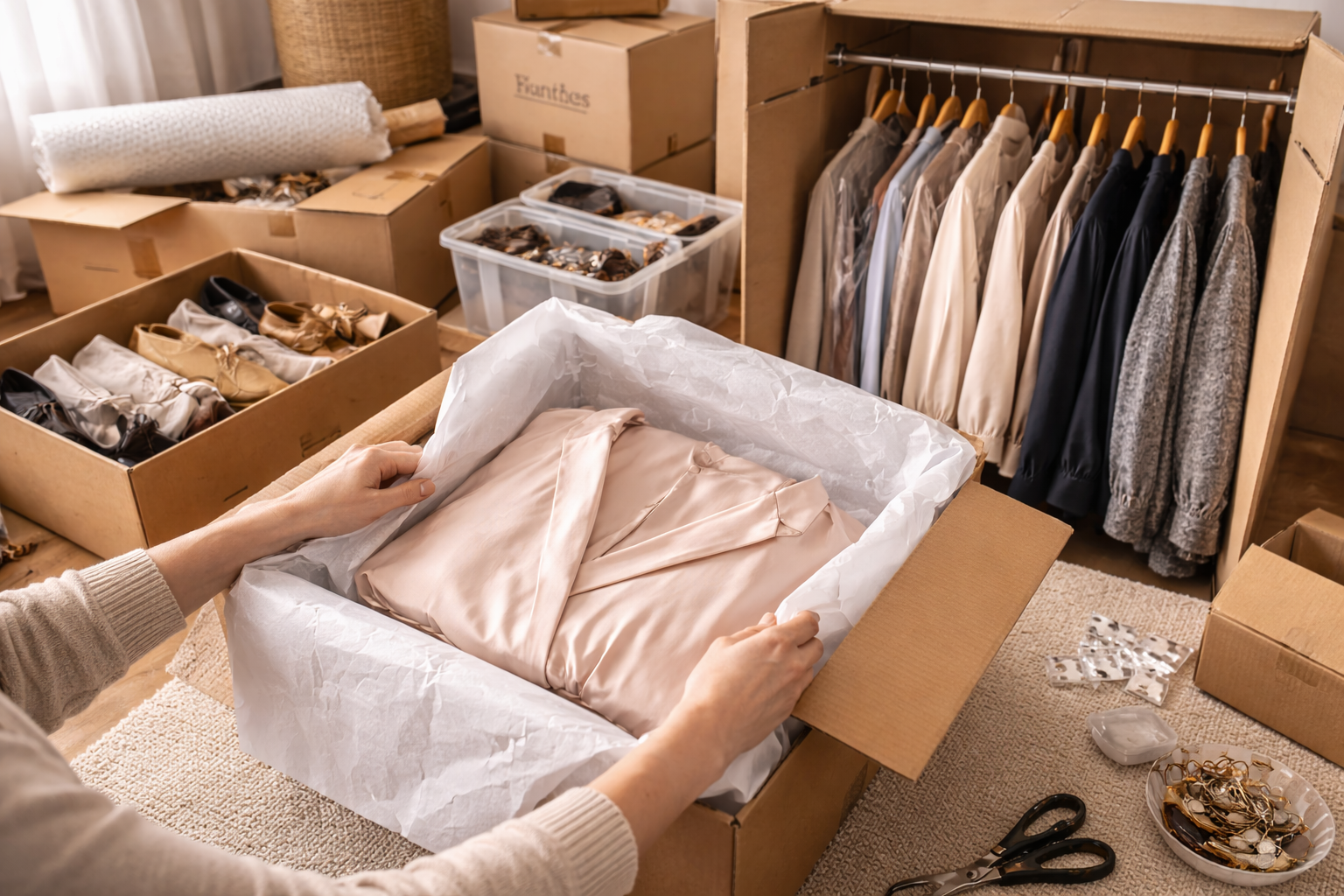
Moving is stressful enough without adding damaged clothing, broken hangers, or crushed shoes to the list of problems.
Unfortunately, closet items are often packed in a rush, treated as soft and “easy,” and end up arriving wrinkled, stretched, stained, or even torn.
Protecting your wardrobe during a move requires more than simply placing clothes into boxes.
It requires strategy, proper materials, and an understanding of how different fabrics and items react to pressure, humidity, and transportation.
If you want your closet to arrive in the same condition it left, here is how to prevent closet damage during a move and protect your wardrobe properly.
Understand the Most Common Types of Closet Damage
Before you can prevent damage, you need to understand what typically goes wrong during a move.
The most common issues include:
Wrinkling from compression
Fabric stretching from improper hanging
Moisture damage during long-distance transport
Scuffed or deformed shoes
Broken accessories
Lost small items
When clothes are packed without structure, they shift inside boxes. Movement causes friction, pressure, and shape distortion.
Prevention starts with awareness.
Use the Right Packing Materials
Quality packing materials make a significant difference.
Essential materials include:
Wardrobe boxes with hanging rods
Acid-free tissue paper
Sturdy moving boxes
Plastic bins with secure lids
Garment bags
Shoe boxes or dust bags
Avoid overused, weak cardboard that can collapse under weight. Cheap boxes increase the risk of crushing and moisture exposure.
Investing in proper materials protects valuable clothing.
Pack Hanging Clothes Correctly
For delicate garments such as blazers, dresses, coats, and structured pieces, wardrobe boxes are the safest option.
Transfer clothing directly from the closet rod into the wardrobe box without removing hangers. Keep similar garments grouped together to prevent overcrowding.
Do not overload each box. Too many garments in one wardrobe box create pressure and wrinkling.
If wardrobe boxes are not available, fold carefully using tissue paper between layers to reduce creasing.
Protect Delicate Fabrics
Certain fabrics require extra care, including:
Silk
Linen
Wool
Cashmere
Satin
Wrap delicate garments in acid-free tissue paper before placing them in boxes. Avoid plastic wrapping for long-distance moves, as plastic can trap moisture.
Moisture combined with heat can lead to mildew or fabric odor.
Breathable protection is safer for sensitive materials.
Prevent Shoe Damage
Shoes are often thrown into boxes loosely, which leads to scratches and deformation.
To prevent damage:
Clean shoes before packing
Insert tissue paper or shoe trees to maintain shape
Wrap each shoe individually
Place heavier shoes at the bottom of boxes
Keep delicate shoes separate
High heels and leather shoes are especially vulnerable to scuffs during transport.
Structure inside the box prevents movement and friction.
Secure Jewelry and Accessories
Accessories are small but fragile.
Store jewelry in individual pouches or compartment organizers. Wrap belts and place them flat. Store handbags upright and fill them with soft clothing to maintain shape.
Do not leave accessories loose inside large boxes.
Small items are easily lost during moves.
Containment prevents confusion and damage.
Control Moisture Exposure
Moisture is one of the biggest risks during long-distance or seasonal moves.
If you are moving during humid weather or storing items temporarily, consider adding silica gel packets or moisture absorbers inside boxes.
Avoid placing clothing boxes directly on truck floors without protection. Elevate them if possible.
Keeping fabrics dry protects against odor, mildew, and staining.
Avoid Overpacking Boxes
Overpacked boxes increase pressure on garments. Compression leads to deep wrinkles and fabric distortion.
Fill boxes only to a manageable weight. If there is empty space inside, use soft items like folded T-shirts to fill gaps and prevent shifting.
Balanced packing reduces internal movement during transportation.
Separate Heavy and Light Items
Do not pack shoes, heavy jackets, and delicate blouses together.
Weight imbalance inside boxes increases the risk of crushing lighter fabrics.
Group items by weight and material type. This protects fragile garments from pressure damage.
Organization inside the box is as important as organization in the closet.
Keep a Personal Wardrobe Bag
For valuable or essential pieces, keep them with you rather than loading them onto the moving truck.
Carry:
One or two professional outfits
Special occasion garments
Sentimental clothing
Keeping critical pieces under your supervision reduces anxiety and risk.
Not everything must travel with the movers.
Label Boxes Clearly
Proper labeling prevents careless handling.
Mark boxes with labels such as:
Fragile Clothing
Shoes – Do Not Crush
Delicate Fabrics
This Side Up
Clear labeling encourages careful stacking and unloading.
Communication protects your belongings.
Unpack Immediately Upon Arrival
The longer clothes remain compressed, the higher the chance of deep wrinkles or moisture buildup.
As soon as possible:
Remove hanging garments from boxes
Air out folded clothes
Inspect shoes
Rehang delicate pieces
Quick unpacking allows fabrics to recover naturally.
Delayed unpacking increases damage risk.
Inspect for Issues Early
After unpacking, check for:
Stains
Mildew smell
Fabric stretching
Loose buttons
Broken zippers
Addressing small issues early prevents permanent damage.
Minor wrinkles can often be fixed with steaming. Early detection saves repairs.
Avoid Temporary Storage Risks
If your clothing must remain in storage for days or weeks, choose climate-controlled storage when possible.
Extreme temperatures and humidity levels can damage fabrics, especially natural fibers.
Proper storage conditions preserve quality.
Maintain a Long-Term Protection Mindset
Closet protection should not begin only on moving day. Build habits that support safe transport long-term.
Use quality hangers year-round. Store off-season clothing properly. Avoid overcrowding.
When your wardrobe is well maintained before the move, it is easier to protect during the move.
Preparation always reduces risk.
Final Thoughts: Move Your Wardrobe With Care
Your clothing represents time, money, and personal style. Treating it casually during a move can lead to avoidable damage.
By using proper materials, packing strategically, protecting delicate fabrics, and unpacking quickly, you preserve your wardrobe’s quality.
Moving does not have to mean wrinkled suits or damaged shoes.
When you protect your closet intentionally, you arrive at your new apartment ready to organize instead of repair.
Preparation transforms stress into control.

Ryan Lewis is a home organization enthusiast who specializes in smart, renter-friendly solutions for small spaces. With a passion for functional design and practical living, Alex shares tips, guides, and ideas to help readers create calm, clutter-free environments—no matter the size of their home.