
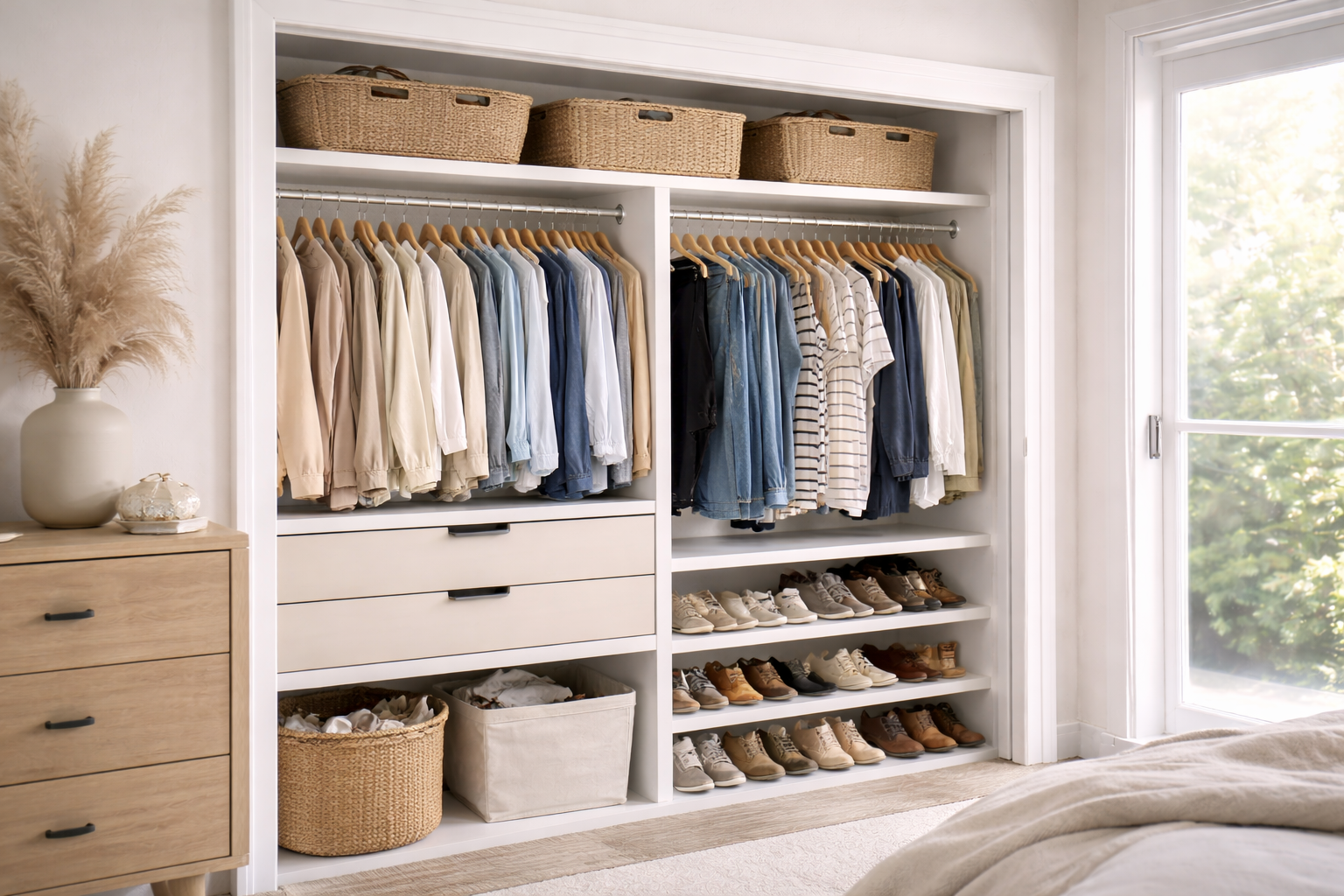
Organizing a closet in a small bedroom apartment requires a very specific approach.
Unlike larger homes, where closets can absorb inefficiencies, small bedroom apartments expose every organizational mistake quickly.
When space is limited, layout decisions affect not only storage but also comfort, movement, and even sleep quality.
In these apartments, the closet is not an isolated area. It is part of the bedroom environment. Poor organization can make the room feel crowded, while a well-planned layout can make the entire apartment feel more open and calm.
This article focuses on how to organize a closet in a small bedroom apartment by using layout strategies that respect limited space and support everyday living.
Why Bedroom Closets Require a Different Layout Strategy
A closet inside a small bedroom competes with the bed, nightstands, walking paths, and sometimes a desk or dresser. Unlike hallway closets, bedroom closets directly influence how spacious the room feels.
When closet layouts are bulky or poorly planned, they visually and physically shrink the bedroom. That is why organization in these apartments must prioritize flow and balance, not just storage volume.
The goal is to support the bedroom, not overwhelm it.
Understanding the Relationship Between Closet and Bedroom Space
Before organizing, it is important to view the closet as part of the bedroom layout. The way the closet opens, the direction doors swing, and how much clearance exists around it all matter.
If the closet is too crowded, doors may not open fully. If storage extends too far into the room, walking paths become tight. These issues affect daily comfort.
Good organization respects circulation space and keeps the bedroom functional.
Choosing Layouts That Preserve Walking Space
In small bedroom apartments, walking space is critical. Any closet layout that blocks movement will feel oppressive.
Slim organizers, vertical storage, and recessed layouts preserve floor space. Avoid deep shelves or bulky units that protrude into the room.
Keeping storage aligned with walls or inside the closet footprint maintains a sense of openness.
Using Vertical Layouts to Reduce Bedroom Clutter
Vertical layouts help keep storage compact. By stacking storage upward instead of outward, renters preserve bedroom floor space.
Tall freestanding units, hanging shelves, and stacked bins allow items to be stored without spreading horizontally. This approach keeps the bedroom visually lighter.
Vertical layouts also draw the eye upward, making the room feel taller.
Creating a Balanced Hanging Layout Inside Bedroom Closets
Bedroom closets often include a single rod that holds everything. This leads to overcrowding and poor visibility.
Separating hanging space by garment length improves balance. Short items can hang lower, while long items stay higher. This layout prevents bunching and makes clothing easier to access.
Balanced hanging layouts reduce visual clutter inside the bedroom.
Designing a Folded Clothing Area Without Bulky Furniture
Dressers often take up too much space in small bedrooms. Integrating folded clothing storage into the closet layout reduces the need for extra furniture.
Slim drawer units, hanging shelves, and narrow cubbies can hold folded items efficiently. Keeping folded storage inside the closet frees up bedroom floor space.
This integration supports a cleaner, more open room.
Managing Shoes Without Taking Over the Bedroom
Shoes stored on the bedroom floor quickly create clutter. In small apartments, shoe layout must be intentional.
Using vertical shoe racks, stackable shelves, or door-based storage keeps shoes contained. Placing shoe storage inside the closet prevents visual overflow into the bedroom.
Separating daily shoes from occasional ones also improves order.
Using Closet Doors to Control Visual Impact
Closet doors play a significant role in bedroom perception. When storage spills out visually, the room feels crowded.
Over-the-door organizers placed on the inside of closet doors add storage without affecting the bedroom view. Keeping organizers hidden maintains a clean aesthetic.
This approach balances function and appearance.
Creating Zones That Support Daily Routines
In a bedroom closet, organization should support morning and evening routines. Items used daily should be easy to reach, while occasional items stay higher or deeper.
Creating zones based on use frequency reduces friction. A daily wear zone, a folded items zone, and an accessories zone make routines smoother.
When routines are supported, organization lasts longer.
Choosing Neutral Layouts That Blend With the Bedroom
Because the closet is visually connected to the bedroom, loud or bulky storage can feel intrusive. Neutral colors and simple forms help the closet blend into the room.
Matching storage tones to wall colors or furniture reduces visual noise. This creates a calmer bedroom environment.
Layout is not only about function but also visual harmony.
Avoiding Layout Choices That Make Bedrooms Feel Smaller
Certain layout choices unintentionally shrink bedrooms. Deep shelving, open clutter, and overcrowded rods create visual heaviness.
Avoid layouts that block light or sightlines. Keep storage compact and contained.
A lighter visual footprint makes small bedrooms feel more spacious.
Using Modular Layouts for Changing Needs
Bedroom needs change over time. Work-from-home setups, wardrobe changes, or shared living situations affect storage demands.
Modular layouts allow adjustment without redesign. Shelves can move, bins can shift, and hanging space can adapt.
Flexibility is essential in small bedroom apartments.
Managing Seasonal Storage Without Bedroom Overflow
Seasonal clothing often overwhelms small bedroom closets. Layout planning helps prevent overflow.
Store seasonal items higher or in contained boxes. Rotate items as seasons change instead of storing everything at once.
This strategy keeps the bedroom functional year-round.
Maintaining a Calm Bedroom Through Closet Layout
Clutter affects sleep and relaxation. A well-organized closet supports a calmer bedroom environment.
Keeping items contained, aligned, and visually minimal reduces mental noise. This makes the bedroom more restful.
Organization is part of comfort, not just storage.
Why Closet Layout Impacts Small Bedroom Living
In small bedroom apartments, the closet is not separate from daily life. Its layout affects movement, mood, and comfort.
A thoughtful layout supports routines and preserves space. Poor layout does the opposite.
Focusing on layout rather than volume leads to better results.
Frequently Asked Questions
Why do bedroom closets feel more restrictive than other closets?
Because they share space with sleeping and movement areas, making inefficiencies more noticeable.
What is the best layout for closets in small bedrooms?
Vertical, slim layouts with clear zones usually work best.
Should folded clothes stay inside the closet?
Yes. Integrating folded storage reduces the need for bulky bedroom furniture.
How do renters keep bedrooms from feeling cluttered?
By containing storage inside the closet and maintaining visual simplicity.
Can closet layout really improve bedroom comfort?
Yes. Better layout improves flow, reduces clutter, and supports daily routines.

Ryan Lewis is a home organization enthusiast who specializes in smart, renter-friendly solutions for small spaces. With a passion for functional design and practical living, Alex shares tips, guides, and ideas to help readers create calm, clutter-free environments—no matter the size of their home.