
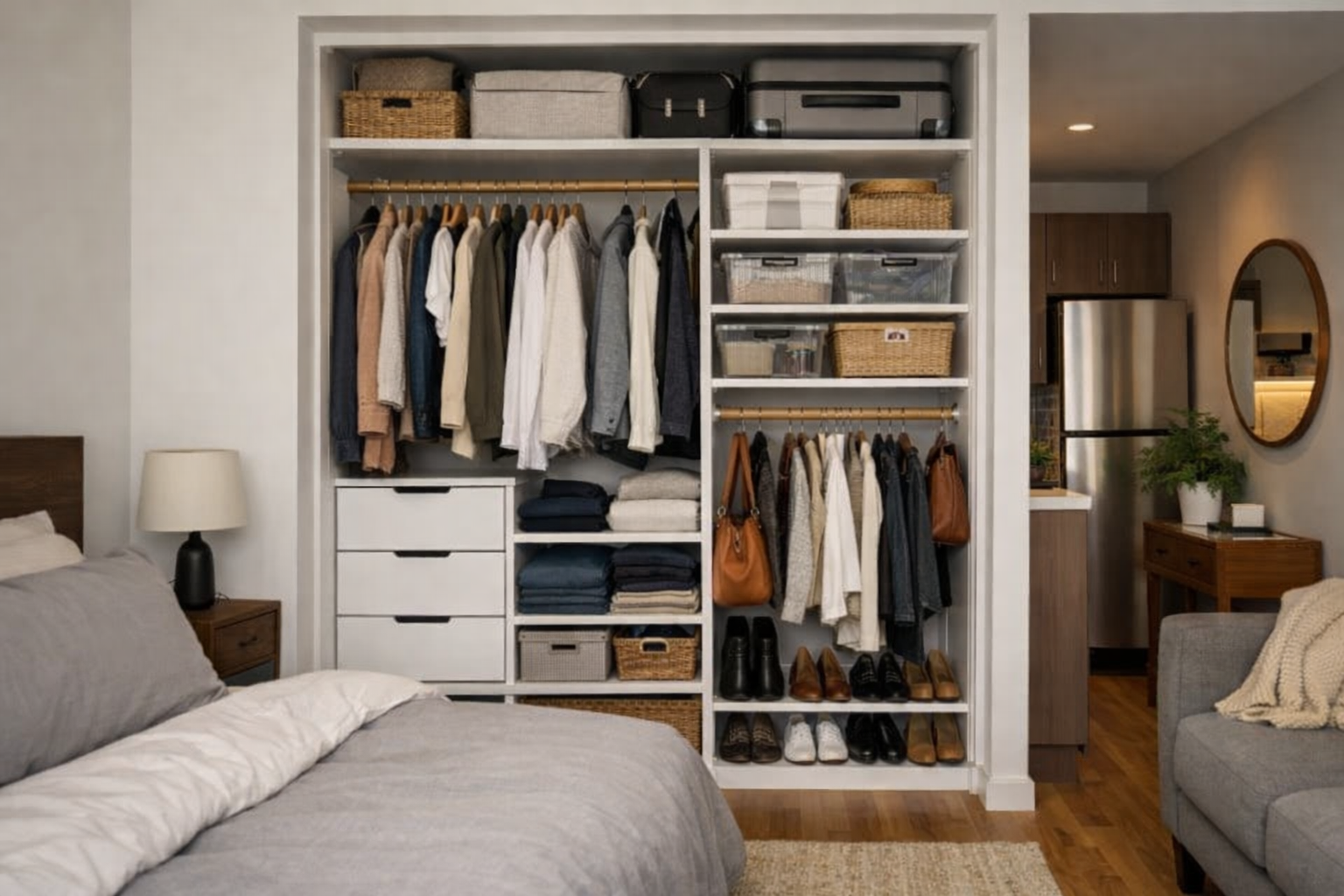
Designing a functional closet in a small apartment is less about buying organizers and more about making intentional layout decisions.
In limited spaces, every choice has consequences. A poorly designed closet quickly becomes a source of daily frustration, while a thoughtful design can quietly support routines, reduce clutter, and make the entire apartment feel more livable.
Small apartments expose inefficiencies. There is no extra room to absorb mistakes, and clutter spreads quickly.
Because of this, closet design must prioritize function, flow, and balance rather than volume alone. A functional closet does not try to store everything. It stores the right things in the right way.
This article explores how to design a functional closet in a small apartment by focusing on layout principles that support everyday life and adapt over time.
What a Functional Closet Really Means in Small Apartments
Functionality in a small apartment closet is not about maximizing storage at all costs. It is about usability.
A functional closet allows you to find items easily, return them without effort, and maintain order without constant reorganization.
In small apartments, functionality also means restraint. When closets are overfilled, they become difficult to use. Items pile up, visibility drops, and frustration increases.
A functional closet supports daily routines first and storage second. This priority shift is what separates effective design from cluttered solutions.
Starting With Realistic Storage Goals
Many small apartment closets fail because they are designed around unrealistic expectations. Trying to fit an oversized wardrobe into a compact space leads to overcrowding and constant friction.
A functional design begins with honest evaluation. Identify which items are worn regularly, which are seasonal, and which are rarely used. This assessment informs how much storage is actually required.
Designing around real usage patterns prevents the closet from becoming overloaded from the start.
Understanding the Closet’s Physical Constraints
Every closet has physical limits. Width, depth, height, and door clearance all influence layout decisions. Ignoring these constraints leads to poor design choices.
In small apartments, depth is often the most critical factor. Deep organizers block access and reduce circulation. Height, on the other hand, is frequently underused.
A functional design respects depth while leveraging vertical space intelligently.
Designing Vertical Storage Without Overwhelming the Space
Vertical storage is essential in small apartments, but it must be balanced carefully. Tall storage can increase capacity, but if it is visually heavy, it can make the closet feel cramped.
Using slim vertical elements, such as hanging shelves or stacked bins, keeps storage light and accessible. Aligning vertical elements cleanly also improves visual order.
Vertical storage works best when it supports the layout rather than dominating it.
Creating a Balanced Hanging Layout
Hanging space is the backbone of most closets, but poor hanging layouts are common in small apartments. A single overcrowded rod creates bunching and reduces visibility.
Separating hanging space by garment length improves function. Short garments can hang lower, while long items occupy a designated section. This separation reduces congestion and makes better use of height.
A balanced hanging layout supports daily routines and reduces clutter.
Integrating Folded Storage Without Bulky Furniture
Folded clothing storage is often handled poorly in small apartments. Dressers take up valuable floor space and compete with the bed and walking paths.
Integrating folded storage into the closet design reduces the need for extra furniture. Slim drawer units, hanging shelves, or narrow cubbies provide contained storage without overwhelming the layout.
This integration keeps the apartment feeling open and uncluttered.
Designing Shoe Storage That Does Not Disrupt Flow
Shoes quickly become a problem in small apartment closets. Floor piles block access and disrupt layout.
Functional shoe storage uses vertical or door-based solutions. Stackable racks, slim shelves, or interior door organizers keep shoes contained and accessible.
Separating daily shoes from occasional ones further improves function and reduces congestion.
Using Closet Doors as Part of the Design
In small apartments, every surface matters. Closet doors should be considered part of the design rather than an afterthought.
Interior door organizers add storage without reducing interior space. They are especially useful for accessories, lightweight items, and shoes.
When storage stays hidden behind closed doors, the apartment feels calmer and more intentional.
Creating Clear Zones That Support Function
A functional closet relies on clear zoning. Without zones, items migrate and clutter spreads.
Typical zones include hanging clothes, folded items, shoes, and accessories. Each zone should have a defined location and purpose.
Zoning simplifies maintenance and reduces decision fatigue during daily routines.
Designing for Visibility and Access
In small apartments, visibility is crucial. When items are hidden or hard to reach, they tend to pile up.
Functional design prioritizes visibility. Shallow shelves, clear containers, and well-lit zones help items stay accessible.
When everything is easy to see, organization becomes easier to maintain.
Choosing Modular Elements for Long-Term Flexibility
Small apartments often require adaptation. Lifestyle changes, wardrobe shifts, and seasonal transitions affect storage needs.
Modular elements allow the closet design to evolve. Shelves can be repositioned, bins can be swapped, and hanging space can be adjusted.
Flexibility ensures that the closet remains functional over time without requiring redesign.
Avoiding Overdesign in Small Closets
One common mistake is overdesigning. Too many organizers, too many systems, and too much structure can make a small closet harder to use.
Functional design favors simplicity. Each element should serve a clear purpose. If an organizer does not improve access or clarity, it likely does not belong.
Restraint is a key design principle in small spaces.
Managing Seasonal Storage Through Design
Seasonal clothing places extra pressure on small closets. Functional design accounts for this from the beginning.
Daily-use items should stay at eye level. Seasonal items should move to higher or less accessible zones. Rotating items seasonally prevents overcrowding.
Design that anticipates change performs better long term.
Using Lighting to Support Functionality
Lighting affects how functional a closet feels. Poor lighting makes even well-designed layouts frustrating.
Portable lighting solutions improve visibility without installation. Battery-powered or motion-activated lights enhance access and reduce clutter.
Good lighting reinforces good design.
Maintaining a Functional Closet Over Time
Design alone is not enough. Maintenance preserves function.
Regular reviews, seasonal decluttering, and small adjustments keep the closet working. Because the design is intentional, maintenance requires less effort.
A functional closet supports habits rather than fighting them.
Why Functional Design Matters More Than Storage Volume
In small apartments, storage volume is limited by reality. Functional design works within those limits.
A well-designed closet feels easier to use, less stressful, and more supportive of daily life. It reduces clutter and preserves space.
Function-first design consistently outperforms storage-heavy solutions.
Frequently Asked Questions
What makes a closet functional in a small apartment?
Ease of access, clear zones, visibility, and adaptability over time.
Is it better to store everything in the closet?
No. Only items used regularly should stay accessible. Others should rotate seasonally.
How do renters avoid clutter in small closets?
By designing around real usage patterns and maintaining clear zones.
Can functional design reduce the need for extra furniture?
Yes. Integrated closet storage often replaces dressers and shelves.
Should closet design change over time?
Yes. Functional closets adapt as needs and lifestyles change.

Ryan Lewis is a home organization enthusiast who specializes in smart, renter-friendly solutions for small spaces. With a passion for functional design and practical living, Alex shares tips, guides, and ideas to help readers create calm, clutter-free environments—no matter the size of their home.