
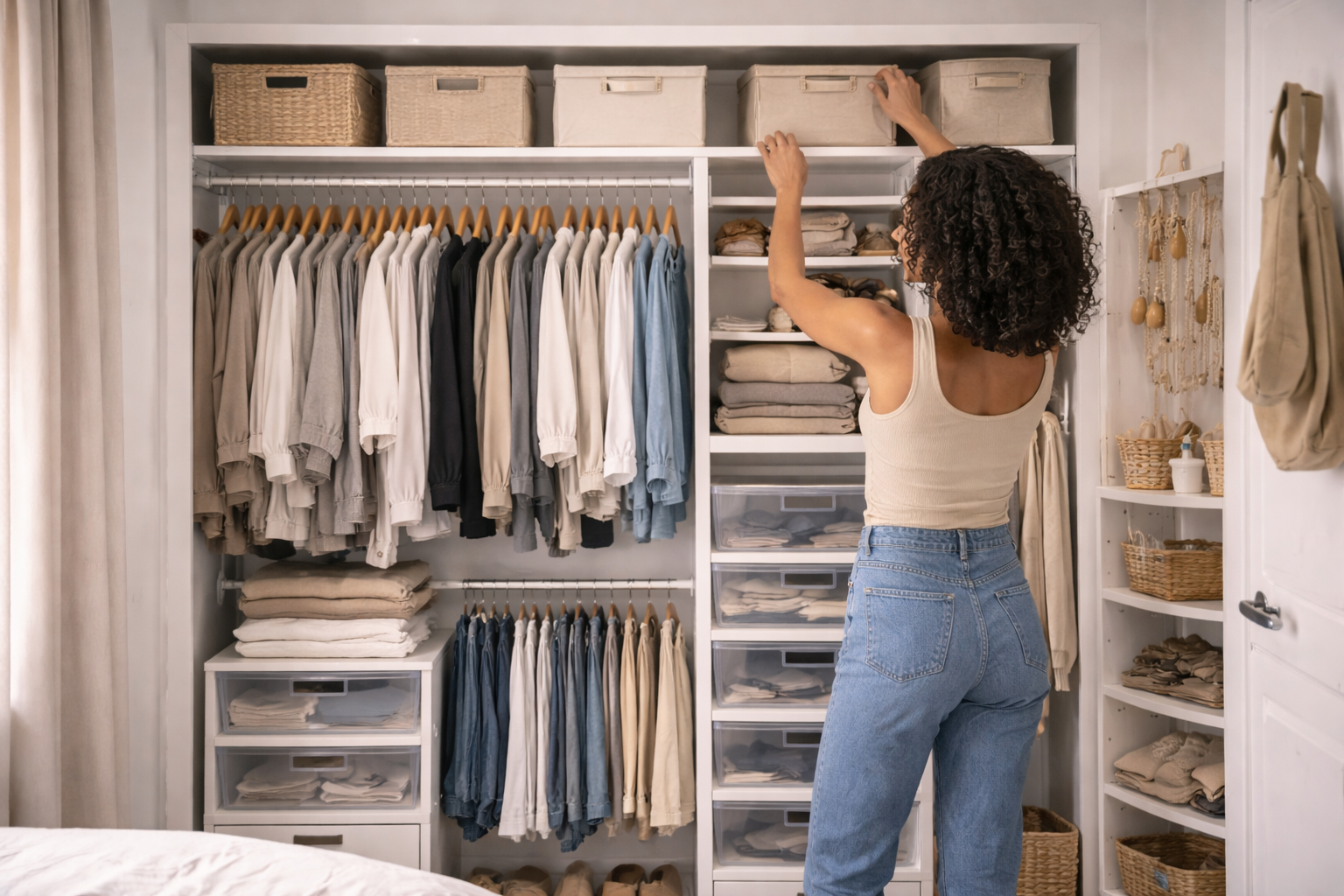
Designing the best closet layout for a small rental space is not about finding a universal formula. Each apartment has its own constraints, proportions, and daily rhythms.
What works in a large home often fails in rentals, where space is limited and permanent changes are not an option. In these environments, layout decisions shape how comfortable and functional the apartment feels.
Small rental spaces demand efficiency without rigidity. The best layouts allow movement, visibility, and flexibility while respecting the temporary nature of rental living.
When layout is done well, closets quietly support daily routines instead of becoming a constant source of frustration.
This article explores the best closet layouts for small rental spaces, focusing on practical configurations that work across different apartment types.
Why Layout Is the Foundation of Closet Organization in Rentals
In rental apartments, layout matters more than storage volume. Adding more shelves or bins without a clear layout often makes the closet harder to use. Items become difficult to reach, clutter increases, and maintenance becomes overwhelming.
A strong layout creates order even before organizers are added. It defines where items belong, how they are accessed, and how they move through daily routines. When layout leads the process, storage becomes supportive rather than intrusive.
In small rentals, layout is what allows limited space to function efficiently.
Understanding Common Small Rental Closet Types
Small rental closets usually fall into a few basic types. Some are narrow and deep, others are wide but shallow, and some are compact with minimal height. Understanding which type you have helps guide layout decisions.
Narrow closets benefit from one-sided or vertical layouts. Shallow closets require slim organizers and careful depth management. Compact closets rely heavily on zoning and prioritization.
Designing layouts based on closet type prevents wasted space and frustration.
The One-Wall Layout for Narrow Rental Closets
One of the most effective layouts for narrow rental spaces is the one-wall layout. Instead of placing storage on both sides, all organizers are concentrated on a single wall.
This layout preserves a clear pathway and improves access. Hanging space, shelves, and drawers align vertically on one side, while the opposite side remains open.
The one-wall layout works especially well in older apartments with tight closets.
The Split Hanging Layout for Versatile Storage
Split hanging layouts divide hanging space by garment length. Short items occupy one section, while long garments stay in another.
This layout maximizes vertical efficiency and reduces overcrowding. It works well in rental closets with standard ceiling heights and limited width.
Split hanging layouts are easy to adapt and support daily use without permanent installation.
The Vertical Stack Layout for Compact Rentals
Vertical stack layouts use height as the primary storage dimension. Shelves, bins, and hanging organizers stack upward instead of spreading outward.
This layout keeps the floor clear and improves visual balance. It is especially effective in small rentals where floor space is limited.
Vertical stack layouts also simplify maintenance by grouping items logically.
The Zone-Based Layout for Daily Efficiency
Zone-based layouts divide the closet into clear functional areas. Each zone serves a specific purpose, such as daily wear, folded items, shoes, or accessories.
Zoning reduces clutter by preventing overlap. Items return to their designated area, which makes organization easier to maintain.
This layout adapts well to different closet shapes and sizes.
The Minimalist Layout for Extremely Small Spaces
In extremely small rentals, minimalism becomes a layout strategy. The goal is not to store everything, but to store essentials efficiently.
Minimalist layouts limit the number of organizers and prioritize open space. Only frequently used items remain accessible, while others rotate seasonally.
This approach reduces visual noise and makes small closets feel calmer.
The Modular Layout for Changing Needs
Rental living often involves change. Modular layouts accommodate these shifts without requiring redesign.
Modular shelves, bins, and hanging systems can be rearranged as needs evolve. This flexibility makes modular layouts ideal for renters.
A modular layout protects investments and supports long-term usability.
The Door-Integrated Layout for Extra Capacity
Closet doors are valuable layout elements in small rentals. Integrating door-based storage adds capacity without consuming interior space.
Over-the-door organizers work well for shoes, accessories, and lightweight items. When the door closes, storage remains hidden.
This layout preserves visual simplicity while increasing functionality.
The Floor-Clear Layout for Visual Balance
A floor-clear layout minimizes items stored directly on the closet floor. Storage shifts upward to shelves and hanging zones.
This layout improves accessibility and makes the closet feel larger. It also simplifies cleaning and maintenance.
Floor-clear layouts are ideal for renters who value visual order.
Choosing Layouts Based on Lifestyle, Not Trends
Trends often promote layouts that look good but fail in daily use. The best layout depends on lifestyle.
A professional wardrobe requires more hanging space. Casual wardrobes benefit from folded storage. Shoe-heavy lifestyles need vertical shoe layouts.
Aligning layout with lifestyle improves satisfaction and longevity.
Avoiding Layout Choices That Create Bottlenecks
Bottlenecks occur when storage blocks movement or access. Deep shelves, overlapping zones, and crowded rods create frustration.
Effective layouts maintain clear access paths and avoid stacking items in ways that require constant rearranging.
Avoiding bottlenecks improves daily usability.
Using Lighting to Support Layout Clarity
Lighting enhances layout effectiveness. Poor lighting hides zones and reduces visibility.
Portable lighting improves access without installation. Better lighting reinforces organization and reduces friction.
Lighting helps layouts perform as intended.
Adjusting Layouts Seasonally
Seasonal adjustments keep layouts functional. Heavy winter items move higher or deeper, while daily items remain accessible.
This rotation prevents overcrowding and maintains balance.
Seasonal adjustments are easier when layouts are flexible.
Maintaining the Best Layout Over Time
Even the best layout requires maintenance. Habits change, items accumulate, and needs evolve.
Regular reviews help keep layouts effective. Removing unused items and adjusting zones preserves functionality.
Maintenance protects the layout’s benefits.
Why the Best Layout Is the One You Can Maintain
A perfect layout that cannot be maintained will fail. The best layout supports habits rather than fighting them.
Layouts that feel intuitive and flexible last longer and reduce stress.
Sustainability is the true measure of success.
Frequently Asked Questions
What is the best layout for small rental closets?
Layouts that prioritize access, vertical storage, and clear zones perform best.
Should renters avoid complex layouts?
Yes. Simpler layouts are easier to maintain and adapt.
Can one layout work for every rental?
No. Layouts should respond to closet shape, size, and lifestyle.
How often should layouts be adjusted?
Seasonally or whenever storage needs change.
Do good layouts reduce the need for more storage?
Yes. Strong layouts often make existing storage sufficient.

Ryan Lewis is a home organization enthusiast who specializes in smart, renter-friendly solutions for small spaces. With a passion for functional design and practical living, Alex shares tips, guides, and ideas to help readers create calm, clutter-free environments—no matter the size of their home.