
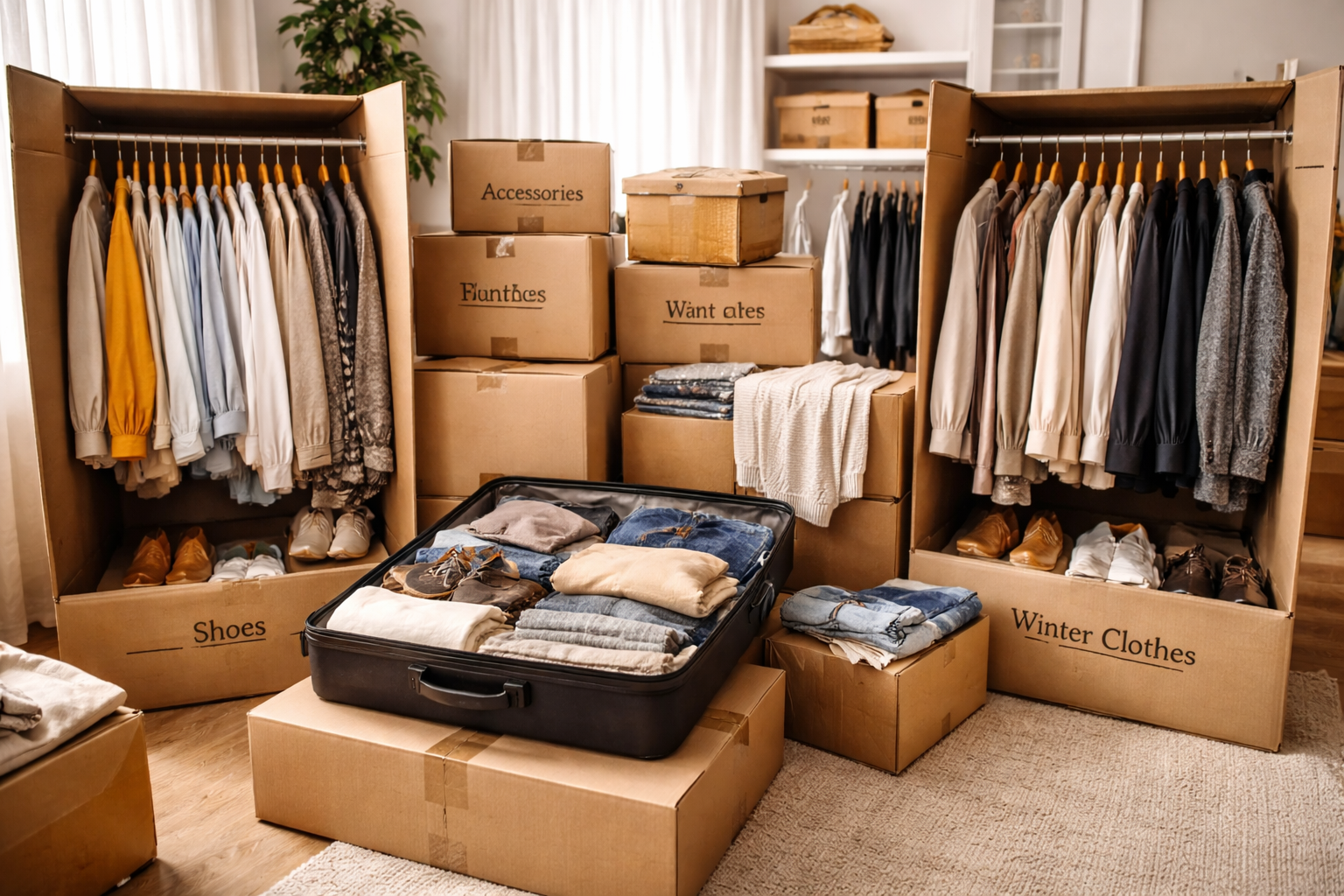
A long-distance move adds a new level of complexity to closet organization.
Unlike local moves, where you can quickly retrieve forgotten items or make multiple trips, long-distance relocations require precision, planning, and strategic packing.
If your closet is not packed and organized correctly, unpacking in the new apartment can feel overwhelming.
Clothes arrive wrinkled, shoes get misplaced, accessories disappear into random boxes, and you end up rebuilding your system from scratch.
However, with the right approach, you can maintain structure even during a cross-country or multi-state move. The goal is not just to transport your wardrobe, but to preserve its organization.
Here is how to keep your closet organized during a long-distance move without losing control of your system.
Start Planning Earlier Than You Think
Long-distance moves require more preparation time. Start organizing your closet at least three to four weeks before moving day.
Early planning allows you to:
Declutter properly
Separate seasonal items
Sell or donate unnecessary clothing
Purchase appropriate packing materials
Rushed packing leads to chaotic unpacking. Preparation creates continuity.
Conduct a Full Wardrobe Audit
Before packing anything, remove everything from your closet and evaluate each item.
Ask yourself:
Does this still fit my lifestyle?
Have I worn this in the past year?
Would I buy this again today?
Moving long distance means paying for transportation by weight or volume in many cases. Reducing unnecessary clothing can save money and effort.
Only pack what you truly need.
Pack by Category, Not Randomly
One of the most effective strategies is packing by clear categories. Instead of filling boxes based on proximity, group items intentionally.
For example:
Daily essentials
Work clothing
Outerwear
Shoes
Accessories
Seasonal storage
Label each box clearly and specifically. Avoid vague labels like “closet stuff.” Detailed labeling saves hours during unpacking.
When categories remain intact, your system remains intact.
Use Wardrobe Boxes for Hanging Clothes
Wardrobe boxes with built-in hanging rods are especially valuable for long-distance moves. They allow you to transfer clothes directly from your closet rod into the moving box without folding.
This preserves:
Garment shape
Wrinkle control
Category separation
Keep similar garments together inside each wardrobe box. For example, place all work blazers in one and casual shirts in another.
Maintaining grouping makes reinstallation effortless.
Protect Shoes Properly
Shoes are often damaged during long-distance transportation if not packed carefully.
Clean them before packing. Stuff them with paper to maintain shape. Place them in individual dust bags or wrap them in soft clothing.
Pack shoes upright in sturdy boxes and label them clearly.
If possible, keep frequently used pairs separate in a personal suitcase so you can access them immediately after arrival.
Secure Accessories in Small Containers
Belts, jewelry, scarves, and smaller items can easily become tangled or lost.
Use:
Small compartment organizers
Zippered pouches
Clear labeled containers
Pack these containers inside larger boxes marked “Accessories.”
Keeping small items contained prevents frustration later.
Create an Essentials Suitcase
For long-distance moves, you may not unpack immediately. Create a personal essentials suitcase that includes:
One week of daily outfits
Undergarments
Sleepwear
Comfortable shoes
Basic accessories
This suitcase stays with you, not on the moving truck.
Having immediate access to essentials reduces stress and prevents unnecessary digging through boxes.
Separate Seasonal Items Clearly
If you are moving between climates, seasonal adjustments may be necessary.
For example, moving from a warm region to a colder climate might require easier access to coats and sweaters upon arrival.
Label seasonal boxes clearly and load them strategically so they are accessible early during unpacking.
Climate awareness supports smooth transitions.
Keep an Inventory List
For long-distance moves, especially when using professional movers, create a simple inventory list of your closet boxes.
Note:
Number of boxes
Category of contents
Special items
This list ensures nothing is missing upon arrival and makes unpacking more organized.
An inventory adds accountability and clarity.
Unpack Strategically in the New Apartment
When you arrive, resist the urge to unpack everything at once.
Start with:
Core daily essentials
Work clothing
Shoes
Rebuild your primary zone first. Once daily functionality is restored, unpack secondary categories like seasonal storage or formal wear.
Prioritization prevents overwhelm.
Recreate Categories Before Adjusting Layout
The physical layout of your new closet may differ significantly. However, your categories should remain consistent.
Before rearranging based on shelves and rods, reinstall items by their original groupings.
After categories are in place, adjust their physical positioning based on the new dimensions.
System first. Layout second.
Inspect Clothing After Transport
Long-distance travel can expose clothing to humidity, temperature changes, or compression.
After unpacking:
Air out garments
Steam or iron wrinkled items
Check for damage
Quick maintenance prevents long-term issues and helps restore order.
Avoid Immediate Overexpansion
Sometimes long-distance moves come with larger closets. Do not immediately expand your wardrobe to fill empty space.
Maintain the disciplined system you established during packing.
Empty space provides flexibility and supports future moves.
Establish a Post-Move Reset Day
Within the first two weeks after arrival, schedule a reset session.
Evaluate:
Is the new layout functional?
Are frequently used items accessible?
Is anything overcrowded?
Make small adjustments early before clutter sets in permanently.
Intentional resets protect organization.
Think Long-Term Mobility
If you have moved long distance once, you may do it again.
Keep modular storage solutions. Avoid permanent installations. Maintain labeled containers for seasonal items.
A portable closet system saves time in future relocations.
Mobility should be built into your strategy.
Final Thoughts: Protect Structure Through Distance
A long-distance move does not have to dismantle your closet organization.
When you plan early, pack by category, protect essentials, and reinstall strategically, your system survives the journey.
Distance increases complexity, but preparation reduces chaos.
Your closet is not just clothing storage. It is a daily-use system. Treat it like one during your move.
With clarity, labeling, and structured packing, you can arrive in your new apartment ready to function immediately instead of starting from scratch.

Ryan Lewis is a home organization enthusiast who specializes in smart, renter-friendly solutions for small spaces. With a passion for functional design and practical living, Alex shares tips, guides, and ideas to help readers create calm, clutter-free environments—no matter the size of their home.