
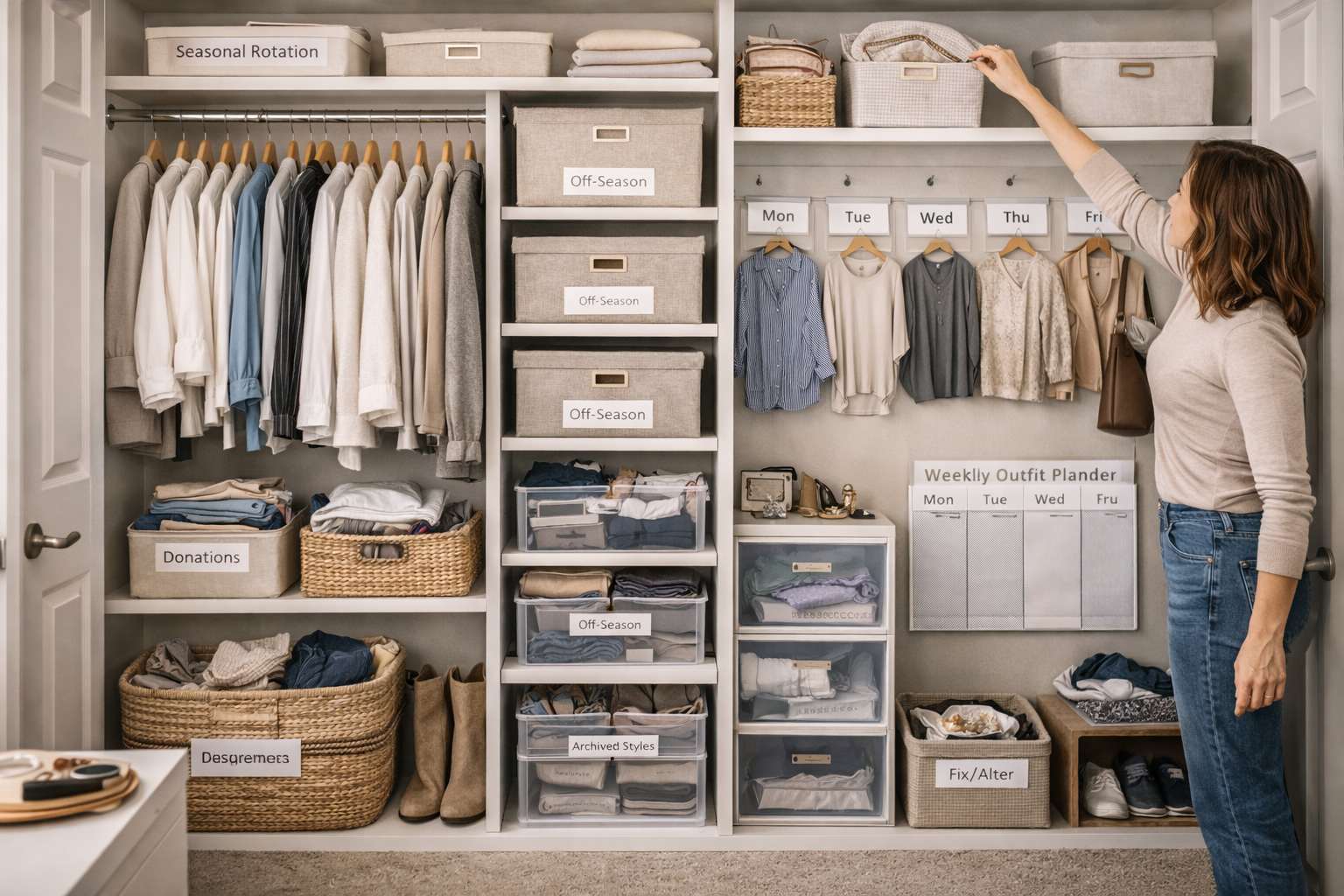
You don’t have to become a minimalist. You don’t have to do a full closet purge. You don’t even have to give up pieces you love but rarely wear.
Closet chaos can be fixed — without getting rid of everything.
The popular idea that you have to throw away half your wardrobe to get organized often backfires. While decluttering helps, it’s not the only — or even the most effective — solution.
In this article, you’ll learn how to transform your closet into a functional, calm, and useful space without the stress or guilt of extreme minimalism.
Whether you live in a small apartment or just want more clarity in your daily routine, you’ll discover proven strategies that create real order — no trash bags required.
The Myth of “Just Get Rid of Stuff”
Popular organizing advice often starts with one word: purge.
- “Take everything out.”
- “Donate half.”
- “If you haven’t worn it in a year, toss it.”
That works for some people — but for others, it creates anxiety, guilt, and resistance. Why? Because:
- You might love variety.
- Your lifestyle may change.
- Some clothes have emotional value.
- You’re afraid of needing them again later.
Instead of forcing a massive declutter, you can use smarter, gentler systems to organize what you already own.
Step 1: Stop Blaming Yourself for the Mess
The first step to fixing closet chaos is shifting your mindset.
Clutter isn’t always a sign of laziness. Often, it’s a sign of a system that doesn’t match your real life.
Maybe your space is too small.
Maybe you’ve changed jobs or routines.
Maybe your storage isn’t set up to handle your current wardrobe.
Whatever the reason, the solution starts with understanding the why, not judging yourself for the mess.
Step 2: Look at the Structure — Not Just the Stuff
Instead of focusing on the clothes, start by evaluating the structure of your closet.
Ask:
- Are your most-used items easy to reach?
- Are your shelves too deep or too high?
- Do you have enough hanging space for long clothes?
- Are items getting crushed, lost, or hidden?
Often, the structure is the problem — not the quantity of clothes. A poorly designed layout causes chaos even with a small wardrobe.
You don’t need to throw away items. You need to redesign access points.
Step 3: Create Zones That Work for Your Life
You don’t have to remove clothing — you just need to group it more effectively.
Here’s how to create helpful zones:
Daily Wear Zone
Place your most-used items at eye level. These are your go-to clothes — the ones you wear 70% of the time. They deserve the best real estate.
Weekly Wear Zone
Items you wear 1–2 times per week can go slightly lower or higher. Still accessible, but not front and center.
Special Occasion Zone
Formalwear, seasonal pieces, or items you rarely need can go in higher bins, garment bags, or less convenient corners.
“Not Sure Yet” Zone
Create a labeled basket or bin for pieces you don’t use often but aren’t ready to part with. Revisit every 2–3 months.
By using function-based zoning, you avoid the pressure to toss things — and instead create flow and ease.
Step 4: Use Containment, Not Elimination
Containment is a powerful tool. You don’t need to remove items — you just need to contain them in ways that reduce mess.
Use bins or baskets for:
- Scarves
- Swimwear
- Workout gear
- PJs and loungewear
Use drawer dividers for:
- Socks
- Underwear
- Jewelry
Use hanging organizers for:
- Shoes
- Bags
- Accessories
Everything has a place — not everything has to be out or constantly visible.
Containment creates calm, even when your wardrobe is large.
Step 5: Rotate Instead of Remove
Instead of throwing things away, try rotation — a flexible system that keeps your closet fresh.
Here’s how it works:
- Keep current-season items front and center.
- Move out-of-season items to bins or higher shelves.
- Every 3 months, rotate based on weather and lifestyle.
This allows you to enjoy your full wardrobe — just not all at once.
Rotation mimics the benefits of a capsule wardrobe, without forcing you to get rid of pieces you still value.
Step 6: Rethink How You Use Vertical Space
Closets often have underused vertical height. This leads to pileups on the floor and crammed hangers.
Here are ways to better use vertical zones:
- Install a second hanging rod (tension or removable)
- Add slim shelves above the top shelf for rarely-used bins
- Use vertical cubbies for shoes or folded items
- Hang hooks inside doors for accessories
By building upward, you reduce clutter below — without discarding anything.
Step 7: Create an Outfit Planning Space
One reason closets feel chaotic is because we plan outfits while digging through everything.
A simple solution? Create a weekly outfit station.
Ideas:
- A hanging rod or rack for the next few days’ outfits
- A drawer for “currently in use” items (like gym clothes or pajamas)
- A hook for tomorrow’s bag or accessories
This reduces stress and keeps your main closet space tidy.
Planning prevents panic — and that keeps your closet cleaner longer.
Step 8: Tame the Laundry Loop
Laundry is a major source of closet chaos — not just dirty clothes, but also clean clothes that never make it back properly.
Fix this with a few tweaks:
- Use labeled laundry hampers (e.g., lights/darks/gym)
- Keep a “clean but needs folding” bin near your closet
- Set a routine time each week to reset folded clothes
- Use open shelving or bins instead of drawers if folding slows you down
The goal is not perfection — it’s creating a system that matches your energy level.
Step 9: Add Labels and Visual Cues
You don’t have to remember where everything goes. Let labels do the work.
Label:
- Bins and baskets
- Drawer sections
- Shelves
- Special occasion storage zones
Why it helps:
- Reduces decision fatigue
- Makes it easier to clean up
- Helps others in the household follow the system
Choose simple, elegant labels for a professional look. Use icons if you’re more visual.
Step 10: Adjust Instead of Abandoning
When your closet starts to feel messy again, don’t assume the whole system failed. Instead, adjust just one thing.
Ask:
- What feels off right now?
- What’s getting messy fastest?
- Which area do I avoid using?
Then tweak that zone — move a shelf, add a bin, swap positions — instead of resetting the entire closet.
Sustainable organization is flexible, not fixed.
Optional: Light Decluttering Without Pressure
If you still want to reduce — but not dramatically — try these low-pressure techniques:
The One-Year Box
Place items you’re unsure about in a sealed box with a date. If you don’t open it in a year, it’s safe to let go.
The Hanger Flip
Hang all hangers backwards. When you wear something, flip the hanger. In 6 months, see what remains untouched.
The 5-Minute Rule
Once a week, spend 5 minutes pulling out just one item you no longer wear. No pressure. One item at a time.
This style of slow, thoughtful decluttering is less overwhelming — and often more effective long-term.
You Don’t Need Less — You Need Logic
Many people assume closet peace comes from having less. But often, it comes from having more logic in how your clothes are stored.
Logic beats minimalism:
- You can own 200 pieces of clothing and still have a neat closet — if it’s organized by use, season, and accessibility.
- You can avoid decision fatigue — even with options — if you rotate and zone your wardrobe.
- You can feel in control — without letting go of anything you still value.
This mindset shift empowers you to take action without losing what you love.
Real-Life Closet Transformations (Without Purging)
Case 1: The Accessory Collector
Before: Dozens of scarves, bags, and jewelry overflowing drawers
After:
- Added vertical accessory wall
- Used labeled bins by category
- Created outfit station for planning with accessories
No decluttering. Just smarter layout.
Case 2: The Busy Parent
Before: Closet mixed with partner’s and kids’ clothes; mess everywhere
After:
- Created zones per person
- Used bins with photos for kids’ items
- Added “today/tomorrow” drawers for faster mornings
Zero items thrown away — complete order restored.
Case 3: The Style Shifter
Before: Closet filled with “past life” pieces — office wear, going-out clothes
After:
- Created “archive” box for sentimental pieces
- Rotated current lifestyle clothes forward
- Set reminders to reevaluate archive in 6 months
Identity respected, not erased.
Final Thoughts: Closet Peace Is Possible — Without the Purge
Your closet can be organized, peaceful, and a joy to use — even if you keep every single item you own.
You just need:
- Systems that match your behavior
- Zones that reflect your lifestyle
- Tools that create calm without pressure
- Adjustments over time — not perfection overnight
Don’t let internet organizing trends shame you into throwing things away that still matter to you.
There’s another path. A practical, compassionate one.
You can fix the chaos without giving up what you love.
And your closet can become one of the most helpful — not stressful — parts of your day.

Ryan Lewis is a home organization enthusiast who specializes in smart, renter-friendly solutions for small spaces. With a passion for functional design and practical living, Alex shares tips, guides, and ideas to help readers create calm, clutter-free environments—no matter the size of their home.