
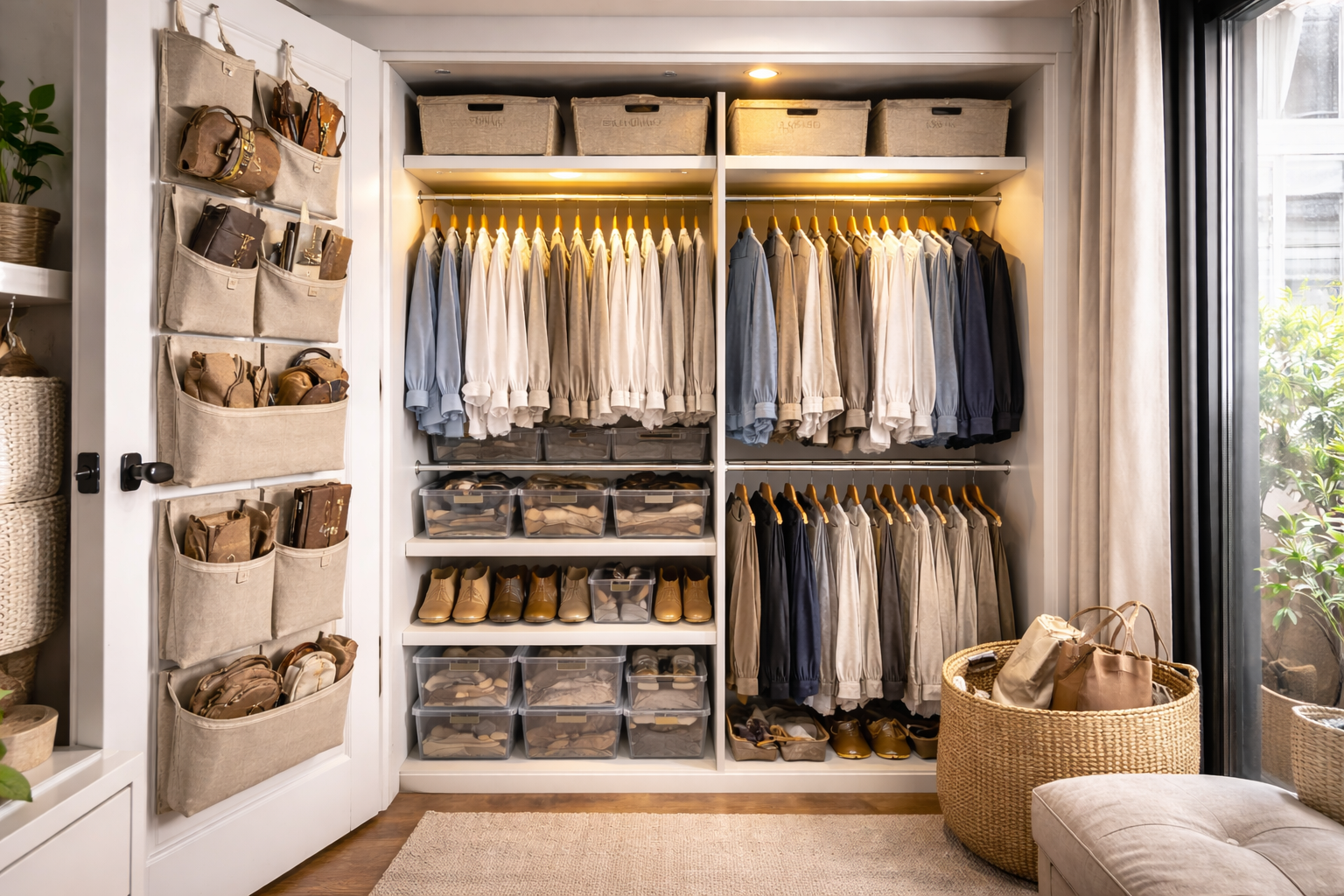
Living in an apartment under 500 square feet changes the way you think about space. Every corner matters. Every vertical inch matters. Every unused gap becomes either wasted potential or hidden opportunity.
In extremely compact apartments, closets are rarely generous. Most are shallow, narrow, or limited to a single rod and shelf.
Some micro-apartments do not even include built-in closets at all. In these environments, traditional organization methods simply do not work.
Maximizing closet storage in apartments under 500 square feet requires strategic layering, vertical optimization, category discipline, and creative hidden storage techniques.
The goal is not just to store clothing. It is to create a system that prevents visual overwhelm while maintaining accessibility.
Here is how to unlock hidden closet storage capacity in ultra-small apartments without remodeling or construction.
Understand the Physics of Small Spaces
Small closets feel cramped for three main reasons:
Lack of vertical segmentation
Visual clutter
Poor lighting
Before adding anything, analyze the current structure.
Measure:
Height from floor to ceiling
Rod placement
Shelf depth
Door clearance
Understanding physical constraints allows you to design smarter rather than simply adding containers randomly.
Small spaces demand precision.
Use Double and Triple Vertical Hanging
Most compact closets waste vertical height.
If you have one rod, you are likely using only 50% of potential hanging space.
Add:
A second tension rod below the first
A third mini rod for shorter garments
Slim cascading hangers
Layering rods multiplies capacity without increasing footprint.
Shorter items such as shirts, folded pants, and skirts can occupy lower sections.
Vertical stacking is the foundation of micro-apartment closet efficiency.
Utilize Closet Doors as Storage Walls
Closet doors are often blank surfaces.
Install:
Over-the-door organizers
Slim pocket systems
Hook panels for accessories
Use doors for:
Belts
Scarves
Small bags
Jewelry organizers
Lightweight shoes
This transforms unused surface into functional vertical storage.
In micro-spaces, walls must work.
Introduce Ceiling-Level Storage
In apartments under 500 square feet, ceiling height becomes valuable real estate.
Install stackable bins on upper shelves for:
Seasonal clothing
Travel gear
Rarely used items
Use uniform containers to reduce visual noise.
High storage should be stable, clearly labeled, and lightweight.
Upper zones are ideal for low-frequency items.
Use Slim, Low-Profile Hangers
Bulkier hangers consume unnecessary horizontal space.
Switch to slim velvet or ultra-thin hangers.
Benefits include:
Increased rod capacity
Improved visual alignment
Reduced friction between garments
Even saving half an inch per hanger adds up significantly in tight closets.
Small improvements compound quickly.
Create Micro-Zones Instead of Large Sections
In small closets, large sections become messy quickly.
Divide space into smaller micro-zones:
Workwear
Lounge
Gym
Seasonal
Outerwear
Smaller zones prevent sprawl and maintain clarity.
Clear boundaries maintain order.
Rotate Seasonally With Discipline
Apartments under 500 square feet cannot support year-round wardrobes in one space.
Adopt a strict seasonal rotation system.
Store off-season clothing in:
Under-bed containers
Vacuum-sealed bags
Labeled bins on upper shelves
When seasons change, swap efficiently.
Rotation prevents overcrowding.
Store Shoes Vertically, Not Horizontally
Shoes often occupy valuable floor space.
Use:
Vertical stackable shoe boxes
Slim vertical racks
Hanging shoe organizers
Keep only daily-use pairs accessible.
Off-season or special occasion shoes should be stored separately.
The closet floor should remain clear.
Clear floor space creates breathing room.
Incorporate Drawer Inserts for Compression
If you have drawers inside or near the closet, maximize internal compression.
Use dividers to:
Compress socks tightly
Stack accessories vertically
Create slim compartments
Compressed storage allows more volume in less space.
Internal organization supports overall efficiency.
Hide Visual Clutter With Uniformity
In micro-apartments, visual chaos amplifies spatial stress.
Choose one cohesive color palette for bins and hangers.
Matching containers reduce cognitive load.
The closet feels calmer even when full.
Perception matters in small spaces.
Use Under-Shelf Hanging Baskets
Under-shelf baskets slide onto existing shelves and create additional storage layers.
They are ideal for:
Small handbags
Clutches
Lightweight sweaters
Scarves
This doubles shelf productivity without tools.
Layering multiplies function.
Install Motion Lighting
Dark closets feel smaller.
Add rechargeable LED strips or motion-sensor lights to eliminate shadows.
Bright closets appear larger and more manageable.
Lighting influences perception.
Apply the One-In-One-Out Rule Strictly
In apartments under 500 square feet, wardrobe expansion must be controlled.
For every new item added, one must leave.
This prevents slow accumulation.
Micro-living requires discipline.
Store Bulk Elsewhere When Necessary
Closets do not have to hold everything.
Consider:
Under-bed storage
Storage ottomans
High bedroom shelving
Relieving closet pressure creates sustainability.
Closets should house active clothing, not overflow.
Think in Layers, Not Surfaces
Surface-only storage wastes depth.
Layer:
Rod layers
Shelf layers
Under-shelf additions
Door storage
Upper ceiling storage
Layering increases cubic usage without increasing footprint.
Small apartments require three-dimensional thinking.
Psychological Impact of Hidden Storage
Hidden storage reduces visual overwhelm.
When surfaces look clean:
Stress decreases
Decision-making improves
Maintenance becomes easier
Micro-apartment living depends on controlled visibility.
The less visual chaos, the more spacious the apartment feels.
Final Thoughts: Structure Beats Size
Apartments under 500 square feet demand intelligent design, not sacrifice.
By layering vertically, using hidden surfaces, rotating seasonally, compressing internally, and maintaining strict volume control, even the smallest closet can function efficiently.
The key is not adding more furniture.
It is maximizing every inch intentionally.
In ultra-small spaces, organization is not optional.
It is essential.

Ryan Lewis is a home organization enthusiast who specializes in smart, renter-friendly solutions for small spaces. With a passion for functional design and practical living, Alex shares tips, guides, and ideas to help readers create calm, clutter-free environments—no matter the size of their home.