
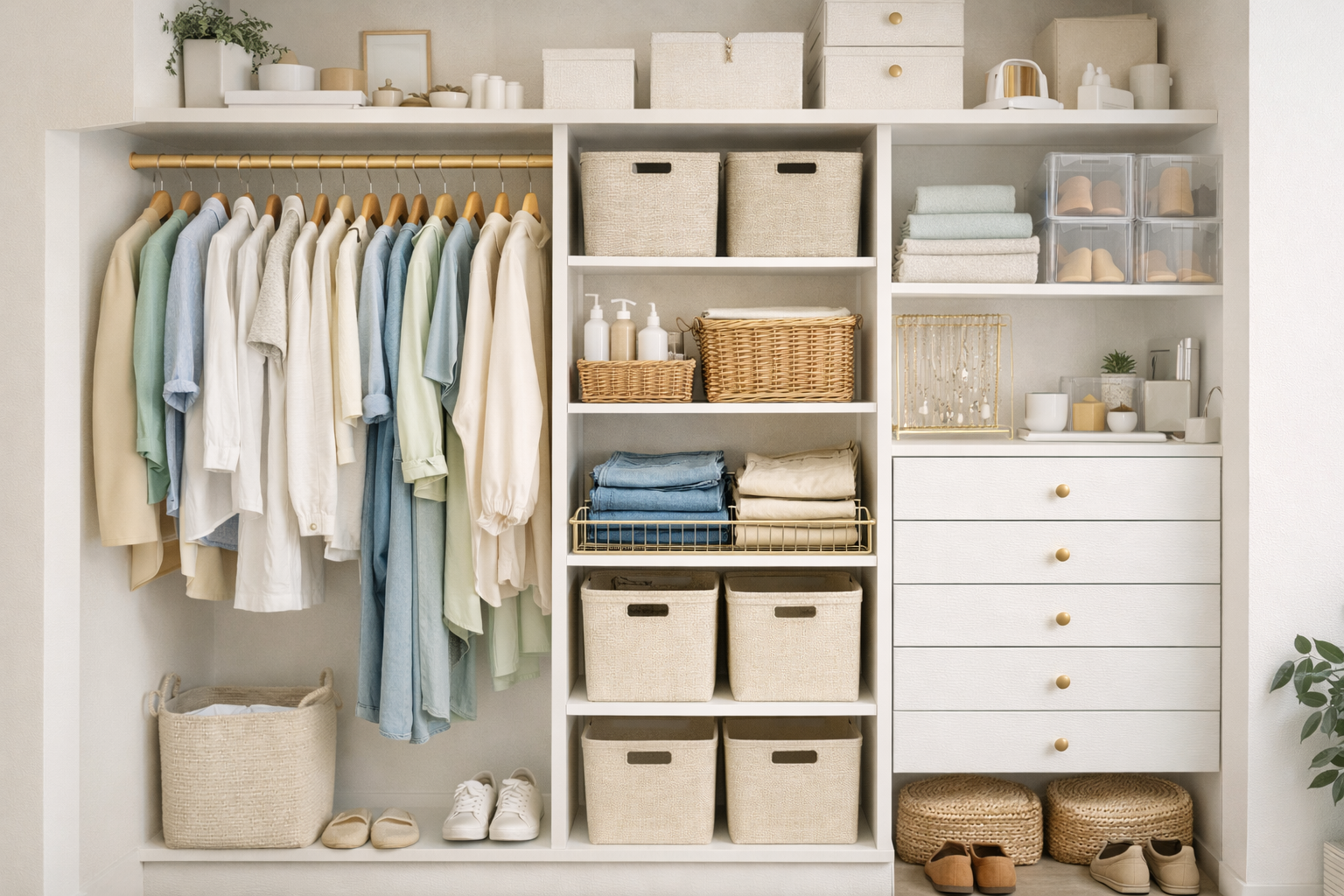
Living in an apartment under 600 square feet changes how you think about storage. There is no excess space to absorb inefficiencies, and every square foot must serve a clear purpose.
Closets, in particular, carry a heavy load. They often store not only clothing, but also shoes, accessories, linens, and items that would normally live elsewhere in a larger home.
In apartments this small, closet storage is not about maximizing capacity at any cost. It is about creating a layout that supports daily life without overwhelming the space.
When storage is poorly planned, small apartments feel cramped and chaotic. When storage is designed thoughtfully, even a 500-square-foot apartment can feel calm and functional.
This article explores closet storage ideas specifically for apartments under 600 square feet, focusing on layout-driven strategies that preserve openness while delivering real storage value.
Why Apartments Under 600 Square Feet Require Special Storage Planning
Small apartments magnify every design decision. A bulky organizer that might go unnoticed in a larger space can dominate a compact apartment. Poor storage choices quickly reduce mobility, block light, and create visual clutter.
Closets in sub-600-square-foot apartments often function as multi-purpose storage hubs. They may hold clothing, shoes, cleaning supplies, luggage, or seasonal items. Without a clear plan, this mix leads to congestion and frustration.
Storage planning in these apartments must balance containment with restraint. The goal is to support daily routines, not to store everything in one place.
Defining the Role of the Closet in a Very Small Apartment
Before organizing, it is essential to define what the closet should and should not store. In very small apartments, closets cannot serve every storage need equally.
A practical approach is to assign the closet a primary role. For most people, this means clothing and daily-use accessories. Secondary items, such as linens or rarely used belongings, should be minimized or relocated if possible.
When the closet has a clear purpose, layout decisions become simpler and more effective.
Using Vertical Storage Without Making the Apartment Feel Smaller
Vertical storage is a powerful tool in apartments under 600 square feet, but it must be handled carefully. Overusing vertical storage can make the space feel heavy and enclosed.
The key is to use vertical storage selectively. Tall but slim organizers, hanging shelves, and stacked bins work best when they align cleanly and do not protrude into walking areas.
Vertical storage should feel like an extension of the apartment’s structure, not an obstacle within it.
Designing Hanging Space for Maximum Efficiency
Hanging space often consumes the largest portion of a closet, yet it is frequently used inefficiently. In small apartments, every inch of hanging space matters.
Slim hangers immediately reduce bulk and improve alignment. Separating garments by length prevents bunching and allows vertical space to be used more effectively.
Hanging layouts should prioritize items worn frequently. Occasional or seasonal garments can move to higher or less accessible zones.
Integrating Folded Storage Without Overcrowding
Folded storage can quickly overwhelm small closets if it is not contained properly. Large shelves and deep drawers consume valuable depth and reduce accessibility.
In apartments under 600 square feet, folded storage should be compact and controlled. Slim drawer units, narrow shelves, or hanging organizers work best.
The goal is to keep folded items visible and easy to access without dominating the closet.
Creating Shoe Storage That Preserves Floor Space
Shoes are one of the most common sources of clutter in small apartments. Left unmanaged, they spread into living areas and disrupt flow.
Vertical shoe racks, stacked shelves, or door-based storage solutions keep shoes contained without using valuable floor space. Separating daily shoes from occasional pairs further improves efficiency.
Shoe storage should support quick access without visual clutter.
Using Closet Doors as Storage Extensions
In very small apartments, every surface matters. Closet doors are often overlooked as storage opportunities.
Interior door organizers add capacity without reducing interior depth. They work well for accessories, scarves, belts, and lightweight items.
By moving these items to the door, the interior of the closet remains focused on bulkier storage.
Creating Clear Zones to Prevent Overlap
Without clear zones, storage in small apartments quickly becomes chaotic. Items migrate, overlap, and block access.
Zoning brings structure. A hanging zone, a folded items zone, a shoe zone, and an accessories zone give each category a defined place.
Zones simplify maintenance and reduce daily friction.
Choosing Slim Organizers Over High-Capacity Ones
High-capacity organizers often promise more storage, but they usually sacrifice accessibility. In apartments under 600 square feet, access matters more than volume.
Slim organizers preserve circulation space and visual balance. Narrow shelves, compact drawers, and low-profile racks support storage without crowding.
Choosing slim solutions prevents the apartment from feeling overloaded.
Managing Seasonal Items Without Overloading the Closet
Seasonal items can overwhelm small closets if they are stored alongside daily items. Apartments under 600 square feet benefit from seasonal rotation.
Off-season clothing should move to higher shelves, bins, or separate storage locations. Daily-use items remain accessible.
This rotation keeps the closet balanced and functional throughout the year.
Using Containers to Control Visual Noise
Containers help reduce visual clutter by grouping similar items. In small apartments, visual noise makes spaces feel smaller.
Shallow bins, uniform boxes, and labeled containers create order without blocking access. Containers also make it easier to maintain organization over time.
The key is moderation. Too many containers can be as problematic as none.
Avoiding Storage Choices That Reduce Mobility
Mobility is critical in apartments under 600 square feet. Storage should never block movement or restrict door operation.
Avoid placing bulky organizers near entrances or walkways. Keep pathways clear and ensure that drawers and doors can open fully.
Storage that interferes with movement quickly becomes frustrating.
Using Lighting to Improve Storage Perception
Poor lighting exaggerates the feeling of tightness. Dark closets feel smaller and more cluttered than they are.
Portable lighting solutions improve visibility and perception without installation. Battery-powered or motion-activated lights illuminate storage zones effectively.
Lighting enhances both function and comfort.
Adapting Closet Storage as Needs Change
Small apartments often require flexibility. Storage needs change with seasons, lifestyle shifts, and wardrobe updates.
Modular organizers and adjustable elements allow layouts to adapt without a full redesign. Shelves can move, bins can rotate, and hanging space can be reconfigured.
Flexibility is essential in compact living.
Maintaining Order in Apartments Under 600 Square Feet
Maintenance is critical in very small spaces. Small lapses become visible quickly.
Regular reviews, seasonal decluttering, and quick resets keep storage functional. When layout supports habits, maintenance requires less effort.
Consistency preserves the benefits of thoughtful design.
Avoiding the Trap of Overfilling Small Closets
One of the most common mistakes in small apartments is trying to store too much in one place. Overfilling undermines even the best layout.
Accepting limits is part of successful organization. When storage volume aligns with space reality, the apartment feels calmer.
Restraint improves usability.
Why Layout-Driven Storage Works Best in Very Small Apartments
In apartments under 600 square feet, layout determines success. Storage without layout creates chaos.
Layout-driven storage supports access, visibility, and movement. It allows small spaces to function comfortably without constant adjustment.
Thoughtful layout often makes a small apartment feel larger than it is.
Frequently Asked Questions
How do people live comfortably in apartments under 600 square feet?
By prioritizing layout, limiting excess belongings, and using storage intentionally.
Should everything be stored in the closet?
No. Closets should focus on primary storage needs, not absorb everything.
What storage works best in very small apartments?
Slim, vertical, and modular storage solutions offer the best balance.
How do renters prevent clutter in small spaces?
By zoning, seasonal rotation, and regular maintenance.
Does good storage really affect how small apartments feel?
Yes. Thoughtful storage significantly improves comfort and perceived space.

Ryan Lewis is a home organization enthusiast who specializes in smart, renter-friendly solutions for small spaces. With a passion for functional design and practical living, Alex shares tips, guides, and ideas to help readers create calm, clutter-free environments—no matter the size of their home.