
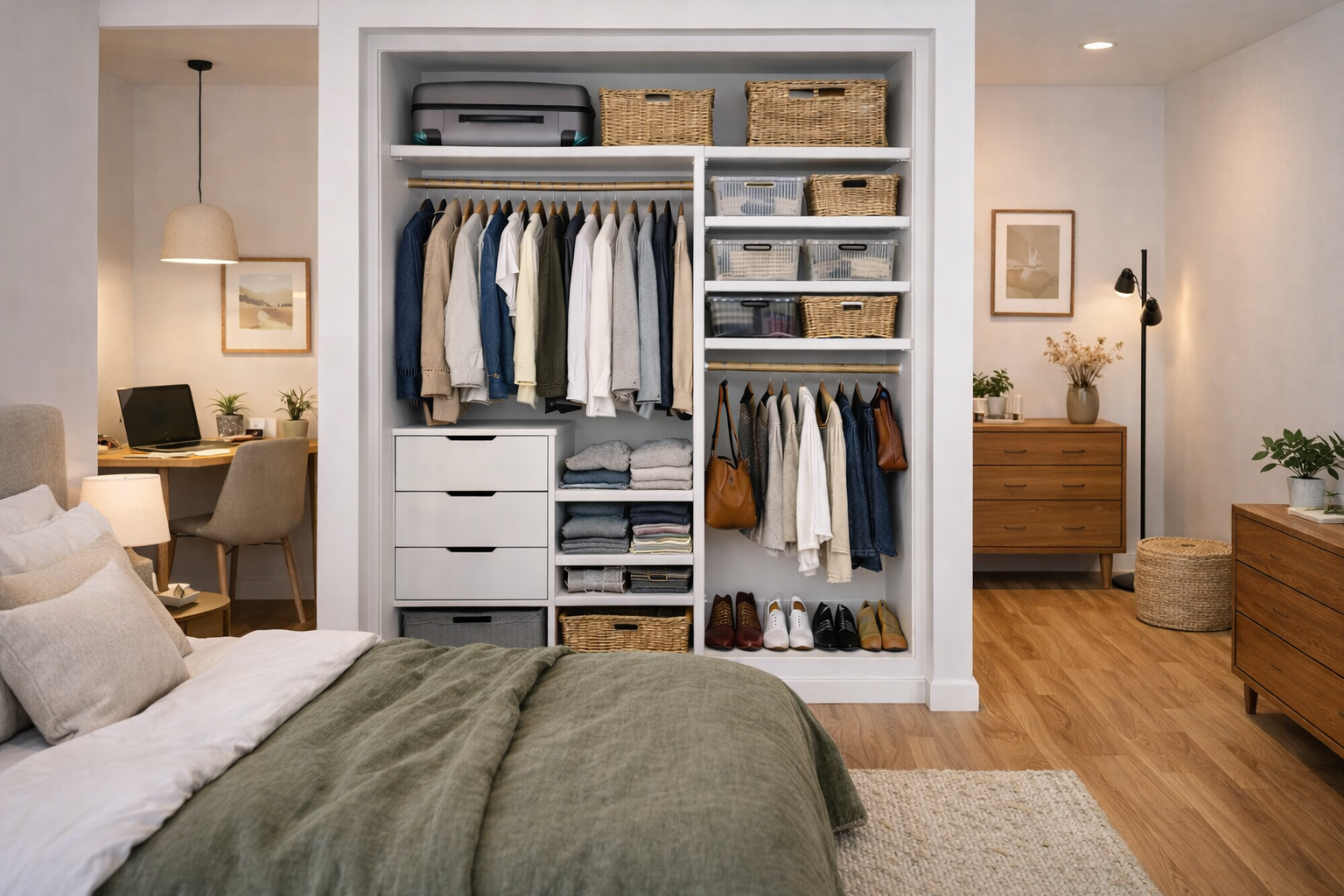
Living in a small rental apartment changes how you experience space.
Every square foot matters, and storage decisions have a direct impact on comfort and daily routines. Closets, in particular, often feel inadequate because they were not designed with modern living in mind.
In small rental apartments, closet organization is not just about storage. It is about layout. The way space is structured, divided, and accessed determines whether the closet feels functional or constantly frustrating.
This article explores closet organization ideas specifically designed for small rental apartments, focusing on layout strategies that make limited space work better without altering the apartment.
Why Layout Matters More Than Storage in Small Apartments
In larger homes, adding storage can compensate for poor layout. In small apartments, this approach usually fails. More storage without a clear layout often leads to clutter and restricted movement.
Layout determines how easily items can be accessed, returned, and maintained. A good layout reduces friction and keeps the closet usable over time. A poor layout forces constant rearranging.
For renters, focusing on layout first prevents wasted space and unnecessary purchases.
Understanding the Shape of a Small Closet
Small rental closets come in many shapes. Some are narrow and deep. Others are wide but shallow. Many have awkward corners or limited height.
Before choosing organizers, it is essential to understand the closet’s shape. Layout decisions should respond to dimensions rather than fight them.
A narrow closet benefits from vertical stacking. A shallow closet benefits from slim organizers. Understanding proportions allows smarter layout choices.
Using Vertical Layouts to Expand Capacity
Vertical layouts are one of the most effective strategies for small rental apartments. When floor space is limited, height becomes the primary resource.
Hanging shelves, stacked bins, and tall freestanding units create vertical layers of storage. These layers allow items to be grouped logically without overcrowding.
A vertical layout also keeps the floor clearer, which improves accessibility and visual balance.
Designing a Double-Level Hanging Layout
Many small closets waste space beneath hanging clothes. A single rod often leaves unused room below shorter garments.
A double-level hanging layout separates short and long items. Shirts and folded pants can hang on a lower level, while coats and dresses occupy the upper level.
This layout increases capacity without increasing footprint, which is ideal for small apartments.
Creating a Compact Folded Clothing Zone
Folded clothing requires careful layout in small closets. Large shelves or deep drawers often do not fit well.
Compact folded zones use narrow shelves, hanging organizers, or slim drawer units. These elements allow folded items to stay visible and accessible without taking over the space.
Keeping folded clothing grouped prevents clutter and simplifies daily routines.
Planning Shoe Layouts for Limited Space
Shoes quickly overwhelm small closets if layout is not considered. Floor piles block access and reduce usable space.
A smart shoe layout uses vertical or door-based storage. Stackable shoe racks and slim shelves keep shoes organized while preserving floor area.
Separating daily shoes from occasional ones helps maintain order and reduces congestion.
Using Closet Doors as Layout Extensions
In small rental apartments, the closet door is part of the layout, not just a boundary. Over-the-door storage extends usable space without changing the interior.
Door-based layouts work well for shoes, accessories, and lightweight items. They free interior space for bulkier storage.
Treating the door as an extension of the layout improves efficiency significantly.
Dividing the Closet Into Clear Zones
Small closets benefit from clear zoning. Without zones, everything competes for space.
A typical layout includes a hanging zone, a folded items zone, a shoe zone, and an accessories zone. Each zone has a defined purpose and location.
Zoning improves maintenance because items always return to the same place.
Choosing Slim Organizers for Narrow Layouts
Bulky organizers overwhelm small closets. Slim designs preserve circulation space and visual clarity.
Narrow drawer units, thin shelves, and compact racks allow storage without blocking access. These organizers fit better within tight layouts.
Choosing slim elements prevents the closet from feeling crowded.
Creating Visual Balance in Small Closets
Layout is not only functional. It is also visual. Balanced layouts feel calmer and easier to use.
Keeping similar items grouped, aligning organizers, and maintaining symmetry improve visual order. This makes the closet feel larger and more intentional.
Visual balance reduces stress and supports organization habits.
Avoiding Overlapping Layout Functions
A common mistake in small closets is overlapping functions. Shoes mixed with folded clothes, accessories mixed with outerwear, and seasonal items mixed with daily use create confusion.
Clear layout boundaries prevent overlap and improve efficiency. Each item category should have a defined zone.
This clarity is especially important in limited space.
Using Modular Layouts for Flexibility
Small rental apartments often require adaptation. Modular layouts allow sections to be rearranged as needs change.
Modular shelves, bins, and freestanding units can be reconfigured without redesigning the entire closet. This flexibility supports long-term usability.
A layout that adapts is more sustainable than a fixed one.
Managing Seasonal Changes Through Layout
Seasonal clothing adds pressure to small closets. Layout planning helps manage this challenge.
Daily-use items should remain accessible. Seasonal items should move to higher or less convenient zones.
Rotating layout zones with the seasons keeps the closet functional year-round.
Avoiding Layout Mistakes That Shrink Space
Some layouts unintentionally reduce space. Overcrowding, deep shelves, and poor circulation make small closets feel even smaller.
Avoid blocking access paths and ensure that doors and drawers can open fully. Layout should support movement, not restrict it.
Simple adjustments often improve usability dramatically.
Maintaining an Efficient Layout Over Time
Even the best layout requires maintenance. Items accumulate, habits change, and storage needs evolve.
Regular reviews help keep the layout efficient. Removing unused items and adjusting zones preserves balance.
Because small closets are sensitive to clutter, maintenance is essential.
Why Layout-First Organization Works Best in Small Apartments
Storage adds volume. Layout adds function.
In small rental apartments, layout-first organization prevents clutter and supports daily routines. It makes the most of limited space without permanent changes.
A well-planned layout often outperforms complex storage systems.
Frequently Asked Questions
Why is layout more important than storage in small closets?
Because poor layout causes congestion and inefficiency, even with added storage.
What is the best layout for very small rental closets?
Vertical layouts with clear zones usually work best.
Can renters change closet layout without installation?
Yes. Layout changes rely on placement and organization rather than permanent fixtures.
How do renters avoid overcrowding small closets?
By zoning, using slim organizers, and rotating seasonal items.
Should layout be adjusted over time?
Yes. Regular adjustments keep the closet functional as needs change.

Ryan Lewis is a home organization enthusiast who specializes in smart, renter-friendly solutions for small spaces. With a passion for functional design and practical living, Alex shares tips, guides, and ideas to help readers create calm, clutter-free environments—no matter the size of their home.