
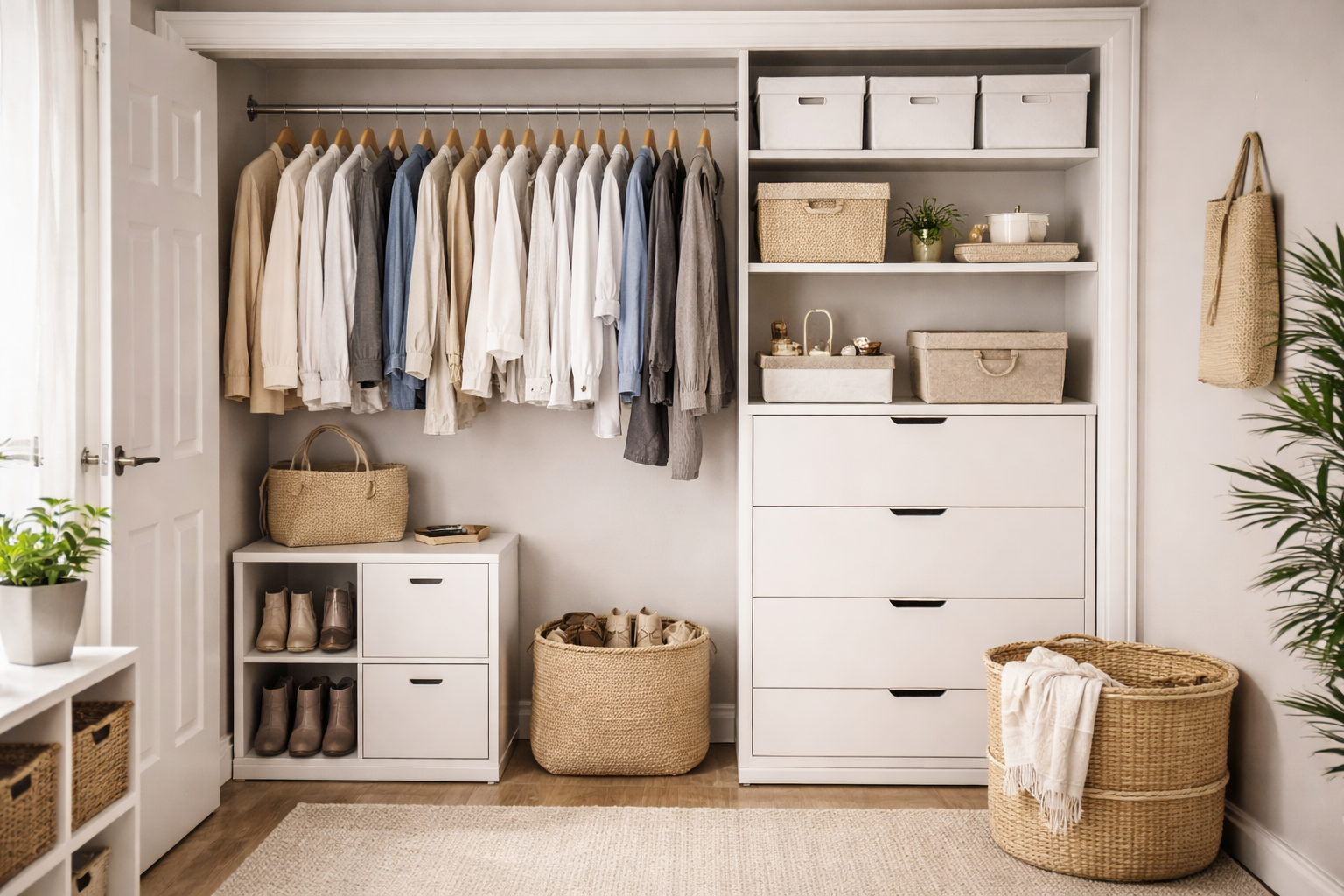
Minimalism isn’t just a design trend — it’s a mindset that brings clarity, focus, and intentionality into daily life.
Nowhere is that more evident than in a well-designed minimalist closet. Instead of cramming every inch with clothes and accessories, a minimalist closet emphasizes space, simplicity, and functionality.
Whether you’re living in a small apartment or just trying to reduce clutter, understanding the principles behind minimalist closet design can help you create a more useful, visually calming space — and transform the way you interact with your wardrobe every day.
In this article, we’ll explore how minimalist closets teach us not only how to store less, but how to live more efficiently, with purpose and ease.
Why Minimalist Closets Work So Well — Especially in Small Apartments
Most renters know the challenge of small closets: limited hanging space, few shelves, and nowhere to put extra items. Trying to maximize storage often leads to overstuffing, clutter, and chaos.
That’s where minimalism flips the equation. Instead of asking, “How can I fit more into this closet?” minimalist design asks, “What do I actually need in here?”
By reducing what’s stored — and organizing it with intention — minimalist closets become easier to use, easier to maintain, and far more visually appealing. They’re not just about having less. They’re about making what you have more functional.
Key Principles of Minimalist Closet Design
Minimalist design isn’t about empty spaces or cold, bare walls. It’s about purpose. Here are the principles that define a minimalist closet:
1. Less but better
Only keep clothing and accessories that serve a real purpose, fit you well, and reflect your lifestyle.
2. Clear visual lines
Use consistent hangers, matching bins, and neutral colors to create visual calm.
3. Open space is valuable
Empty space in a closet isn’t wasted — it creates breathing room and makes finding things easier.
4. Everything has a place
Every item should have a specific, logical home. That makes cleanup easier and keeps things tidy over time.
These principles don’t just apply to clothing — they help train your brain to think more clearly, reduce distractions, and focus on what matters.
The Capsule Wardrobe: Minimalism in Action
A capsule wardrobe is a perfect example of minimalist closet design. It typically includes 25–40 versatile pieces that can be mixed and matched to create dozens of outfits.
Instead of overloading your closet with trends or duplicates, a capsule wardrobe encourages:
- Intentional purchases
- Timeless styles
- Higher quality over quantity
- Seasonal rotation
This approach naturally reduces clutter and forces you to keep only what you actually wear and love.
Bonus: it saves money and time
By limiting choices, you eliminate decision fatigue and stop wasting money on clothes that stay unworn. You also spend less time digging for outfits and more time enjoying your day.
The Aesthetic Power of Minimalism
A minimalist closet just looks better. With clean lines, uncluttered shelves, and a calm color palette, the space instantly feels more spacious — even if the square footage hasn’t changed.
Visual simplicity translates into mental simplicity. When you open a closet that’s clean, balanced, and thoughtfully arranged, your brain doesn’t feel overwhelmed. Instead, you feel in control and focused.
This is especially powerful in rental apartments, where the rest of your living space may feel tight or crowded.
Furniture and Layout Choices That Support Minimalist Design
To create a minimalist closet, it’s important to choose furniture and layouts that support simplicity.
Use slim-profile hangers
They create uniformity, reduce bulk, and maximize space.
Choose closed storage bins
Store items like scarves, underwear, or seasonal gear out of sight in neutral-colored boxes or baskets.
Limit visible patterns
Too many prints or logos can make a small closet feel visually noisy. Use solid-color hangers, bins, and background fabrics.
Keep shelving simple
One or two well-placed shelves are better than a wall full of cluttered ledges.
Integrate hidden storage
Drawer units or boxes with lids help keep visual peace — a key principle of minimalist design.
Renter-Friendly Minimalist Closet Upgrades
You don’t need to own your home or remodel your closet to achieve a minimalist look. Here are renter-approved upgrades that support a sleek, clutter-free vibe:
- Tension rods for a double hanging system
- Removable drawer units in clean wood or white finishes
- Over-the-door fabric organizers in solid, neutral tones
- Peel-and-stick hooks to keep accessories off the floor
- Matching fabric bins for overhead shelves or closet floors
These tools allow you to customize your closet layout without damaging walls — a must for any renter.
Minimalist Closets Encourage Mindful Shopping
Once you experience the calm and function of a minimalist closet, it changes the way you shop. You start asking:
- “Do I really need this?”
- “Does this work with what I already own?”
- “Is this a quality item that will last?”
This mindset not only prevents future clutter, but it also saves money and reduces waste. Fewer items, but better items — that’s the heart of minimalist shopping.
Closet Decluttering: The Minimalist Method
If you’re ready to create your own minimalist closet, here’s a simple step-by-step decluttering process:
Step 1: Empty the closet completely
Yes — everything. Seeing it all at once creates awareness.
Step 2: Sort by category
Group clothes by type: shirts, pants, shoes, etc.
Step 3: Evaluate each item
Ask:
- Do I wear this?
- Does it fit?
- Does it align with my lifestyle?
If the answer is no, donate or recycle.
Step 4: Reorganize with intention
Put back only the items that serve a purpose or bring joy. Arrange them by color, type, or season.
Step 5: Maintain with regular reviews
Check your closet every 2–3 months and remove what’s no longer being used.
This process isn’t about being perfect — it’s about being honest and purposeful.
Storage for a Minimalist Lifestyle
Minimalism doesn’t mean having nothing. It means everything has a purpose.
Here’s how minimalist storage looks in action:
- One basket for shoes, instead of multiple racks
- A slim shelf for daily accessories, not a whole drawer
- Seasonal bins stored out of sight, not mixed in with daily use items
- A simple hook for one favorite bag, not a tangled mess of ten
This leaner system makes every choice faster and every space easier to clean.
How Minimalism Supports Mental Wellness
There’s a strong link between physical clutter and mental clutter. A messy closet can make you feel rushed, overwhelmed, or even ashamed.
In contrast, a minimalist closet brings:
- Calmness from visual order
- Focus from reduced decisions
- Confidence from knowing what you own
- Freedom from the weight of excess
Even if minimalism doesn’t come naturally to you, a small step like organizing your closet can have big ripple effects.
Tips to Keep Your Minimalist Closet Looking Great
Here are a few tips to maintain the aesthetic and function over time:
- Stick to a neutral color palette for bins and organizers
- Use labels to avoid “junk drawers” forming again
- Practice the one-in, one-out rule: when you buy something new, donate something old
- Clean out the closet at the start of each season
- Use soft lighting or LED strips to make the space inviting
Consistency is key. Once you get used to the benefits of a minimalist closet, you won’t want to go back.
Final Thoughts: Simplicity That Makes a Difference
A minimalist closet isn’t just about making your closet look pretty — it’s about building a life with less stress, more clarity, and greater purpose.
By reducing what you store and focusing on functionality, you free yourself from clutter and confusion. You save time, energy, and money — all while creating a closet that’s easier to maintain and more enjoyable to use.
In a small rental apartment, these small wins matter. With just a few smart choices and a mindset shift, your closet can go from chaotic to calm — and take your daily routine along with it.

Ryan Lewis is a home organization enthusiast who specializes in smart, renter-friendly solutions for small spaces. With a passion for functional design and practical living, Alex shares tips, guides, and ideas to help readers create calm, clutter-free environments—no matter the size of their home.