
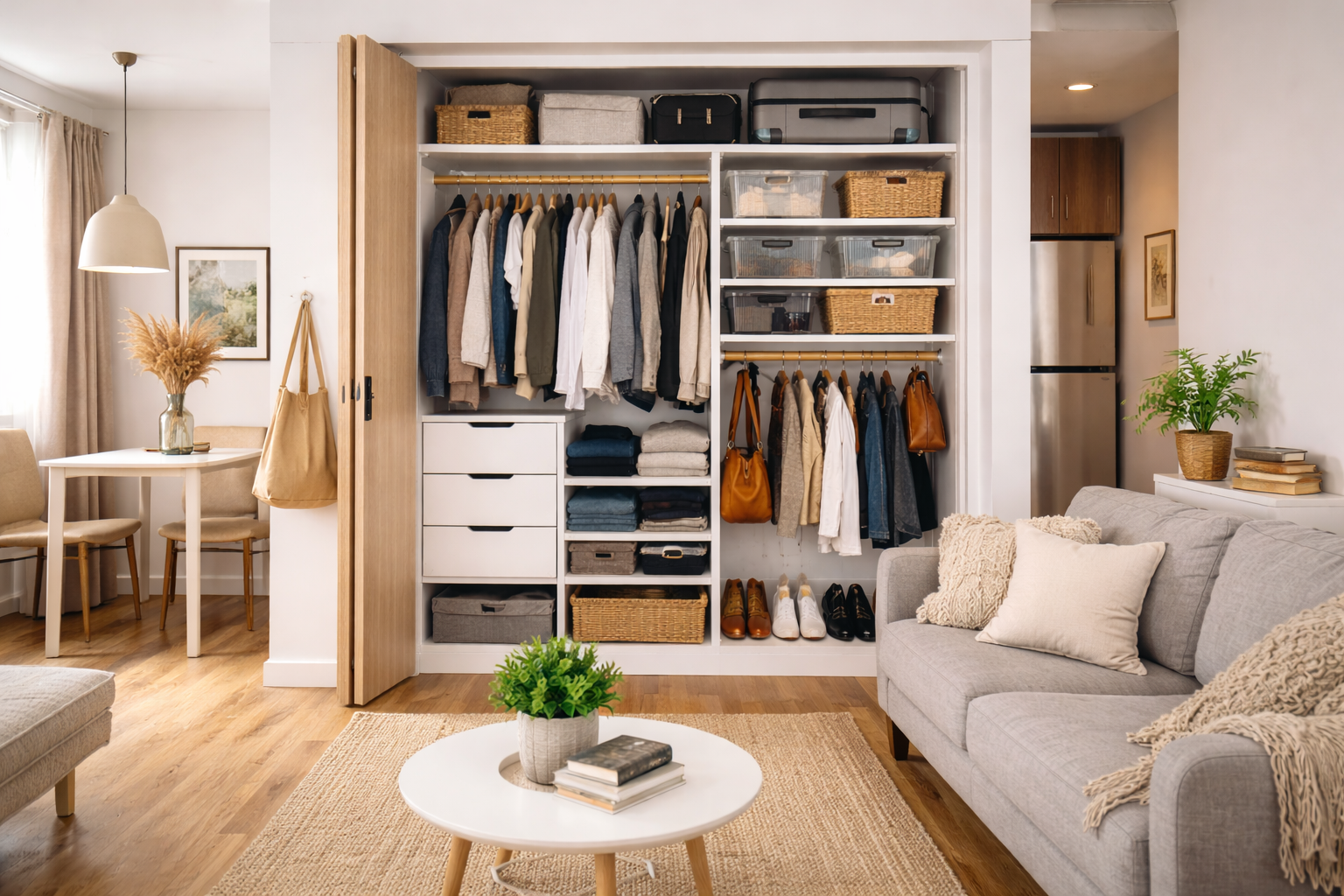
Living in a narrow apartment creates a very specific type of challenge.
The space may not be extremely small in total square footage, but the proportions make storage difficult. Closets are often long and tight, with limited depth and restricted movement.
When organization is poorly planned, these closets become frustrating corridors of clutter rather than functional storage areas.
In narrow apartments, closet organization is not about adding more furniture. It is about choosing space-saving solutions that respect depth, preserve circulation, and keep everything accessible without blocking movement. Layout decisions matter more here than almost anywhere else.
This article explores space-saving closet solutions designed specifically for narrow apartments, focusing on layouts and strategies that make tight spaces work efficiently without overwhelming them.
Why Narrow Closets Require a Different Approach
Narrow closets fail when they are treated like standard closets. Deep shelves, bulky organizers, and oversized bins quickly eat up the limited depth available. The result is blocked access, poor visibility, and constant reorganization.
In a narrow apartment, every inch of depth must be used intentionally. The goal is not to fill space, but to preserve flow. A successful narrow closet allows items to be reached easily without pulling everything out to access what is in the back.
This requires a layout mindset that prioritizes slim profiles, vertical organization, and clear pathways.
Understanding Depth as the Main Limitation
Width and height often get the most attention, but in narrow closets, depth is the true constraint. When storage extends too far forward, it interferes with movement and visibility.
Before organizing, it is essential to measure depth accurately. This measurement should guide every storage decision. Organizers that exceed available depth will always cause problems, no matter how attractive they look.
Space-saving solutions for narrow closets respect depth first, then expand vertically and selectively across width.
Using Vertical Space to Reduce Depth Pressure
One of the most effective strategies for narrow closets is shifting storage upward. Vertical layouts reduce reliance on deep storage and keep the pathway clear.
Hanging shelves, stacked bins, and tall freestanding units allow items to be stored without extending too far into the closet. When storage grows upward instead of outward, narrow spaces remain usable.
Vertical solutions also improve visibility, making it easier to see what you own and maintain order.
Choosing Slim Hanging Layouts for Narrow Closets
Hanging clothes incorrectly is one of the biggest mistakes in narrow closets. Bulky hangers and overcrowded rods cause garments to press forward, reducing usable depth.
Slim, non-slip hangers reduce bulk and keep clothing aligned. Separating garments by length also helps. Short items can hang in a lower section, while long items stay confined to a designated area.
This layout minimizes forward movement and keeps the closet visually lighter.
Designing a One-Sided Storage Layout
In very narrow closets, storage on both sides often creates congestion. A one-sided layout can be more effective.
By concentrating shelves, drawers, or hanging organizers on one side and keeping the opposite side open, movement improves significantly. This approach preserves access and prevents the closet from feeling like a tunnel.
One-sided layouts are especially effective when combined with vertical storage elements.
Using Shallow Shelves Instead of Deep Ones
Deep shelves are rarely practical in narrow closets. Items get lost in the back, and access becomes difficult.
Shallow shelves encourage intentional storage. They limit overstacking and keep items visible. This makes maintenance easier and reduces clutter.
When shelves are shallow, items are less likely to protrude into walking space.
Integrating Slim Drawer Units Without Blocking Access
Drawers can be useful in narrow closets, but only when designed correctly. Wide or deep drawer units often block movement and reduce accessibility.
Slim drawer towers that fit beneath hanging clothes or along one wall provide storage without disrupting flow. These units work best when drawers slide smoothly and do not require extra clearance.
Drawers should support the layout, not dominate it.
Managing Shoes in Narrow Closet Layouts
Shoes are one of the hardest items to store in narrow closets. Floor piles quickly block access and create visual clutter.
Vertical shoe racks, stacked shoe shelves, or door-based storage are far more effective. These solutions keep shoes contained while preserving floor space.
Separating daily shoes from occasional ones also helps prevent overcrowding.
Using Closet Doors as Depth-Neutral Storage
Closet doors offer valuable storage without affecting depth. Over-the-door organizers add capacity without intruding into the closet interior.
These organizers are ideal for shoes, accessories, scarves, and lightweight items. Because they remain flush with the door, they do not reduce usable depth.
Door-based storage is one of the smartest space-saving solutions for narrow apartments.
Creating Clear Zones to Prevent Congestion
Without zones, narrow closets become chaotic quickly. Items migrate forward, overlap, and block access.
Clear zoning keeps storage contained. A hanging zone, a folded items zone, a shoe zone, and an accessories zone should each have defined boundaries.
Zones reduce movement within the closet and make maintenance easier.
Using Containers to Control Visual Spread
Loose items spread quickly in narrow spaces. Containers help control this spread and maintain order.
Shallow bins, narrow baskets, and labeled boxes keep items grouped without extending too far forward. Uniform containers also improve visual balance.
Containers work best when they are sized specifically for narrow layouts.
Avoiding Bulky Organization Trends
Many popular organization trends do not translate well to narrow closets. Oversized bins, deep wire shelving, and heavy racks often worsen congestion.
Avoid solutions that prioritize volume over access. In narrow apartments, access is more important than capacity.
Choosing fewer, well-sized organizers usually leads to better results.
Maintaining Clear Pathways Inside the Closet
A narrow closet must always maintain a clear pathway. This pathway ensures that items can be reached without disruption.
Avoid placing storage directly on the floor unless it is low-profile and contained. Leave enough clearance for movement and door operation.
Pathways are essential for usability.
Using Lighting to Enhance Narrow Layouts
Poor lighting exaggerates narrowness. Dark closets feel tighter and more cluttered.
Portable lighting improves visibility and perception. Battery-powered lights placed strategically help illuminate vertical storage and reduce shadowing.
Good lighting makes narrow closets feel more functional and less confined.
Adapting Layouts for Changing Needs
Narrow apartments often require flexibility. Storage needs change with seasons, lifestyle shifts, and wardrobe updates.
Modular and adjustable storage allows layouts to adapt without redesign. Shelves can move, bins can rotate, and hanging space can adjust.
Flexibility ensures long-term usability.
Avoiding Common Narrow Closet Mistakes
One common mistake is trying to store too much in a limited space. Overcrowding defeats space-saving efforts.
Another mistake is using deep organizers that block access. Even attractive solutions fail when depth is ignored.
Avoiding these mistakes preserves both function and comfort.
Maintaining Space-Saving Layouts Over Time
Space-saving layouts require discipline. Narrow closets show clutter quickly.
Regular decluttering, seasonal rotation, and small adjustments help maintain balance. Because space is limited, maintenance is especially important.
Consistent habits preserve usability.
Why Space-Saving Layouts Matter in Narrow Apartments
In narrow apartments, closets affect daily routines more than in larger homes. Poor layouts create friction and frustration.
Space-saving solutions restore ease and control. They allow renters to use their closets efficiently without sacrificing comfort.
A well-planned narrow closet often feels larger than it is.
Frequently Asked Questions
What is the biggest mistake in narrow closet organization?
Using deep or bulky organizers that block access and reduce flow.
Are shallow shelves better than deep shelves?
Yes. Shallow shelves improve visibility and prevent items from getting lost.
Can narrow closets still hold a full wardrobe?
Yes, with vertical storage, slim organizers, and clear zoning.
How do renters keep narrow closets from feeling cramped?
By preserving pathways, using door-based storage, and avoiding overcrowding.
Should narrow closet layouts change seasonally?
Yes. Seasonal rotation helps maintain balance and prevents overflow.

Ryan Lewis is a home organization enthusiast who specializes in smart, renter-friendly solutions for small spaces. With a passion for functional design and practical living, Alex shares tips, guides, and ideas to help readers create calm, clutter-free environments—no matter the size of their home.