
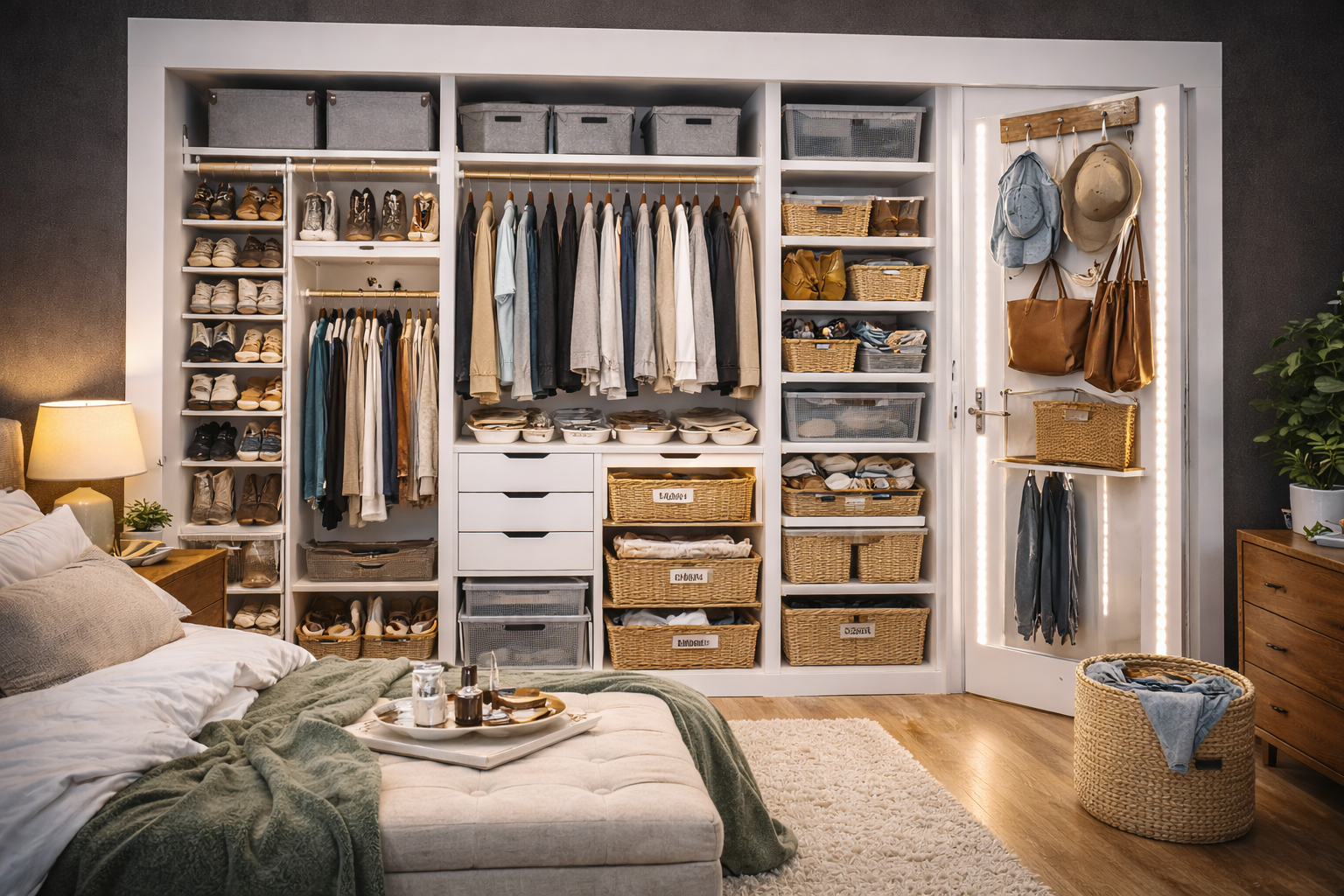
Many apartment dwellers believe that improving closet space requires construction. New shelves, custom cabinetry, or permanent changes seem like the only way to fix poor storage.
For renters and small-space residents, this belief creates frustration, because remodeling is usually not allowed, affordable, or practical.
The reality is that most closet problems are not structural. They are layout problems. Space is often wasted, misused, or blocked by poor organization choices.
When layout is addressed thoughtfully, closet capacity and usability can improve dramatically without any remodeling at all.
This article explains how to maximize closet space without remodeling, focusing on layout strategies that work in small apartments and rental environments.
Why Remodeling Is Not the Solution Most People Think It Is
Remodeling is often associated with permanence and customization. In reality, remodeling fixes one version of a problem at a single moment in time. It does not adapt easily as needs change.
In small apartments, remodeling can even reduce flexibility. Fixed shelves and built-ins lock storage into one configuration that may not match future wardrobes or lifestyles.
Maximizing closet space without remodeling allows the closet to evolve. Layout-based solutions provide adaptability that permanent changes cannot.
Understanding Where Closet Space Is Commonly Wasted
Most closets have more usable space than they appear to have. The issue is that this space is often fragmented or blocked.
Common sources of wasted space include unused vertical height, overcrowded hanging rods, deep shelves that hide items, and floor space filled with loose piles. These problems are not solved by remodeling. They are solved by rethinking layout.
Identifying wasted space is the first step toward maximizing capacity.
Shifting From Volume Thinking to Access Thinking
A common mistake is focusing on how much a closet can hold instead of how easily items can be accessed. When access is poor, clutter builds even if capacity is technically high.
Maximizing space without remodeling means improving access. When items are easier to reach and return, the closet functions better with the same physical footprint.
Access-first layouts outperform storage-heavy designs in small spaces.
Using Vertical Space to Expand Storage Potential
Vertical space is the most underused dimension in most closets. Ceilings are often much higher than the highest shelf, leaving valuable space unused.
Using vertical storage does not require remodeling. Hanging shelves, stacked bins, and tall freestanding units allow storage to grow upward.
The key is alignment and restraint. Vertical storage should be organized into clean sections rather than chaotic stacks.
Reworking Hanging Space for Efficiency
Hanging space is often the largest single storage area in a closet, yet it is frequently misused. Bulky hangers, overcrowded rods, and mixed garment lengths reduce efficiency.
Switching to slim hangers instantly frees up space. Separating garments by length creates vertical efficiency. Short items can occupy lower sections, while long garments are grouped together.
These changes improve capacity without altering the structure.
Reducing Rod Congestion Without Adding Hardware
Many people assume they need to install new rods to increase hanging space. In reality, congestion is often caused by poor distribution rather than lack of rods.
Rotating clothing seasonally, removing rarely worn items, and folding garments that do not require hanging reduces pressure on the rod.
Reducing congestion often reveals space that was already there.
Using Shallow Storage to Improve Visibility
Deep shelves hide items and waste usable space. When items are stacked deeply, access becomes difficult and clutter increases.
Replacing deep storage with shallow shelves or narrow bins improves visibility and usability. Items stay in view, which reduces overbuying and duplication.
Shallow storage maximizes functional space rather than theoretical capacity.
Turning the Closet Floor Into Structured Storage
The closet floor is often treated as a dumping ground. Shoes, bags, and boxes accumulate without structure.
Maximizing space means giving the floor a purpose. Slim shoe racks, low-profile drawers, or contained bins turn the floor into intentional storage.
When floor storage is controlled, it stops competing with upper zones.
Using Closet Doors as Zero-Footprint Storage
Closet doors are one of the most effective ways to increase storage without remodeling. Interior door organizers add capacity without consuming interior space.
Doors are ideal for accessories, shoes, scarves, belts, and lightweight items. Moving these items to the door frees up interior space for bulkier storage.
Door-based storage is one of the highest-impact, lowest-risk layout changes available.
Creating Zones That Prevent Space Collapse
Without zones, closets collapse into chaos regardless of size. Items migrate and overlap, reducing usable space.
Zoning divides the closet into functional areas. A hanging zone, folded items zone, shoe zone, and accessories zone give structure to the layout.
Zones prevent clutter from spreading and make maintenance easier.
Using Containers to Compress Without Crushing
Containers are often misunderstood. Their purpose is not to stuff as much as possible into a small space. Their purpose is to control and group items.
Choosing containers that fit the available depth prevents wasted space. Containers should hold items comfortably without compressing them excessively.
When containers are used correctly, they increase usable space by reducing chaos.
Improving Lighting to Unlock Hidden Space
Poor lighting makes closets feel smaller than they are. Dark corners hide usable space and discourage proper organization.
Portable lighting improves visibility without installation. Battery-powered or motion-activated lights reveal storage zones that were previously ignored.
Better lighting often reveals that more space exists than expected.
Reallocating Space Based on Frequency of Use
Not all items deserve equal access. Items used daily should occupy prime space. Items used rarely should move to less convenient zones.
Reallocating space based on frequency of use improves efficiency without adding storage. This simple shift often frees up significant space.
Closets function best when priority items are easy to reach.
Reducing Duplication to Free Space
Duplication quietly consumes space. Multiple similar items, forgotten purchases, and unused clothing reduce capacity.
Regular review helps identify duplicates and unnecessary items. Removing even a small percentage of unused belongings can dramatically improve space.
Space is often gained by subtraction rather than addition.
Avoiding the Trap of Over-Organizing
Over-organizing can reduce space rather than increase it. Too many organizers create barriers, not solutions.
Every added element should solve a clear problem. If an organizer does not improve access or clarity, it likely reduces usable space.
Maximizing space requires restraint.
Making Layout Adjustments Incrementally
Large redesigns can be overwhelming. Incremental adjustments are often more effective.
Improving one zone at a time allows the layout to evolve naturally. Small changes compound into significant improvements.
This approach reduces risk and increases long-term success.
Maintaining Space Gains Over Time
Maximizing closet space is not a one-time project. Habits determine whether gains are preserved.
Seasonal rotation, regular decluttering, and small resets prevent space from collapsing again. When the layout supports habits, maintenance becomes easier.
Consistency protects progress.
Why Layout Changes Beat Remodeling for Small Spaces
Remodeling changes walls. Layout changes behavior.
In small apartments, behavior determines success. Layout-based solutions adapt, move, and evolve with the resident.
Maximizing closet space without remodeling provides flexibility, saves money, and respects rental constraints.
Frequently Asked Questions
Can closet space really be increased without remodeling?
Yes. Most space gains come from better layout, access, and organization rather than structural changes.
What is the fastest way to free up closet space?
Removing unused items and switching to slim hangers often produces immediate results.
Are containers always helpful?
Only when they are sized correctly and used to control, not compress, belongings.
Does lighting really affect usable space?
Yes. Better visibility reveals and unlocks underused areas.
Why do layout changes last longer than remodeling?
Because layouts adapt to habits and change, while remodeling is fixed.

Ryan Lewis is a home organization enthusiast who specializes in smart, renter-friendly solutions for small spaces. With a passion for functional design and practical living, Alex shares tips, guides, and ideas to help readers create calm, clutter-free environments—no matter the size of their home.