
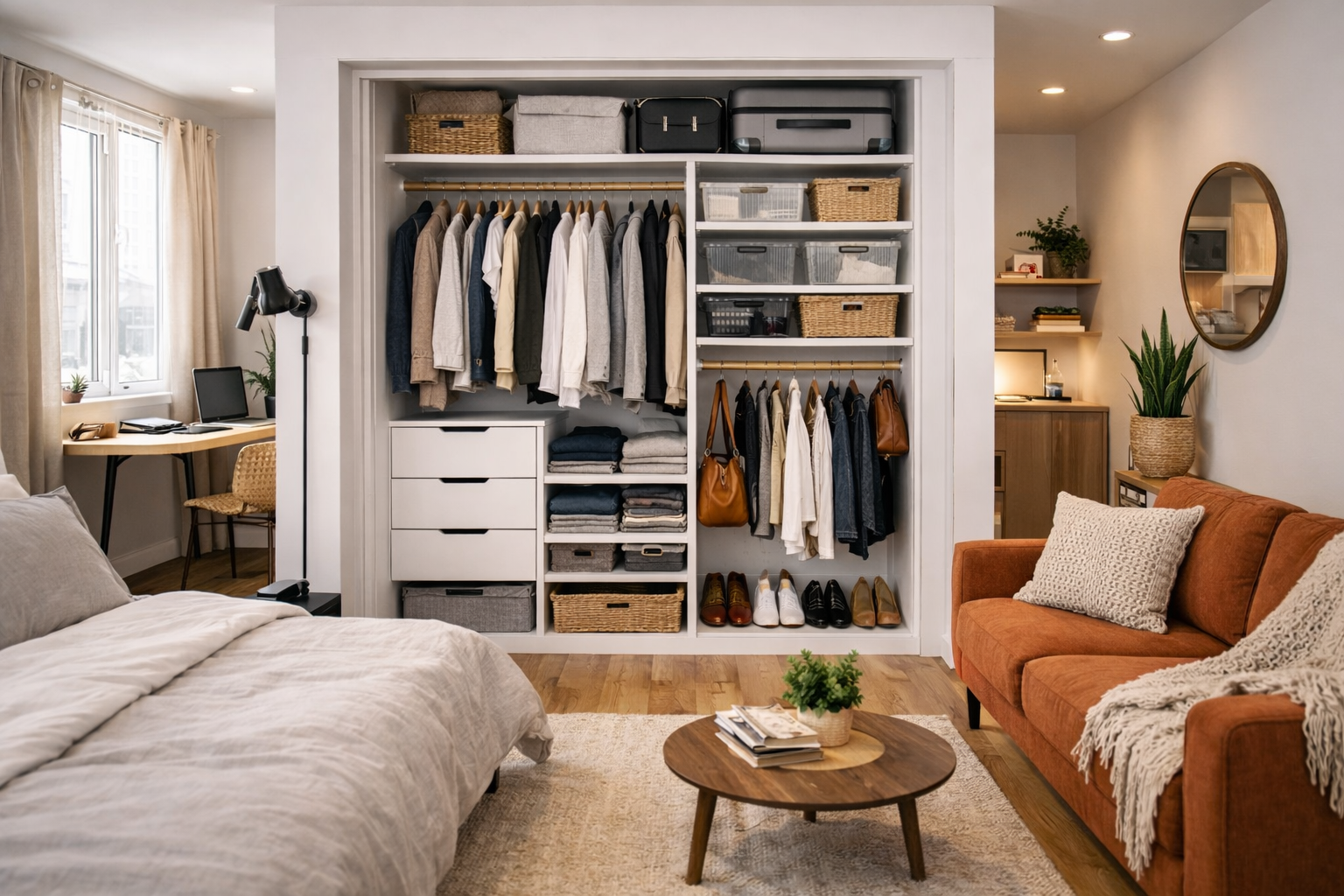
Living in a studio apartment means living without clear boundaries. The bedroom, living room, workspace, and sometimes even the dining area all exist in the same environment.
In this context, closet layout is not just about storage. It is about how the entire apartment functions and feels on a daily basis.
In studio apartments, closets often carry more responsibility than in larger homes. They must store clothing, shoes, accessories, seasonal items, and sometimes even household supplies.
When layout is poorly planned, the studio quickly feels cramped and chaotic. When layout is done well, the apartment feels calmer, more intentional, and significantly larger.
This article explores closet layout ideas designed specifically for studio apartments, focusing on strategies that maximize function while preserving openness and visual balance.
Why Closet Layout Is Critical in Studio Apartments
In a studio apartment, there is no separate bedroom to hide clutter. Everything is visible, and every storage decision affects the overall atmosphere of the space.
Closets in studios often serve as the main storage hub. If the closet layout is inefficient, items spill into the living area, creating visual noise and reducing usable space. This is why layout matters more than volume in studio living.
A well-planned closet layout allows the studio to function as multiple spaces without feeling overcrowded.
Understanding the Role of the Closet in a Studio
Unlike traditional apartments, studios rely heavily on containment. The closet must absorb items that would normally be distributed across multiple rooms.
Before organizing, it helps to define the closet’s role. Will it store only clothing, or also shoes, bags, linens, and personal items? Clarifying this role guides layout decisions and prevents overlap.
When the closet has a clear purpose, the rest of the studio becomes easier to manage.
Vertical Layouts That Support Open Living
Vertical layouts are essential in studio apartments. Floor space must remain as open as possible to support movement and flexibility.
Using tall freestanding units, hanging shelves, and stacked bins allows storage to grow upward rather than outward. This keeps the studio visually lighter and easier to navigate.
Vertical layouts also create visual structure, helping the closet feel intentional rather than improvised.
Designing a Compact Hanging Layout
Hanging space in studio closets must be efficient. Overcrowded rods create clutter that spills visually into the living area.
Separating hanging space by garment length improves organization. Short garments can occupy a lower level, while long items stay on a higher level. This layout reduces bunching and improves visibility.
Compact hanging layouts support daily routines and reduce friction in small spaces.
Integrating Folded Storage Without Overloading the Closet
Folded clothing storage can quickly overwhelm a studio closet if not planned carefully. Deep shelves and bulky drawers reduce flexibility.
Slim drawer units, hanging shelves, and narrow cubbies allow folded items to stay contained without dominating the space. These solutions integrate well into small layouts and preserve openness.
Keeping folded storage minimal helps maintain balance.
Managing Shoes in a Studio Closet Layout
Shoes are one of the biggest challenges in studio apartments. Left unmanaged, they often end up scattered throughout the living space.
A studio-friendly shoe layout prioritizes vertical or concealed storage. Stackable shoe racks, slim shelves, or door-based storage keep shoes contained inside the closet.
Separating daily shoes from occasional pairs prevents overcrowding and improves accessibility.
Using Closet Doors to Protect Visual Simplicity
In studio apartments, visual simplicity is essential. Closet doors play a key role in controlling what is seen.
Over-the-door storage placed on the inside of the closet door adds capacity without affecting the studio’s visual flow. This keeps storage hidden and maintains a clean appearance.
When doors close, the studio feels calm and uncluttered.
Creating Zones That Reflect Studio Living
Zoning is especially important in studios because the closet serves multiple purposes. Clear zones prevent overlap and confusion.
A daily wear zone, a folded items zone, a shoe zone, and a storage zone for non-clothing items help maintain order. Each zone should have defined boundaries, even within a small footprint.
Zoning reduces decision fatigue and supports consistent organization.
Choosing Slim and Modular Elements
Bulky organizers disrupt studio layouts. Slim and modular elements adapt better to limited space.
Narrow shelves, compact drawers, and modular bins allow storage to expand or contract as needed. This flexibility is critical in studio living, where needs change frequently.
Modular layouts support experimentation without commitment.
Managing Seasonal Items Without Visual Overload
Seasonal clothing and accessories can overwhelm studio closets. A layout that accounts for seasonal rotation prevents clutter.
Store off-season items higher or in contained boxes. Keep current-season items at eye level for easy access.
Rotating items maintains balance and prevents overflow into the living area.
Avoiding Layout Choices That Shrink Studios
Certain layout mistakes make studios feel smaller. Overcrowded rods, open piles, and deep shelving create visual heaviness.
Avoid layouts that block light or restrict movement. Keep storage compact, aligned, and contained.
A lighter layout enhances the feeling of space.
Using Lighting to Improve Layout Perception
Lighting influences how layouts are perceived. Poor lighting makes closets feel cramped and chaotic.
Battery-powered or clip-on lights improve visibility without installation. Better lighting supports organization and enhances visual clarity.
In studios, lighting helps define zones and improves usability.
Adapting Layouts for Work and Lifestyle Changes
Studios often serve multiple functions. Work-from-home setups, hobbies, and lifestyle shifts affect storage needs.
A flexible closet layout adapts to these changes. Modular and movable elements allow quick reconfiguration without redesign.
Adaptability is key to long-term studio comfort.
Maintaining Layout Discipline in Studio Living
Studios are sensitive to clutter. Small lapses quickly become visible.
Regular maintenance, seasonal reviews, and quick resets keep the closet layout functional. Because the closet affects the entire apartment, maintenance is especially important.
Consistency preserves openness.
Why Layout First Thinking Works Best in Studios
In studio apartments, layout determines how the space feels. Storage without layout leads to congestion.
Layout-first organization supports openness, movement, and calm. It allows the studio to function as a flexible living environment.
A thoughtful closet layout often makes a studio feel larger than it actually is.
Frequently Asked Questions
Why do studio apartments need different closet layouts?
Because the closet affects the entire living space, not just storage.
What layout works best in very small studios?
Vertical, slim layouts with clear zones and hidden storage.
Should studios avoid open closet storage?
Often yes. Hidden or contained storage preserves visual simplicity.
Can closet layout improve studio comfort?
Yes. Better layout improves flow, reduces clutter, and supports daily routines.
How often should studio closet layouts be reviewed?
At least seasonally, or whenever lifestyle needs change.

Ryan Lewis is a home organization enthusiast who specializes in smart, renter-friendly solutions for small spaces. With a passion for functional design and practical living, Alex shares tips, guides, and ideas to help readers create calm, clutter-free environments—no matter the size of their home.