
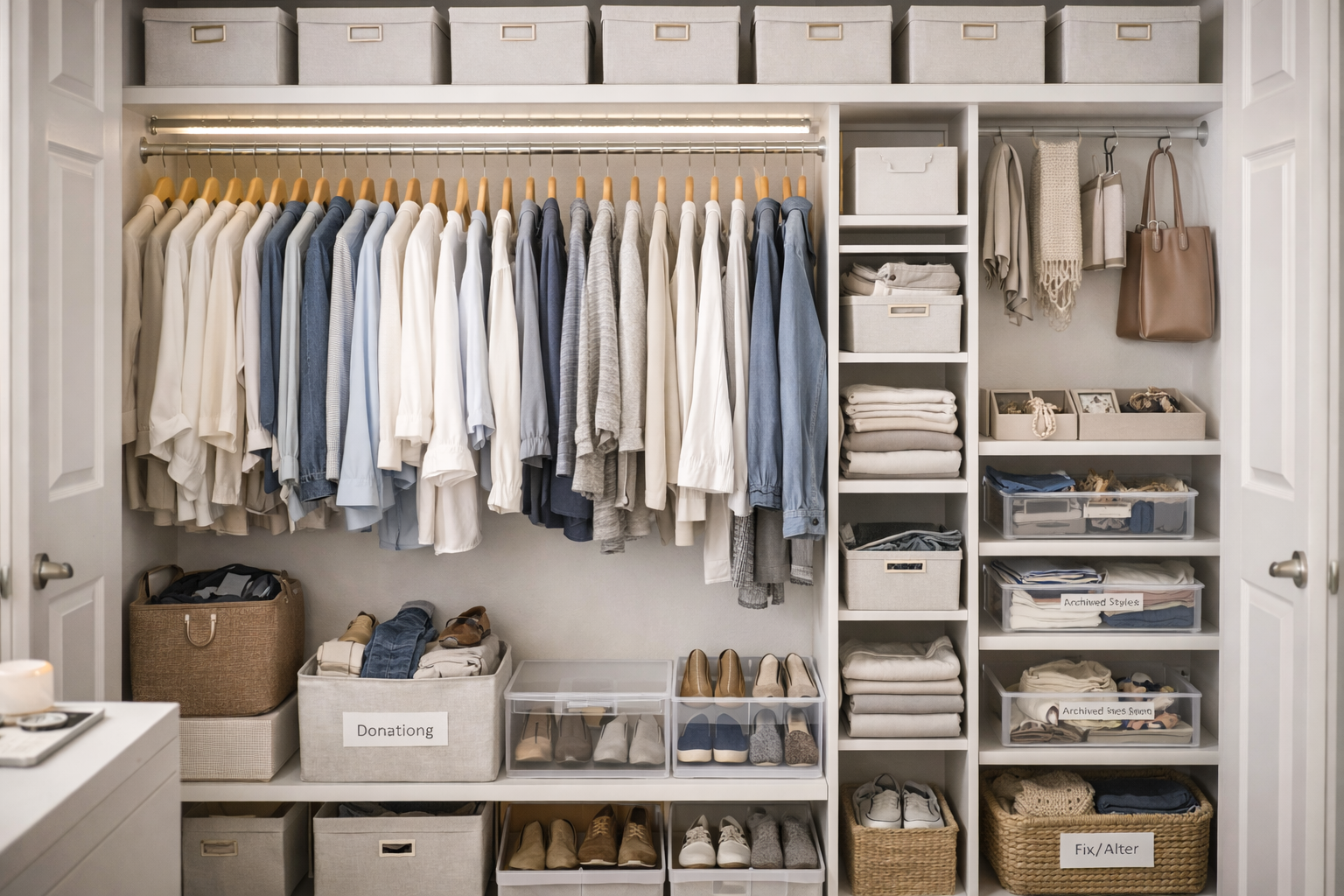
Living in a small apartment means every inch counts — especially when it comes to closet space. But many people make a surprising mistake: they focus only on physical storage and forget how visual organization plays an equally powerful role.
Here’s the truth: your closet may not be as small as it feels.
It just looks and functions smaller because it lacks visual clarity.
In this article, we’ll explore why visual strategies matter just as much as layout in tiny closets, and how simple changes in color, contrast, lighting, and display can make even the smallest storage area feel open, accessible, and easier to use — without any renovation.
The Psychology Behind Visual Space
When we look at a space — any space — our brains interpret it visually before anything else. That means:
- Cluttered visuals = cluttered perception
- Mixed patterns = cognitive overload
- Dark corners = reduced visibility = reduced use
In small closets, visual overwhelm happens fast. With limited room, even a few items out of place can create chaos. That’s why a visually clean design helps not just with aesthetics, but also with functionality.
The goal isn’t to create a showroom. It’s to reduce visual noise so your closet feels:
- Bigger
- More organized
- Easier to navigate
Why Physical Space Isn’t the Only Problem
Let’s say you’ve already:
- Installed a hanging rod
- Bought under-shelf baskets
- Added bins to the top shelf
And yet… your closet still feels cramped and chaotic.
That’s because visual organization is the missing piece.
You might have enough physical storage, but if your eyes can’t quickly scan and locate items, or if the space feels jumbled, your brain registers it as “messy” — even when it’s technically organized.
Problem #1: Color Chaos
One of the biggest causes of visual clutter in small closets is color disorganization.
When hangers are mismatched, bins have different prints, and clothes are arranged randomly by color, the eye doesn’t know where to look.
This leads to:
- Visual overwhelm
- A harder time finding items
- A space that feels more cramped than it is
Solution: Use Color to Create Calm
Here’s how to use color to visually expand your closet:
1. Match Your Hangers
Choose one hanger color for the entire closet. Whether white, black, or wood — consistency reduces distractions.
2. Group Clothing by Color
Arrange your clothes in color gradients — from light to dark, or by categories (neutrals, colors, patterns). This instantly creates order and flow.
3. Keep Storage Neutral
Use neutral-colored bins and baskets (white, beige, gray) to avoid visual “shouting.” Let the clothes be the only color variation.
Problem #2: Visual Clutter From Packaging and Labels
Open bins filled with mixed items, branded shopping bags used as storage, and visible product packaging all contribute to a noisy visual field.
In small closets, this instantly shrinks the perceived space.
Solution: Conceal and Simplify
Here’s how to clean up visual clutter:
1. Use Uniform Storage Containers
Choose identical baskets or bins — even if inexpensive. The uniformity creates a cleaner, more cohesive look.
2. Remove Packaging
Take items like belts, scarves, or accessories out of original packaging. Store them in dividers, trays, or pouches instead.
3. Label Discreetly
Use minimalist, clear labels in one font and tone. Avoid large, colorful tags. The cleaner the label, the less mental clutter it creates.
Problem #3: Dark Spaces That Hide Items
Closets without proper lighting feel smaller — and make items harder to find. This often leads to unused corners or piles forming in the shadows.
Solution: Add Light and Reflective Surfaces
You don’t need an electrician to brighten your closet.
1. Stick-On LED Lights
Battery-powered or rechargeable lights are easy to install and illuminate dark corners instantly.
2. Use Light-Colored Linings
If you line your closet walls or shelves, choose white or light tones. They reflect light and make the space feel bigger.
3. Add a Mirror Nearby
If possible, place a small mirror on the door or outside wall. It reflects light and gives the illusion of more space.
Problem #4: Open Visual Zones Without Boundaries
When everything is visible and mixed together — shoes under dresses, bags on top of shirts, socks in a hanging shelf next to scarves — the space loses its structure.
This lack of separation makes the closet feel jumbled.
Solution: Visually Divide by Function
You don’t need new furniture — just visual boundaries.
1. Use Shelf Dividers
These keep stacks of clothes upright and create clear sections.
2. Add Hanging Organizers
These can create “mini closets” for shoes, accessories, or seasonal items.
3. Use Drawer Inserts
In dresser drawers or bins, use dividers to create clear lanes for each item.
Bonus Tip: Display One or Two Signature Pieces
In very small closets, editing what’s visible is powerful.
Keep your favorite or most-used items in the most prominent positions:
- A go-to jacket
- Your favorite handbag
- A pair of shoes you wear every day
This makes the space feel intentional — and avoids the “stuffed and forgotten” feeling.
Small Changes, Big Visual Impact
You don’t need to renovate. Try these small upgrades that visually double your closet’s feel:
- Use matching storage boxes
- Hang items by category and color
- Install a strip light under each shelf
- Swap packaging for neutral cloth bags
- Use slim, non-slip hangers to reduce bulk
- Fold clothes to the same size for stacked areas
Each of these takes less than 15 minutes — but adds lasting visual clarity.
Real-Life Example: A Tiny Closet Transformed
Before:
- Bright-colored hangers mixed with wire ones
- Patterned bins and plastic bags
- Shoes in a pile at the bottom
- No light
After:
- All black velvet hangers
- White fabric bins with uniform labels
- Stick-on lighting strip under top shelf
- Shoes stored in clear boxes, two rows stacked
- Outfits sorted light to dark
Result:
No clothes removed. No shelf added. Just visual organization. And the closet now feels twice as big — and easier to use.
Visual Organization Helps With More Than Space
Besides improving function and appearance, visual clarity brings psychological benefits:
- Reduces decision fatigue
- Encourages consistent use
- Makes outfit planning easier
- Improves mood in the morning
When your closet looks calm, your mind feels calm — especially in small spaces where your environment affects your mindset daily.
Final Thoughts: Make Your Closet Look as Organized as It Feels
Most closet organization tips focus on layout. But in small apartments, what your eyes see matters just as much as what your closet holds.
You can’t always add space — but you can change how it looks and works:
- Match your hangers
- Group by color and category
- Hide packaging
- Improve lighting
- Define zones visually
These changes make your closet feel cleaner, smarter, and more spacious — without getting rid of a single thing or renovating the structure.
When the visual side of your storage is under control, everything else becomes easier to maintain.
And that’s the real secret to closet peace in small apartments.

Ryan Lewis is a home organization enthusiast who specializes in smart, renter-friendly solutions for small spaces. With a passion for functional design and practical living, Alex shares tips, guides, and ideas to help readers create calm, clutter-free environments—no matter the size of their home.