
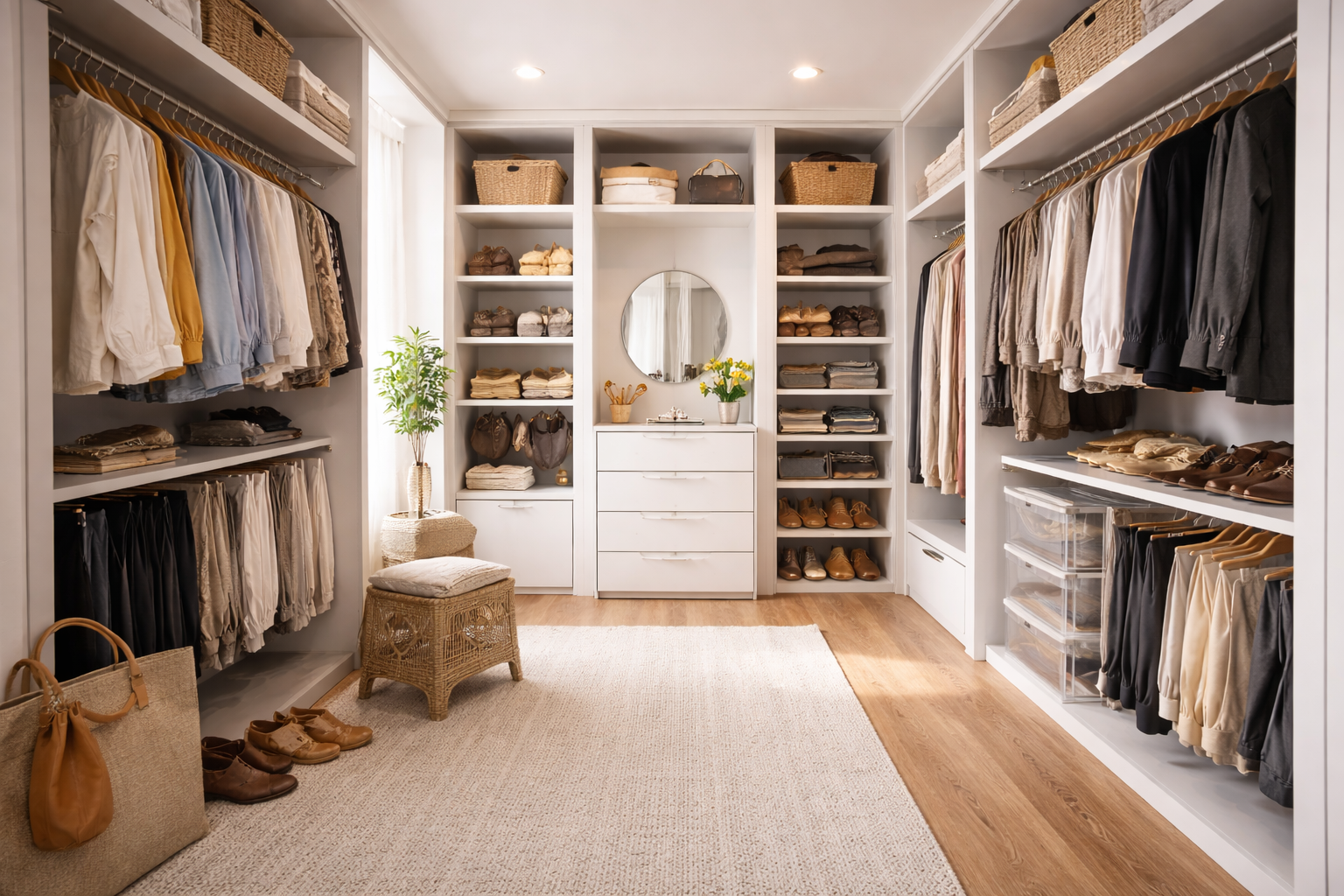
Moving into an apartment with a walk-in closet can feel like a dream. Compared to standard reach-in closets, the extra space seems generous and full of possibilities.
However, without a clear strategy, even a walk-in closet can become disorganized quickly.
Many people assume that more space automatically means better organization. In reality, more space requires more planning.
If you do not establish structure from the beginning, clutter simply spreads out instead of disappearing.
Organizing a walk-in closet efficiently after moving requires intentional zoning, smart storage decisions, and a long-term maintenance mindset.
When done correctly, your walk-in closet can become one of the most functional and calming spaces in your apartment.
Start With a Full Reset Before Installation
Even though you just moved, do not rush to hang everything immediately. Begin with a reset mindset.
Open all boxes and review what you brought. Moving is the perfect opportunity to reassess your wardrobe. If something felt unnecessary during packing, it will likely feel unnecessary now.
A walk-in closet should not become a storage unit for indecision. It should reflect your current lifestyle.
Declutter first. Organize second.
Analyze the Layout Before Placing Anything
Walk-in closets come in many layouts. Some are long and narrow. Others are square. Some include built-in shelves or drawers. Others are empty rooms with rods.
Before placing clothing, study the layout carefully.
Ask yourself:
Where is the natural light coming from?
Are there awkward corners?
Is there vertical space that can be maximized?
Is there enough depth for shelving units?
Mapping the space mentally allows you to create intentional zones instead of randomly filling areas.
Divide the Closet Into Functional Zones
Zoning is the foundation of efficient walk-in closet organization.
Create dedicated areas such as:
Daily wear zone
Work or professional clothing zone
Formal or event clothing zone
Shoe storage zone
Accessory zone
Seasonal storage zone
Each zone should have a clear purpose. When categories are separated, visual clutter decreases and accessibility improves.
Without zoning, items tend to overlap and create confusion.
Prioritize Your Daily Essentials
The most accessible area of your walk-in closet should be reserved for items you wear most frequently.
Place daily essentials:
At eye level
Within easy reach
Near the entrance
This makes your morning routine faster and more efficient. You should not need to navigate the entire closet to find everyday clothing.
Accessibility reduces friction.
Use Vertical Space Strategically
Walk-in closets often have generous vertical height. Do not waste it.
Install or utilize:
Upper shelves for seasonal bins
Double hanging rods for shorter garments
Tall shelving units for folded clothing
If your closet has high ceilings, store rarely used items at the top and keep a small step stool available if necessary.
Vertical optimization increases capacity without increasing clutter.
Create a Dedicated Shoe System
Shoes can overwhelm even large closets if not organized properly.
Instead of scattering pairs across the floor, create a defined shoe area.
Options include:
Tiered shoe racks
Clear stackable shoe boxes
Built-in shelving
Vertical shoe cabinets
Organize shoes by type or frequency of use. Keep daily pairs accessible and store occasional shoes higher or further back.
Defined systems prevent visual chaos.
Incorporate Drawers for Small Items
Small accessories like belts, scarves, jewelry, and socks can quickly create disorganization if left loose.
If your walk-in closet includes drawers, assign them specific categories. If not, consider adding portable drawer units.
Drawer dividers help maintain order inside compartments.
When small items have a designated space, clutter decreases significantly.
Avoid Overcrowding Just Because You Have Space
One of the most common mistakes with walk-in closets is overfilling them.
Just because you have more room does not mean you should expand your wardrobe unnecessarily.
Empty space allows:
Better airflow
Easier browsing
Reduced wrinkling
Less visual stress
A walk-in closet should feel open and breathable, not compressed.
Install Lighting That Enhances Visibility
Good lighting transforms a walk-in closet from functional to luxurious.
If the apartment lighting is insufficient, consider adding battery-operated LED strips or motion-sensor lights.
Proper lighting helps you:
See colors accurately
Avoid duplicate purchases
Find items quickly
A well-lit closet feels more organized instantly.
Maintain Clear Pathways
Walk-in closets should be easy to navigate. Avoid placing storage units in ways that block movement.
Keep pathways clear. Ensure that doors, drawers, and bins open fully without obstruction.
Flow matters as much as storage capacity.
An efficient layout supports smooth movement.
Rotate Seasonally Without Redesigning
Even in larger closets, seasonal overflow can become overwhelming.
Instead of integrating all clothing at once, rotate based on season.
Store off-season items in labeled bins on upper shelves. When the season changes, swap categories without reorganizing the entire structure.
Rotation maintains clarity year-round.
Use Matching Storage Elements
Uniform bins, identical hangers, and consistent labeling create visual harmony.
When everything matches, the closet appears more structured and intentional.
Visual consistency also simplifies future adjustments if you move again.
Your system should be portable even in a larger space.
Create a Small Planning Area If Space Allows
If your walk-in closet is spacious enough, consider incorporating a small planning area.
This could include:
A narrow bench
A small mirror
A hook for outfit planning
A basket for upcoming laundry
This transforms the closet into a functional dressing area rather than just storage.
However, avoid overdecorating. Function should always come first.
Develop a Maintenance Routine
Organization is not a one-time project. Even walk-in closets require regular maintenance.
Adopt simple habits:
Weekly five-minute reset
Monthly review of underused items
Seasonal declutter sessions
One-in-one-out purchase rule
Consistent small actions prevent overwhelming reorganizations.
Plan for Future Moves
Even if your current walk-in closet feels permanent, maintain portability.
Use modular shelving where possible. Avoid permanent modifications that cannot be undone.
If you move again, your categorized system and modular pieces can transition smoothly to a smaller or differently shaped closet.
Flexibility protects your investment.
Final Thoughts: Turn Space Into Strategy
A walk-in closet offers opportunity, but without strategy, opportunity becomes clutter.
When you organize intentionally after moving in, you build a structure that supports your lifestyle instead of overwhelming it.
Start with decluttering. Create zones. Use vertical space. Maintain accessibility. Avoid overcrowding. Build habits.
When your walk-in closet is organized with purpose, it becomes more than storage. It becomes a space that simplifies your routine and reduces daily stress.
The difference between a chaotic walk-in closet and an efficient one is not size. It is structure.

Ryan Lewis is a home organization enthusiast who specializes in smart, renter-friendly solutions for small spaces. With a passion for functional design and practical living, Alex shares tips, guides, and ideas to help readers create calm, clutter-free environments—no matter the size of their home.