
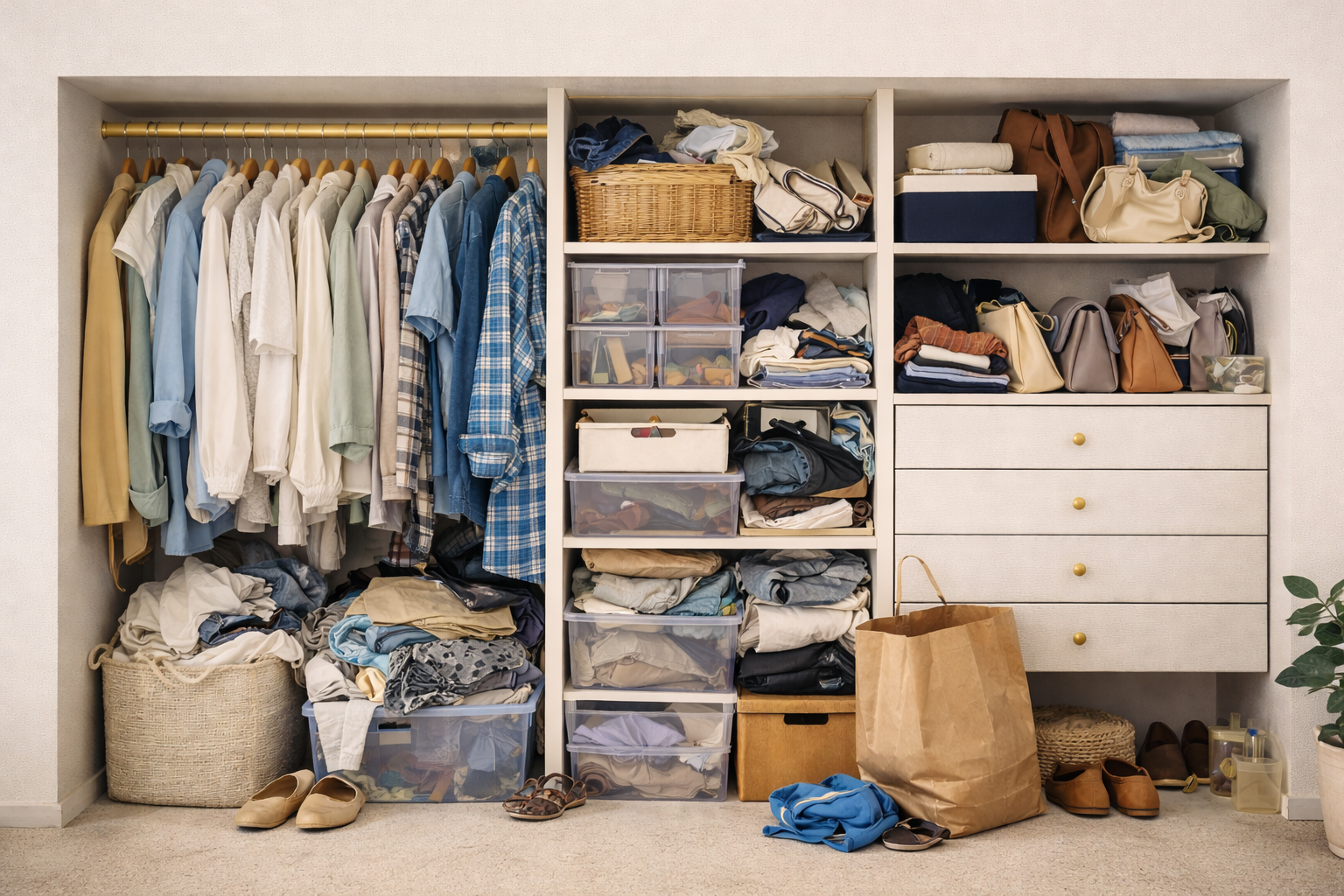
When your closet is overflowing, disorganized, or simply not working, the first instinct is often to buy more storage solutions — more bins, shelves, hangers, maybe even a whole new closet system.
But here’s the hard truth: more storage is not always the solution.
In fact, rushing to purchase new containers or organizers without understanding the root cause of your closet problems often leads to even more clutter, more stress, and more money wasted.
In this article, we’ll uncover how closet frustration starts, and what you really need to do before investing in another drawer, box, or hanger.
Why Closets Become Frustrating in the First Place
Closets aren’t just storage spaces. They’re decision-making zones. Every morning, you go in and decide:
- What to wear
- What matches what
- What you can’t find
- What no longer fits
When your closet isn’t designed to support these decisions smoothly, you feel frustrated — fast. That frustration doesn’t come out of nowhere. It usually builds slowly, over time, due to a few common problems.
Problem #1: Overflow Without Purpose
You might have too many clothes — but the real issue is that too few of them are useful. It’s not about quantity. It’s about purpose. When you own lots of items but only regularly wear a few, your closet becomes a jungle of distractions.
Problem #2: Storage That Solves the Wrong Problem
Buying a shoe rack doesn’t help if you’re actually overwhelmed by coats. Adding drawers won’t help if your problem is vertical space. Many people buy organizers based on what looks good — not on what solves their actual problem.
Problem #3: No System Behind the Stuff
Closets without systems turn into piles. If there’s no logic behind how things are arranged — by type, frequency of use, color, or season — then even the most expensive organizers won’t help.
Problem #4: Emotional Attachment and Avoidance
Letting go of clothing is emotional. Sometimes we keep items for identity reasons (“Maybe I’ll need this if I go back to that job”), guilt (“It was a gift”), or hope (“I’ll fit into this again someday”).
Over time, this emotional clutter builds into mental resistance. That makes using the closet stressful — and buying storage feel like the easier way out.
The Cost of Buying Storage Too Soon
Before we talk about what to do instead, it’s important to understand the hidden cost of rushing into storage solutions:
- Wasted money on organizers that don’t work
- Wasted space as bins and racks take over the floor
- More clutter, because you added without removing
- Increased guilt, when you realize the problem wasn’t solved
It’s the equivalent of putting a band-aid on a deeper issue — and that almost never works.
What to Do Before Buying Any New Closet Storage
Here’s what to do first, before you open your wallet or browse a single product:
1. Take Everything Out
Yes, everything. It might sound dramatic, but this step is key. You need a full picture of what you actually own — not what’s visible at a glance.
Spread clothes and items out on your bed or floor. This might feel overwhelming at first, but it’s crucial for clarity.
2. Sort by Category
Group items by type:
- Tops
- Pants
- Dresses
- Coats
- Shoes
- Accessories
You’ll immediately start to see what you have too much of and what you never use.
3. Be Honest About Use, Not Just Value
For each item, ask:
- Have I worn this in the past year?
- Would I buy this again today?
- Does it fit my current lifestyle or climate?
Let go of the idea that cost equals value. If you’re not wearing it, it’s not valuable to your life — no matter how much it cost.
4. Find the Friction Points
Next, step back and analyze:
- What do you struggle to reach?
- What takes too long to find?
- What gets buried or forgotten?
These are your real closet problems. And they should guide any decisions you make from here on out.
How to Know What Storage You Actually Need
Once you’ve decluttered and identified your closet’s friction points, you’ll be able to determine what kind of storage (if any) will actually help. Here’s how:
If the problem is vertical space…
Use:
- Hanging shelves
- Stackable drawers
- Double-hanging rods
If the problem is small items…
Use:
- Drawer dividers
- Accessory trays
- Over-the-door pouches
If the problem is overflow on the floor…
Use:
- Slim shoe racks
- Tall bins with lids
- Under-bed storage (if available)
If the problem is visual clutter…
Use:
- Matching bins or baskets
- Closed drawers
- Neutral colors to reduce “noise”
Buy storage solutions only after your closet is already more functional. They should enhance your system — not try to fix what hasn’t been addressed.
When Buying Storage Can Backfire
Here are situations when buying storage is more likely to create problems than solve them:
- Impulse purchases based on trends or TikTok hacks
- Buying to delay doing the actual decluttering
- Trying to fix emotional clutter with physical containers
- Assuming your closet’s shape is the issue, not your habits
It’s not that storage is bad — it’s that storage should never come before systems and strategy.
How to Maintain Function Without Adding More Stuff
Once your closet is pared down and working better, you can maintain that function with a few ongoing habits:
Rotate by season
Keep only what’s in-season visible. Store off-season clothes in bins under the bed or in higher closet zones.
Use the “one in, one out” rule
Bought a new shirt? Donate or sell one you no longer love. This keeps your collection intentional.
Do a mini-reset monthly
Once a month, take 10 minutes to tidy up, shift misplaced items, and check for anything no longer serving you.
Keep visible reminders
Place a small note or reminder in your closet: “Do I use this?” or “Does this fit who I am today?” These small cues encourage better decisions.
Final Thoughts: Fix the Foundation First
It’s tempting to jump straight to the fun part — new bins, pretty baskets, a fresh rod. But until you understand why your closet frustrates you, more storage will only mask the problem.
Take the time to reset your space, rethink your habits, and clear the clutter first. Once the foundation is solid, every upgrade you make will actually work — and your closet will finally feel like a tool, not a burden.
You don’t need more space. You just need better strategy.

Ryan Lewis is a home organization enthusiast who specializes in smart, renter-friendly solutions for small spaces. With a passion for functional design and practical living, Alex shares tips, guides, and ideas to help readers create calm, clutter-free environments—no matter the size of their home.