
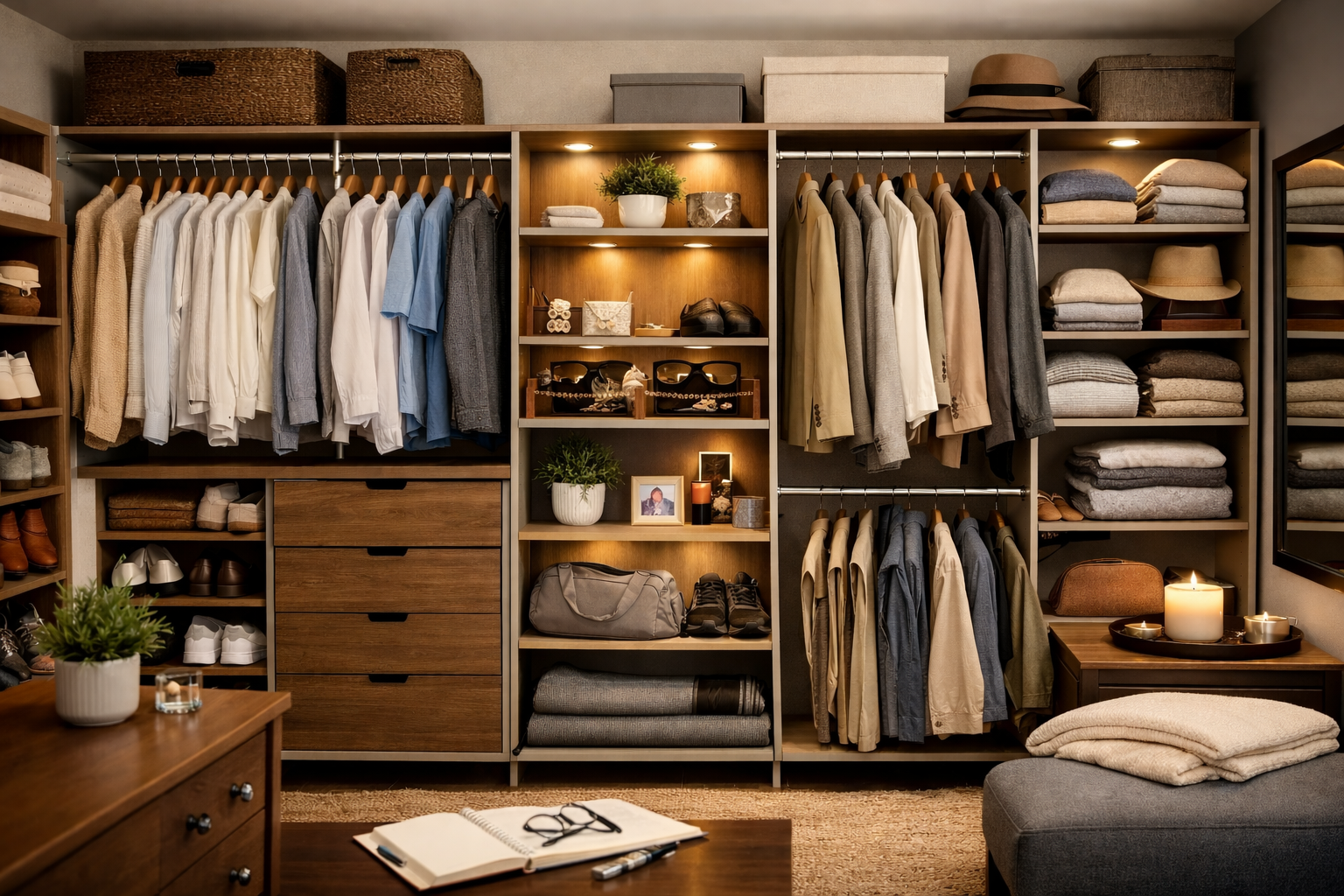
An organized closet does more than just look good — it actively shapes your day-to-day behavior.
The way your clothes and accessories are arranged can influence how quickly you get ready in the morning, how confident you feel throughout the day, and even how productive you are.
That’s not just an opinion — it’s supported by psychological principles. In this article, we’ll explore how closet design impacts your mental clarity, habits, and lifestyle.
Whether you live in a compact rental apartment or a spacious home, understanding the psychology behind closet organization can help you get the most out of your space — and your time.
Cluttered Spaces Create Mental Clutter
When your closet is messy or overstuffed, it doesn’t just waste time — it creates anxiety. Studies show that visual clutter increases cortisol levels (the stress hormone), making you feel overwhelmed or mentally blocked.
Opening a closet and seeing chaos can make even simple decisions like “What should I wear today?” feel exhausting. On the other hand, an orderly, clean closet reduces cognitive load, helping you start the day with a sense of calm and control.
Decision Fatigue and the Closet Connection
You make hundreds of decisions every single day. What to eat. What to say. What to wear. The more decisions you make, the harder it gets to make the next one — this is known as decision fatigue.
Closets are often the first decision point of the day. If your space is cluttered or poorly designed, it adds unnecessary complexity to your morning. But if your closet is organized and streamlined, it reduces the time and energy required to get dressed — preserving mental fuel for more important tasks later.
A smart closet design helps eliminate this fatigue by making it easy to find, select, and combine clothes without overthinking.
Repetition Builds Habits — Visibility Supports Repetition
We’re creatures of habit. When things are visible and accessible, we’re more likely to use them consistently. That’s why organized closets often lead to better routines — like exercising more frequently, dressing with more intention, or even doing laundry more regularly.
For example, keeping your workout gear in a visible spot within your closet can act as a daily reminder to exercise. This is a simple psychological trick: the more often you see something, the more likely you are to act on it.
Closet design isn’t just about shelves and hangers — it’s about reinforcing habits through strategic visibility and placement.
Visual Order = Emotional Relief
Ever feel strangely satisfied by a tidy drawer or color-coordinated clothes? That’s your brain responding to visual harmony. Human brains are wired to seek patterns, and an organized space meets that need. It sends a signal of stability and safety.
Creating symmetry in how you hang your clothes or line up your shoes isn’t just aesthetic — it can improve mood, reduce stress, and even help you feel more in control of your life.
Organized Closets Support Minimalism and Intentional Living
A messy closet often means forgotten clothes, duplicate purchases, and impulse shopping. But when your closet is organized, you see exactly what you own, making you more aware of your choices and needs.
This awareness promotes intentional living, a concept that overlaps with minimalism. When you stop buying clothes you don’t need and start using what you already own, you’re not just saving money — you’re reducing waste and making room (mentally and physically) for what truly matters.
Flexible Closet Systems Reduce Lifestyle Stress
Modular closet systems — ones that can be adjusted, moved, or reconfigured — are especially beneficial for renters and people with limited space. Why? Because they let you respond to changes in your life without sacrificing organization.
Need more drawer space during winter? Add a pull-out bin. Got more hanging clothes than folded ones? Shift a shelf and install another rod.
This flexibility reduces stress, especially in rental apartments where permanent modifications aren’t allowed. You maintain order without risking your deposit — and that peace of mind shows up in your daily life.
Routine Reinforcement Through Layout Design
When you create routines, like always hanging your work clothes on the left or folding your gym gear in a specific drawer, your brain starts to associate those actions with time and purpose.
For example, if you always grab your running shoes from the same shelf before your morning run, the act becomes more automatic. That’s the power of layout: it becomes a physical reinforcement of your mental routine.
An effective closet layout builds micro-habits that improve your day — often without you realizing it.
Boosting Self-Esteem Through Appearance Control
How you feel about your appearance often starts with your closet. When your clothes are accessible, clean, and easy to coordinate, you’re more likely to wear outfits that make you feel confident.
Struggling to find matching shoes or a clean shirt doesn’t just make you late — it can make you feel unprepared, unprofessional, or disheveled. But when everything is ready and in order, getting dressed becomes a boost to your confidence, not a drain on your energy.
That simple shift can change how you walk into meetings, go on dates, or even just take care of errands.
Small Spaces, Big Impact
In small rental apartments, every square foot matters. Closets are often the most overlooked source of usable space. A well-organized closet can free up entire drawers, reduce the need for bulky furniture, and improve traffic flow in the bedroom.
This makes your whole apartment feel larger, cleaner, and more comfortable. The psychological benefit? You feel less boxed in — literally and figuratively. A tidy closet often leads to a tidier home, which supports a clearer, calmer mind.
Key Design Principles That Support Mental Wellness
Here are a few key design principles that tie closet organization to mental wellness:
- Categorize everything: Group similar items together (pants with pants, sweaters with sweaters). This reduces search time and supports faster decisions.
- Use neutral colors: Lighter or natural tones create a calm visual field, especially in small spaces.
- Maximize vertical space: Shelving up to the ceiling makes full use of space and reduces clutter at ground level.
- Label where needed: Especially for bins and boxes — your future self will thank you.
- Make items visible: Use clear containers or open shelving to increase access and reduce mental friction.
These simple strategies make it easier for your brain to process information, stay focused, and build productive routines.
A Physical Extension of Your Mind
In many ways, your closet is a reflection of your inner state. A chaotic closet often mirrors a chaotic schedule. A well-structured one reflects clarity and intention.
When you take the time to design your closet with care — using systems, zones, and flow — you’re also training your mind to think more clearly, act more efficiently, and feel more in control of your day.
It’s not about perfection. It’s about alignment between your space and your goals.
Final Thoughts: Design with Purpose, Live with Ease
The link between closet organization and mental wellness is real — and powerful. With just a few design changes, you can reduce stress, save time, and improve your daily habits in meaningful ways.
Whether you’re a minimalist, a busy professional, or someone just trying to survive apartment living, investing in your closet layout is one of the smartest things you can do. Especially with modular systems, you don’t need to renovate your whole home — you just need to reorganize with purpose.
And remember: when your closet works better, your whole life runs smoother.

Ryan Lewis is a home organization enthusiast who specializes in smart, renter-friendly solutions for small spaces. With a passion for functional design and practical living, Alex shares tips, guides, and ideas to help readers create calm, clutter-free environments—no matter the size of their home.